
The government of Uganda has launched an aggressive drive to expand its Electronic Government Procurement (e-GP) system to 100 additional public entities, scaling the platform from its 36 pilot institutions to a total of 136 procuring and disposing entities across the country.
The move marks one of the most consequential public finance management reforms currently underway in Uganda. Public procurement accounts for trillions of shillings annually in expenditures spanning road construction, drug purchases for health facilities, school supplies, and vehicle acquisitions. For years, manual procurement processes have faced severe criticism from oversight agencies and industry experts due to administrative delays, restricted market competition, high paperwork costs, and opaque paper trails that complicate post-expenditure audits.
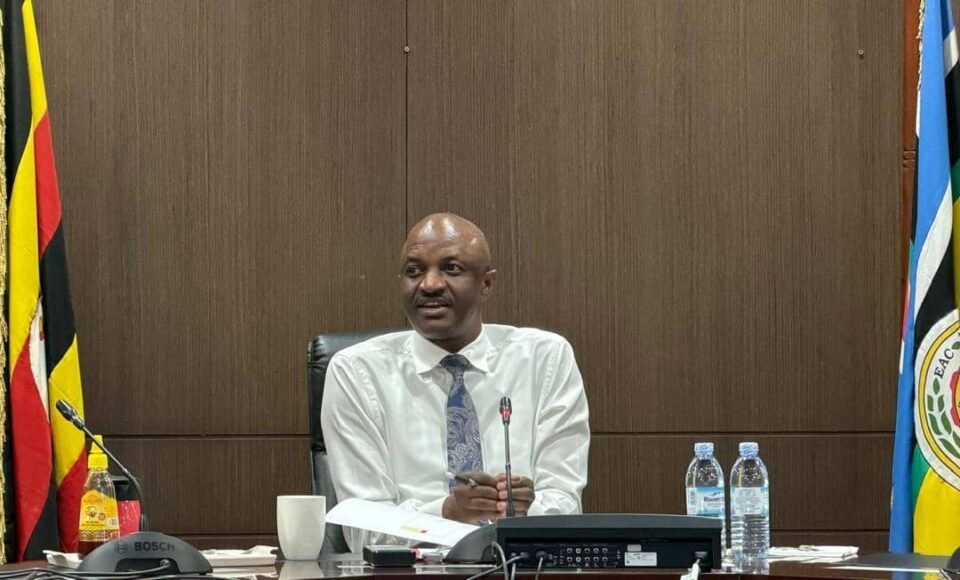
Addressing steering committee members gathered to assess readiness for Version 2.0 of the system, Permanent Secretary and Secretary to the Treasury, Ramathan Ggoobi, emphasized that the transition is fundamental to protecting public resources and ensuring prompt payments to suppliers.


“Successful nationwide deployment must be supported by reliable infrastructure, long-term system sustainability, and effective risk-management mechanisms,” Ggoobi said during the readiness assessment meeting. “We must guarantee reliable performance, continuity of operations, and the system’s capacity to accommodate the growing number of government entities coming on board.”
Ggoobi tasked his technical team to formulate a long-term sustainability framework and called directly on the National Information Technology Authority-Uganda (NITA-U) to strengthen core digital infrastructure.
“NITA-U must prioritize robust core infrastructure to support the system’s expanding operational demands while ensuring stability, security, and uninterrupted service delivery,” Ggoobi noted. “We also need practical safeguards, particularly addressing system-related challenges like SMS notification failures, so that technical interruptions do not compromise procurement processes or delay transactions.”
Following the boardroom discussions, the Acting Accountant General, Godfrey Ssemugoma, guided Ggoobi through a training facility where public officers from various ministries, departments, and agencies were undergoing instruction on Version 2.0. The upgraded software version aims to eliminate systemic glitches uncovered during the initial 36-entity pilot phase while handling higher volumes of concurrent users and financial transactions.
By moving the entire procurement cycle online—from initial planning and tendering to evaluation, award, and contract management—the Ministry of Finance and the Public Procurement and Disposal of Public Assets Authority (PPDA) aim to enhance real-time oversight. The automated workflow is designed to detect contract splitting, irregular repeated awards to preferred vendors, and artificially inflated pricing prior to contract execution, rather than relying on delayed post-audits.
For small and medium enterprises (SMEs) outside Kampala, the digital system promises to level the playing field by eliminating the costs of physical travel, printing, and manual file tracking.
“In theory, a supplier in Gulu, Mbarara, or Mbale should be able to see the same tender at the same time as a supplier in Kampala, submit a bid from a computer or phone, and track its progress without having to physically chase files through a ministry,” Ggoobi observed during his interaction with trainees.
Despite the prospective gains, analysts point out that expanding to 136 entities will present operational hurdles, including stable internet connectivity in upcountry districts, digital literacy gaps among public procurement officials, and institutional resistance to transparent workflows. While digitisation creates audit trails, experts note that reducing corruption ultimately depends on consistent public disclosure of data, timely enforcement, and decisive sanctions against non-compliant officials.