
The Local newsletter is your free, daily guide to life in Colorado. For locals, by locals.
In April 2025, Adam Miller was in Papua New Guinea, camping among villagers in the Oro Province near Tufi, a small coastal town on the southeastern tip of the island. For a week, he’d been hiking steep, unnamed peaks that rose a few thousand feet above dense rainforest and fjords carved into the coastline. At night, he’d sleep shoulder-to-shoulder with a few close friends in a raised platform hut. They ate bananas picked straight from the trees and lobster caught by free divers that same day, hauled from a stretch of ocean just a few miles away.
Miller, now 34, needed that vacation. Six years earlier, he’d launched Revel Bikes and grew the mountain bike brand into a $15 million company. But amid the pandemic-born bike boom of 2021, it was clear to him that his startup was expanding too fast to meet demand and lacked capital and expertise to properly scale. He sold a majority stake to Next Sparc Growth Partners, an Ohio-based private equity firm. Miller stayed on as CEO, but after just a few months, everything seemed wrong. The culture had quickly shifted from the scrappy, rider-first feel of the company he’d built into an unwieldy corporate mess—one that seemed destined to implode. In April 2024, he left the business he’d started in his Carbondale living room, depressed and disoriented, unsure of what came next.
He spent the next year traveling the world, determined to forget about Revel. He spent weeks in Dakar, Senegal, where he boated around islands, and went skiing in Italy and Switzerland. He took a weeklong motorcycle trip through Thailand and made numerous visits to Alaska to go fishing. By the time he reached Papua New Guinea, everything finally seemed right with the world.
One night, he ate nearly 20 bananas, still warm from the sun, then lay down on the hut floor alongside his friends. He fell asleep as the jungle settled into its nighttime chorus. Miller awoke at first light, the air thick and dewy, and set off to climb another peak. The rooty, muddy trail was more of a suggestion than a path. After three hours, he arrived at the summit and stared down at the thick green canopy rolling toward the sea. He could hear the wind in the trees, the distant surf, and the layered hum of insects below.
He had mostly kept his phone off during the trip, but at the top of the peak, he decided to turn it on. It immediately started blowing up. “I looked down and had seven text messages,” Miller says. “They were very cryptic, but they all said basically the same thing: ‘You should find out what’s going on with your company.’ ” Miller was able to determine that Next Sparc had begun defaulting on its payments to its lender, J.P. Morgan, and that Revel was likely heading toward bankruptcy.
The news didn’t surprise him, but the contrast was stunning. The night before, he’d been living in what felt like another century—eating food foraged by hand and experiencing little contact with the outside world. Now he was thinking about leveraged buyouts, legal filings, and the nearly decadelong effort that had built Revel into a brand beloved by serious mountain bikers.
He hiked 12 miles back toward Tufi, turning the situation over in his mind. Somewhere along that humid trek, clarity began to form. “One thing was certain,” Miller says. “I knew I wanted to do everything I possibly could to get my company back.”
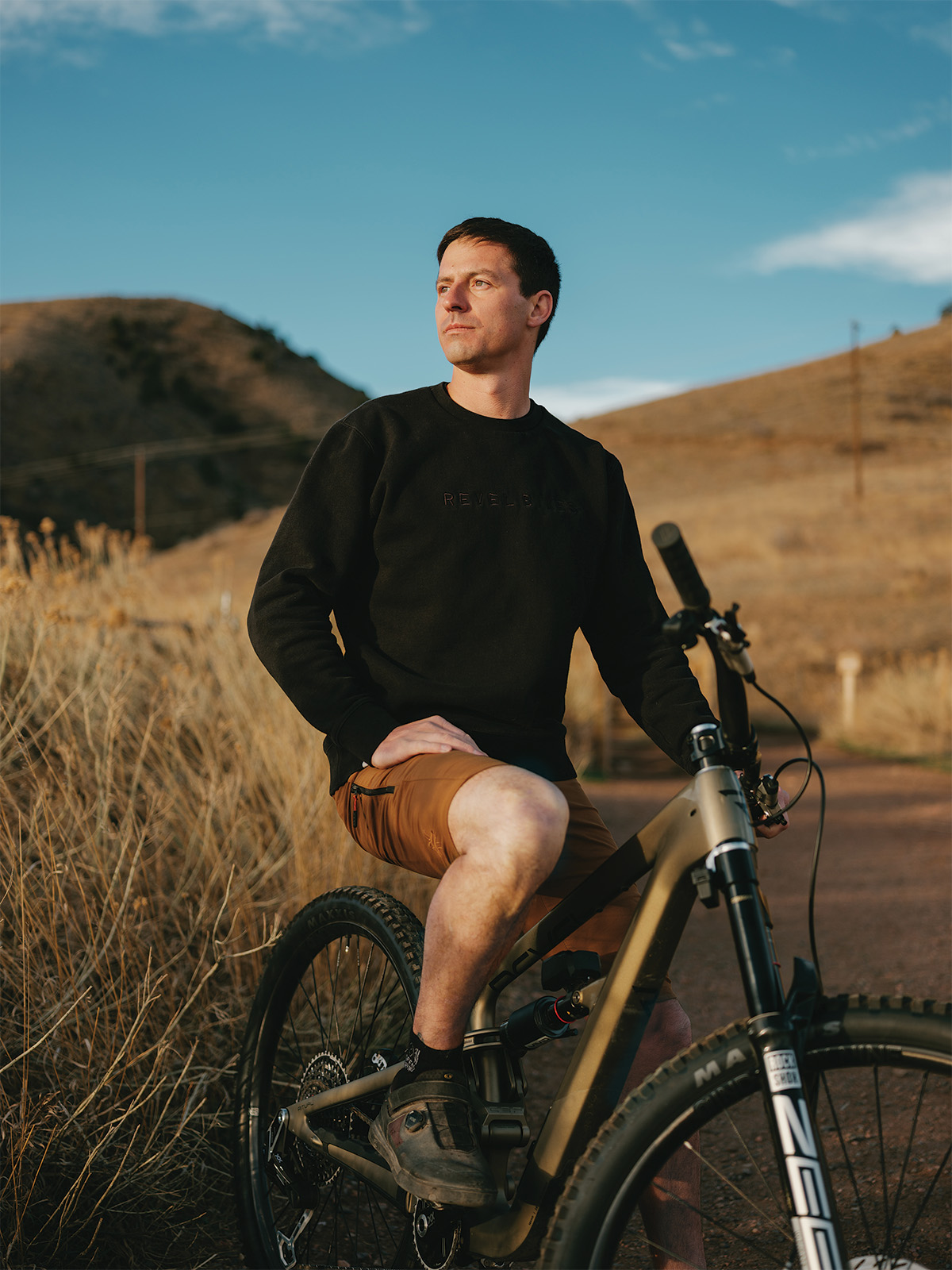
Revel wasn’t the first company Miller started—or the first he lost. Growing up in Anchorage, Alaska, he became infatuated with mountain bikes at 11 while participating in a local summer program called Mighty Bikes. “As a kid who’d done ball sports, and not very well, biking just clicked,” he says. “I loved the adrenaline rush, the views, and the connection with nature.”
He began obsessing over the mechanics of bikes, wondering why certain setups felt faster and how suspension changed a ride. He started an eBay business, buying used bikes online before dismantling them and selling off the parts, usually pocketing $300 over and above a $600 investment. By 14, he was working at a bike shop, building wheels and taking bikes apart, trying to understand every moving piece.
Miller left Alaska for Colorado College, in Colorado Springs, where he studied economics. During his junior year, in 2012, he spotted an opportunity in the emerging fat-tire category (bikes designed for snow and sand). The models on the market, he explains, were “heavy, cheap, and clunky,” and he thought he could build something better. “Nobody was making carbon-fiber fat bikes,” Miller says.
He convinced an investor to back the idea and soon after flew to China and spent three weeks visiting factories. “It was about the most eye-opening trip ever,” he says. “I’d never been to Asia before, and I definitely had never traveled for any sort of business.”
Borealis Fat Bikes debuted in the summer of 2013, just before his senior year. The original plan was modest: store bikes at his investor’s house and treat it as a side project. “The day we launched, my phone was ringing right away,” Miller says. “We had sold more bikes in those few hours than we projected to sell in the first year.”
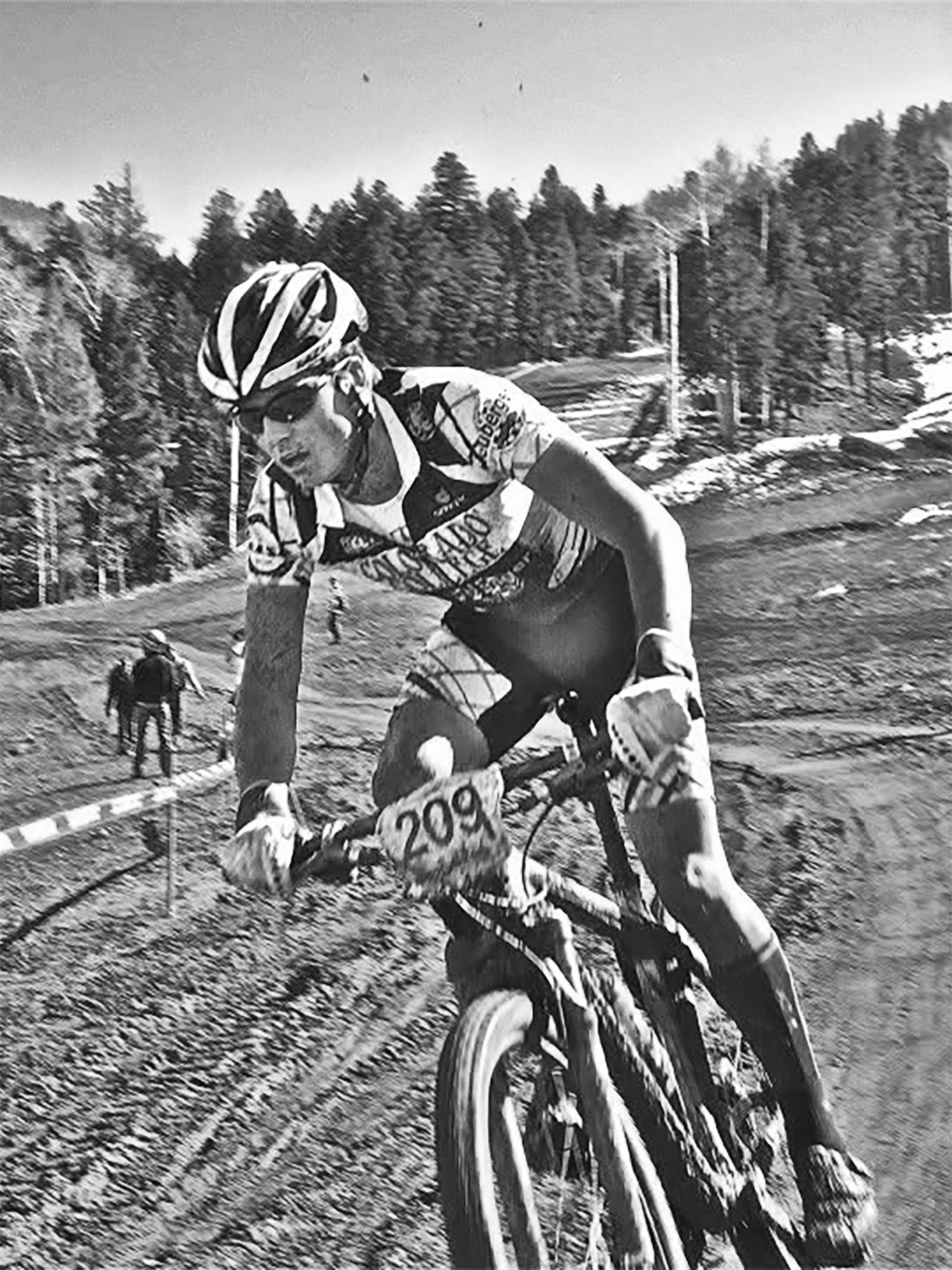
Miller had started Borealis at exactly the right time. Fat bikes were just starting to expand for use beyond snow and sand, and Borealis beat competitors to market with a high-end product by several months.
Within weeks, he’d rented space in the basement of a bike shop. He hired roommates and friends to help build wheels at night after classes. By its second year, Borealis had moved to a warehouse in Colorado Springs. It had 17 employees and distribution in 17 countries and was sold in roughly 250 bike shops in the United States. The company did $1 million in sales during its first four months. It reached $6 million in the second year.
It was Miller’s first crash course in rapid growth—and how quickly it can unravel a business. Borealis was structured as an LLC, with profits flowing through to the owners as taxable income. In 2014, Miller found himself on the hook for taxes on about $300,000. Because almost everything he earned went back into the company to grow it, Miller, then in his early 20s, didn’t have the cash to pay the government.
Facing pressure from the IRS, Miller accepted a buyout from his investor for far less than the company was worth, walking away with very little money. “The truck I was driving belonged to Borealis,” he says. “So when I signed the document turning everything over to my former partner, I had to ask for a ride home from his lawyer.”
After taking a year off following graduation, he moved to Ogden, Utah, and started Why Cycles, a brand that made and sold titanium bikes. It was another niche market, but Miller knew Why Cycles was only a bridge, something to pay the bills, while he worked toward his ultimate goal: building a mountain bike that performed as well going up as it did going down.
At the time, the industry couldn’t figure out how to make a suspension system that would facilitate both. If a bike climbed strongly, it descended weakly, and vice versa. “There was a lot more of a trade-off,” Miller says.
In 2015, at a trade show in Las Vegas called Interbike, a friend suggested he try a bike built by Utah-based engineer Chris Canfield. Canfield had developed a patented system called the Canfield Balance Formula (CBF), which, instead of revolving around a virtual pivot point like most bikes, placed the suspension’s center curvature directly above the chainring, keeping pedal forces consistent throughout the ride. The result was a rear wheel that moved smoothly over rough terrain without sacrificing pedaling efficiency.
About 100 yards into the test drive, Miller stopped and turned around. “I knew right away that it was different,” he says. “I knew that was the suspension I wanted on my bikes.”
He asked Canfield if he could license the design. Two days later, the men drafted a simple agreement and began collaborating. Miller also tapped Mike Deasy, whom he describes as a “3D design engineer master,” to help fabricate the frame and overall design. The three men worked on various designs for four years, creating roughly 18 prototypes along the way. Miller made repeated trips to Asia (carbon frames were fabricated in China, and most components came from Taiwan), and he and others were constantly testing their creations on the berms and rollers of Utah and Colorado.
Miller, who says he “always wanted to live in a small Colorado mountain town,” bought a house in Carbondale in 2017, where he put up his five employees. Late nights were spent drinking whiskey and tinkering. They bought a former Boulder County ambulance to serve as the company car. “A lot of people who start companies say they start in the garage,” Miller says. “But I didn’t have a garage, so we started in the living room.”
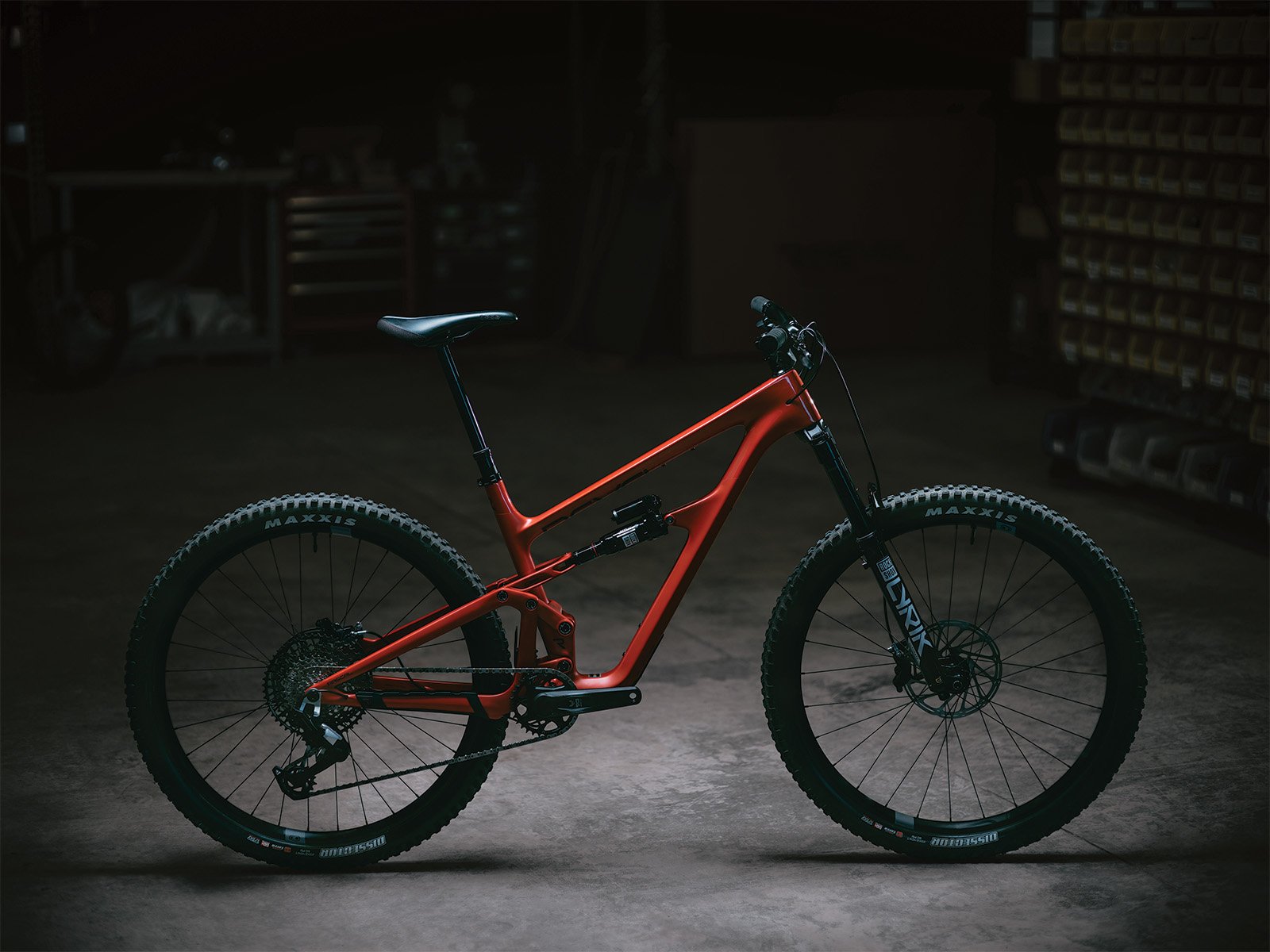
Revel officially launched in March 2019 with two models, the Rascal and the Rail. The same day, Pinkbike, a respected website covering the bike industry, published its review of the latter: “The team at Revel is onto something and whatever sorcery they’ve done with the Rail makes it a really unique ride…. A lot of times, a good-looking bike doesn’t translate into a great ride, but with the Rail, this is not the case. The bike’s performance, both up and down, is simply incredible.”
Revel began with an inventory of 80 bikes. Miller hoped he’d be able to move them by the end of the summer. In large part due to the Pinkbike review, they sold out in three days—and dealers wanted more. Production schedules doubled, then tripled. Miller could sense that the company was growing too fast. They were extremely profitable on paper but had no cash.
Money was perpetually tied up in building molds for frames, manufacturing, and shipping. Miller had to pay factories months in advance, then wait for the bikes to be built, shipped, assembled, and finally sold to recoup his expenses. As sales grew, so did the size of those upfront payments. Eventually, the gap between spending and recouping expenses stretched six to nine months.
At the same time, the company itself was becoming more complex. Miller was designing bikes, flying to Asia, managing a dozen employees, forecasting demand, and trying to professionalize a rapidly scaling business. “I didn’t know how to run a $15 million business,” he says. “I was watching YouTube videos on business management and leadership skills.”
Then the pandemic hit, and people, trapped at home and searching for activities that could be done at a distance, began taking up new outdoor sports. Demand for outdoor equipment spiked, especially for bikes. U.S. sales surged by 64 percent in 2020, reaching nearly $5.4 billion, according to Circana, a market research group. Revel’s sales jumped by several hundred percent.
“Now we need to buy 1,000 frames to have in six months,” Miller says. “But we didn’t have money to pay for them.” Miller had already leaned on personal guarantees, credit cards, and home equity to fuel growth. “I was in over my head,” he says. “I knew enough to know I needed help.”
Miller looked to private equity—investment firms that inject capital into startups in return for a piece of the ownership—because he needed their execs’ business acumen. He ultimately sold a 70 percent stake to Next Sparc. (Miller won’t disclose the terms of the deal, except to say that it was an eight-figure transaction.) He says he turned down higher offers in favor of Next Sparc; unlike many private equity firms, which typically plan to sell a company again within three to five years, Next Sparc said it intended to stick around longer and help grow the company.
He felt good about his decision. But just a few months into Next Sparc’s reign, Miller noticed business practices that seemed incongruent with success. Executives from the firm would jet into Aspen and take him to $2,000 steak dinners overflowing with craft cocktails, expensive wines, and caviar at swanky restaurants like Casa Tua—all on Revel’s dime. In a small valley, where many of Revel’s employees were scraping by on modest salaries, the optics bothered him.
“I pulled aside one of the guys and was like, ‘Hey, we can’t do this,’ ” Miller says. “We have a lot of employees for who $2,000 is several weeks of pay. It’s just not right. They didn’t like that I questioned that.”
Miller was also frustrated by the corporate structure that took over daily operations. “Fifty percent of my time was sitting in a conference room,” he says. “We had to make weekly PowerPoint presentations with KPIs and reports. It was meetings on meetings. This was a company that was supposed to know how to scale a business. But almost everything they did had the opposite effect.”
Most alarming, Next Sparc’s forecasting seemed wildly unrealistic. Revel’s sales increased by 60 percent in 2022, but that wasn’t good enough for Next Sparc. The new owners wanted business to double annually. Execs ignored Miller’s concerns and began pre-building large runs of bikes and stacking inventory in the warehouse.
Under Next Sparc’s leadership, half of Revel’s original employees had resigned. In late 2022, Miller wrote in an email to the heads of the firm that it was their company, and they could run it however they wished. He preferred to not be a part of it. Still, Miller continued as CEO until October 2023, and finally left the company the following year.
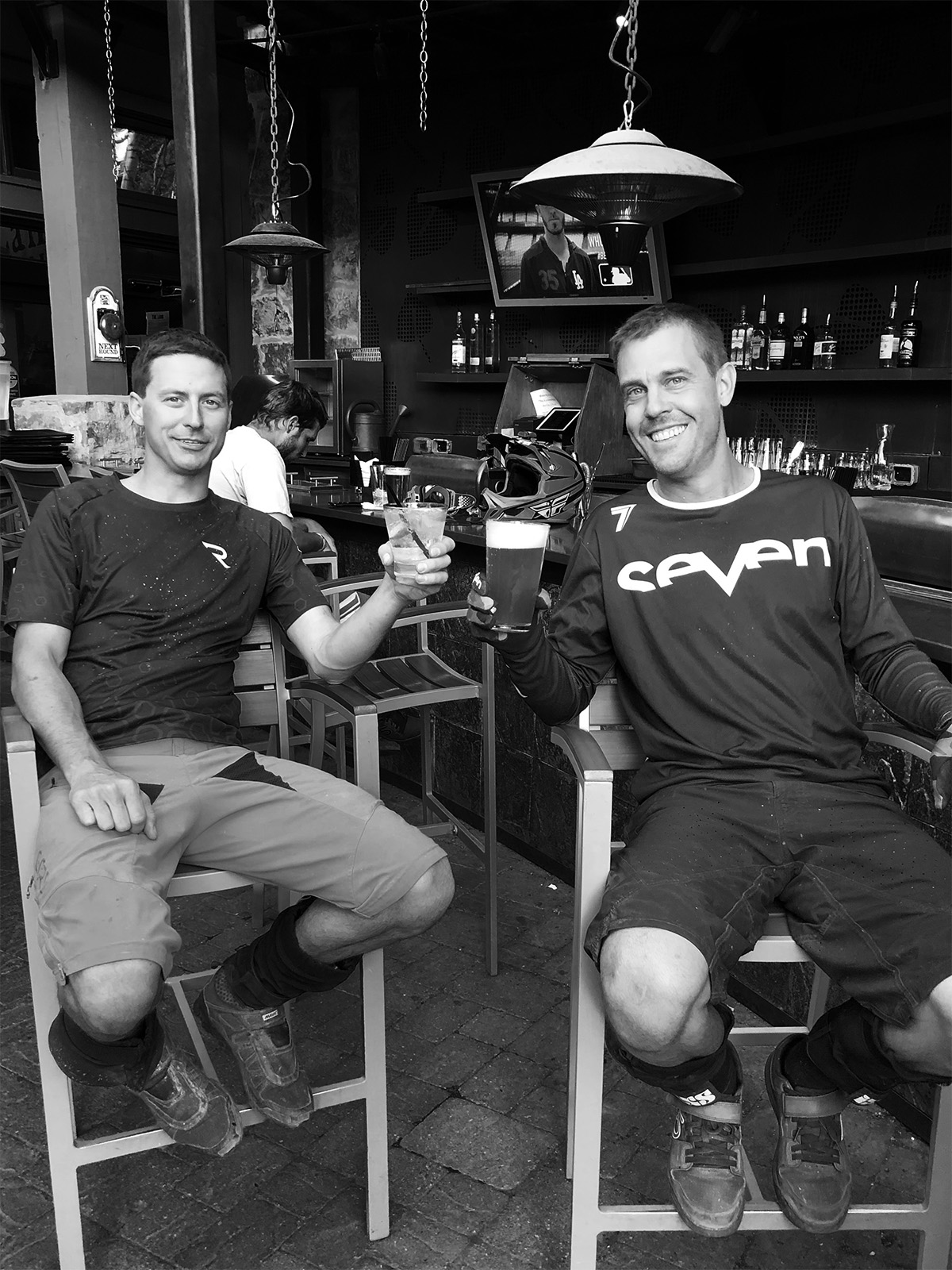
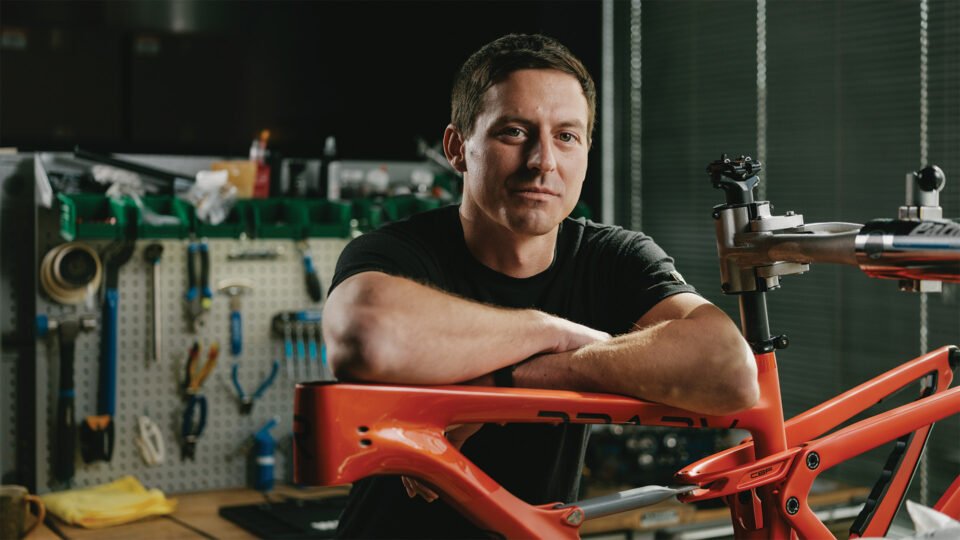
On a mild day this past January, I drive from my home in Basalt to the Revel warehouse and offices in Carbondale. Miller, a lanky guy with close-cropped brown hair, greets me wearing a black sweatshirt and khaki sweatpants. The 34-year-old is smiling like he just rescued his company from the brink of destruction.
When Revel collapsed, it was carrying more than $8 million in debt. Miller started making calls as soon as he got home from Papua New Guinea, first to former employees—could they come back if he pulled this off?—then to lawyers, who began mapping out a path for him to regain control. J.P. Morgan, which carried Revel’s distressed debt, was preparing to take possession of the assets, and once word got out, other buyers would circle. Miller needed to move fast—and quietly.
To avoid tipping off Next Sparc, whom Miller worried might attempt to block him, he made his bid through a newly formed LLC in Wyoming, a state that allowed him to keep his name off the paperwork. “I knew that if they saw my name, there was a chance they would shut it down or try to sell it to somebody else,” he says. He told J.P. Morgan he’d move swiftly by forgoing the time-consuming process of due diligence (he already knew Revel was a mess). “I will buy the company tomorrow,” he told the bank.
To finance the acquisition and repay vendors, Miller used money he’d made from the Next Sparc deal. He also sold two homes in Colorado, one in Redstone and one in Marble, that he had bought as investments. On May 27, 2025, Miller announced that he’d regained control of Revel.
The bike industry and consumers embraced the news. “A truly heartwarming instance of triumph,” wrote Bike Magazine. Instagram commenters were equally excited, responding with a slew of clapping and fire emojis on Revel’s post announcing the founder’s return.
The first thing Miller did was get on a plane to Asia to meet with vendors. “They appreciated that,” he says, “and I was able to work out a payment plan to pay them back the money they were owed.” Then he got to work trying to sell the inventory surplus.
As we tour Revel’s factory, we walk past huge, mostly empty racks. “When I took over again, these were full of bikes in boxes,” Miller says. Next Sparc, Miller says, had bought around 5,000 on spec, and there were still some 1,000 that needed to be sold. “That’s how bad their forecasting was,” he says. “But I think we had a lot of positive tailwinds from the news of the buyback, so it was actually pretty easy to sell those bikes.”
Miller had other complaints about Next Sparc’s leadership. Revel stopped selling bikes internationally because executives thought the paperwork was too complicated, eliminating what had once constituted 20 percent of sales. They also decided not to send bikes out for magazine reviews. “That’s one of the ways we built the company,” he says. “A good magazine review is free marketing.”
My emails to Next Sparc went unanswered, but I spoke with Ben Coates, who became CEO following Miller’s resignation. Coates agrees that Revel was sitting on too much inventory but says “it wasn’t extreme.”
The real problem, Coates says, was that by summer 2022, the market for new bikes had flattened and was heading toward decline.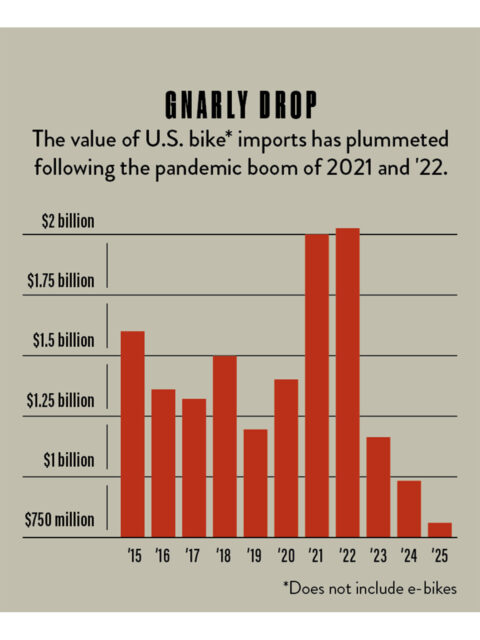
Kelly Davis, the director of research at the Outdoor Industry Association (OIA), calls what happened next a “bullwhip effect.” For a while, the pandemic-born growth looked real and lasting: According to OIA, bike participation numbers were up nearly 25 percent, retailers couldn’t keep bikes in stock, and backorders piled up. But as Davis says, once people finally got a bike, “you don’t need a bike anymore.” Anecdotal evidence suggests that most people will hold onto the same bike for five to 10 years. “Bikes are expensive, durable gear that lasts a while,” Davis says. What manufacturers read as a new baseline was actually years of future sales crammed into a single surge. Many major brands posted annual revenue declines of 20 to 40 percent.
As Miller wrangled back control of Revel, the industry was also grappling with the Trump administration increasing tariffs on imported goods, a levy that adversely affected the outdoor industry. Dan Abrams, president and co-founder of Denver-based Flylow Gear, which produces outdoor apparel, including ski and bike clothing, says the tariffs pushed his business into the red for the first time in two decades. When duties on some shipments topped 140 percent and overall import taxes climbed as high as 47 percent, the company, which has factories in Vietnam, India, China, Japan, and Taiwan, was forced to absorb half the costs and pass the rest along to consumers.
“Then your bank financing goes away because you break bank covenants, which say that you must be a profitable business,” Abrams says. “So the bank stops giving you loans, and that shuts down your ability to grow.”
Borealis Fat Bikes, the company Miller co-founded in college, announced in April 2025 that it would suspend new inventory purchases because of Trump’s tariffs. Most of its parts came from China.
This past February, the U.S. Supreme Court ruled that tariffs imposed under the International Emergency Economic Powers Act were unconstitutional. A week later, several outdoor companies, including bike manufacturers such as Trek, Specialized, and Shimano, sued the government, hoping to recoup at least some of the money they were taxed. But a settlement could take years. Meanwhile, the administration has vowed to use other methods to levy tariffs.
“Part of the industry is holding its breath, seeing what’s really going to happen,” says Stephen Frothingham, editor-in-chief of Bicycle Retailer & Industry News, in reference to tariffs as well as ongoing conflicts around the world. “What is the consumer demand going to be? We don’t quite know yet.”
All of this begs a very obvious question: Why would Miller, who walked away from Revel with a pile of cash just before the bike market began to crash, want to ride back into this mess?
Miller and I walk out of the warehouse and jump on a couple of Revel bikes. It’s my first time on one, and I immediately understand why Miller reacted so strongly when he initially experienced Chris Canfield’s suspension in Las Vegas.
Even just riding down the road toward one of Miller’s favorite Carbondale lunch spots, I’m able to feel how plush the suspension makes the Rascal travel, and also how efficiently it pedals (the bike never sinks into its suspension to the point that it robs my pedaling power). Reviewers universally agree that on technical uphill climbs, Revel bikes do a remarkably good job of keeping traction and maintaining horsepower. (Canfield told me that several manufacturers have tried to mimic his design without copying it, which would violate the patent, but none has been able to get it right.)
As we roll along, I ask Miller why he wanted to re-enter such a difficult marketplace. “I realized how much I missed it,” he says. “And I really believe in the bikes and in the people and the years of work they put into the company. That’s the main reason that I was comfortable buying it back.” His reasoning seems a little starry-eyed, but Miller also says he learned from previous mistakes and is implementing new strategies that he believes will grow Revel at a sustainable clip.
For example, the bike I’m riding, the 2026 Rascal, will launch on Revel’s website in just a few days, and as we pedal, Miller emphasizes that online sales are a big part of his strategy going forward. “Our business model before was 80 percent shops and 20 percent direct-to-consumer,” he says. “Now it’s flip-flopped, and that was a change I made almost immediately.”
Selling directly to riders allows the company to produce bikes closer to when they’re purchased, rather than guessing months in advance what shops might order, a strategy that left much of the industry buried in excess inventory after the pandemic surge faded. It also mostly cuts out the distributor and retail markups that traditionally inflate prices, making bikes sold online 25 to 30 percent cheaper.
It’s a strategy that has worked well for Canyon Bicycles, a German company founded in 2002. It sells exclusively online and has grown into an $800 million business. Interestingly, a private equity company acquired a majority stake in Canyon in 2020. Even more interestingly, it’s also where Ben Coates, Revel’s former CEO and president, now works as the general manager for the Americas. “The big boost [from online sales] is the value to the customer and product availability,” he says.
One thing Miller isn’t having to deal with as much as some outdoor companies is tariffs. Many Revel bikes are assembled in Taiwan. “Most bike components are also made there,” Miller says. Crucially, Taiwan has a friendly tariff agreement with the U.S. government, which includes a “non-stacking tariff cap” of 15 percent, meaning the combined rate on Taiwanese-made goods can’t exceed that number.
That should give Miller some financial breathing room as he rebuilds Revel. During our time together, he was hiring for a handful of roles, including sales staff, bike builders, and warehouse workers, with the goal of assembling a tight group that cares deeply about the performance of the bikes. “How does our company—20 people, two or three people in product development—compete against a billion-dollar company like Specialized?” he says. “I think it’s just a lot of us care more about how the bike rides than anything else.”
We roll up to the Brass Anvil, lean our bikes against the side of the restaurant, and head inside. We both order steak sandwiches and, as we tuck in, Miller bemoans the fact that he won’t have a chance to eat here as often. Perhaps the biggest part of Miller’s revamped business strategy is his decision to move the company out of Carbondale: In March, he relocated Revel to a 7,000-square-foot warehouse in Golden. Miller calls it “a total cost-saving move.”
The Roaring Fork Valley is one of the most expensive places to live and work in the country. In Carbondale, specifically, the cost of living is about 47 percent higher than the national average, according to the Economic Research Institute, driven largely by housing prices that far outpace local wages. Rent for a studio apartment in the city is about $28,000 per year, more than half the salary of some Revel employees.
Elliot Wilkinson-Ray started the performance denim brand Ripton in 2019 while living in cheap ski-bum housing in Aspen, storing early inventory in his room and the building’s lobby and eventually in a small office between Glenwood Springs and Carbondale. But by late 2021, as Ripton began to grow, the economics of staying in the valley stopped making sense. When Wilkinson-Ray searched for a larger warehouse space—about 4,000 square feet, instead of the roughly 1,000 he was renting—the price jumped from about $1,200 a month to roughly $8,000. He looked at cheaper areas nearby, he says, “and it was still hard to find something.”
Ultimately, Wilkinson-Ray decided to move the business to east Boulder, where warehouse space was two-thirds cheaper and the labor pool was more plentiful. “Shipping things is a lot easier from here, too,” he says. “Up in the mountains, you’re on that last rural leg of delivery. Down here you’re on the main shipping lines.”
Miller figures he’ll save up to $200 in shipping costs per bike and that deliveries will arrive two days faster. As a primarily direct-to-consumer company, that’s probably the biggest plus. But Golden is also closer to Denver International Airport, making Miller’s flights to Asia more convenient, and the Front Range doesn’t get as much snow as Carbondale. “It’s an easier place to test our bikes year-round,” Miller says.
Another bike company has already proven that it’s possible to have massive success in Golden: For 25 years, Yeti Cycles has been based in the town. “That was honestly a major selling point for me,” Miller says. “They figured out that it worked in Golden a long time ago, so it made sense for us to be there, too.”
So far, Revel’s new strategy seems to be working. Miller says the company is back to being cash-flow positive, and demand has outpaced expectations: Revel currently has a four-week backlog on orders. Miller and his team are also working on new products, including a downhill bike set to launch in the coming months.
As Miller and I finish our sandwiches, he tells me he still can’t quite believe he’s back where he started. “I feel incredibly lucky to be doing this,” he says.
I ask him what success will look like this time around. “I don’t need or want to be the biggest company out there by any means,” he says. “If we get to sell bikes and we get to ride bikes and build a really fun company full of great people, that’s good enough.”