
A guest post by Joy K. Mutunga, with Dennis Nyunyuzi and Caroline W. Njuguna, authors of the African Venture Studio Report 2026
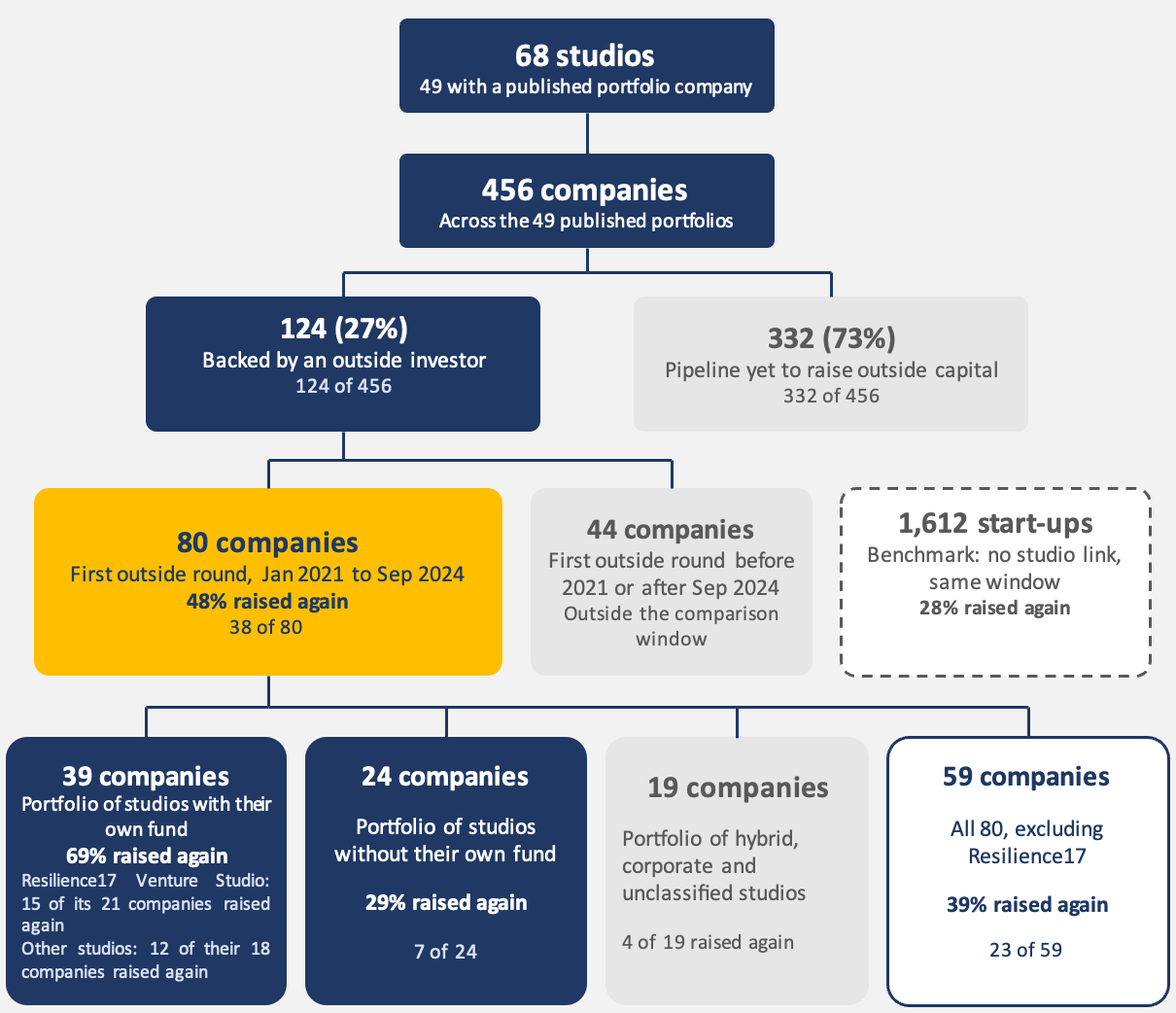
Africa’s venture studios hold a pipeline of 456 companies, yet seven in ten first-round investors in studio companies have backed only one. We looked at 68 venture studios across the continent. Forty-nine publish their portfolios, and we matched every company they list to Africa: The Big Deal’s deal records from January 2019 to September 2026. Nearly three in four, 332 companies, have yet to raise from an outside investor, but those that have cleared that first hurdle go on to raise again more often than other start-ups.
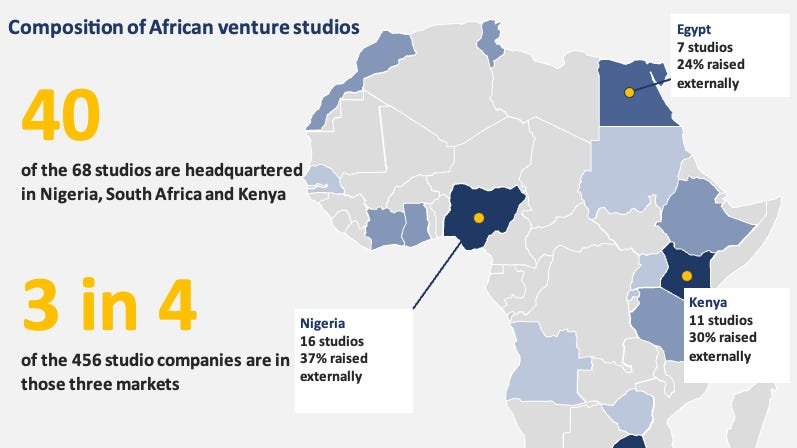
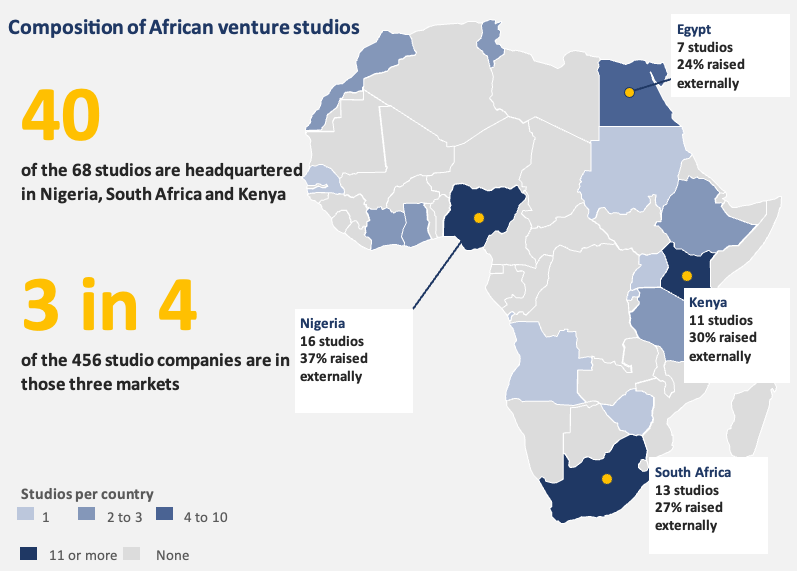
Nigeria, South Africa and Kenya host 40 of the 68 studios we identified (59%) and 75% of studio companies, so an investor active in those three countries can reach most of the continent’s studio deal pipeline. Nigeria leads, with 37% of its studio companies raising externally, against 30% in Kenya and 27% in South Africa. The studio, however, matters more to an investor than the market, because companies at studios that run their own fund raise externally about three times more often than those at studios without one. The first question in a studio deal is therefore whether the studio has capital lined up to invest alongside outside investors, through its own fund or a committed partner.
Studios typically put $60k to $150k of their own cash into each venture; we focused only on rounds that the deal record shows were funded by an investor other than the studio. On that measure, 124 of the 456 companies (27%) have raised externally and 332 companies (73%) have yet to. Some of these 332 companies are likely still funded by their studio, as the model intends in a company’s early years. Studio companies launched since 2019 that have since raised took a median of two years to reach their first outside round, so many younger companies may simply not have reached that point yet.
Companies that clear that first outside round tend to keep raising. More than half of the 124 – 70 companies – have raised again, and the typical funded studio company has now raised $2m in total. Most studio companies have yet to reach that first outside cheque, and those that do begin to build the funding record later investors look for.
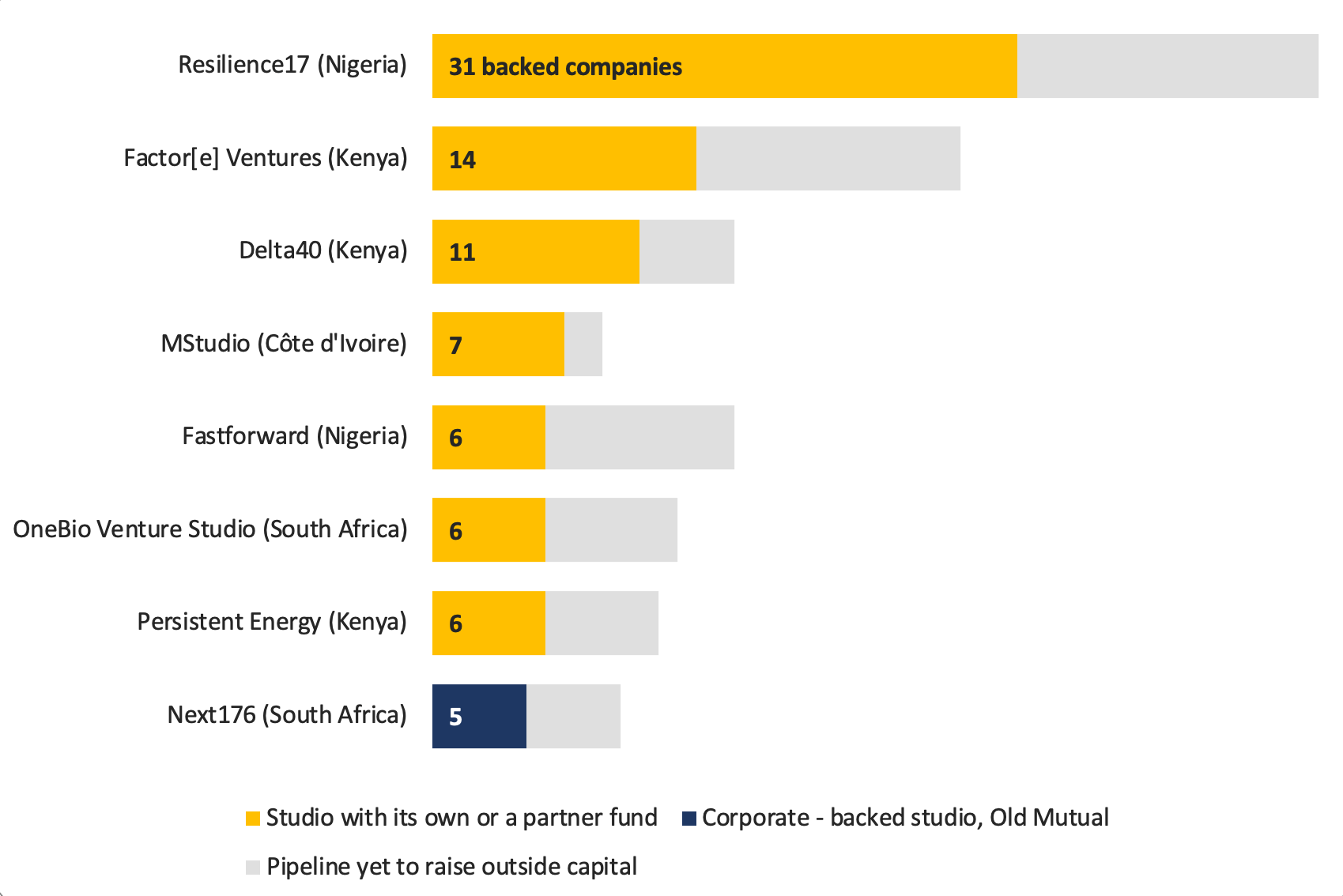
Companies that have raised from an outside investor are concentrated in a few studios: eight studios each have five or more such companies in their portfolios. Resilience17 in Nigeria, Factor[e] Ventures and Delta40 in Kenya lead, followed by MStudio, Fastforward, OneBio Venture Studio, Persistent Energy and Next176. Together they account for 81 of the 124 companies with an outside investor. Seven have capital lined up through their own fund or partner funds, and Next176 was set up with capital from its corporate parent, Old Mutual.
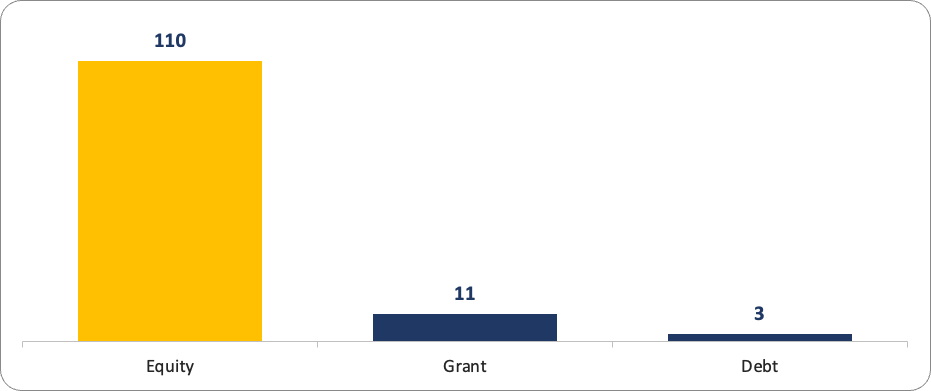
Nearly nine in ten studio companies that have raised took equity as their first outside cheque. A grant came first for around one in ten, mostly from the German development agencies GIZ and DEG, and only three companies started with debt, which tends to come at a later stage. Three in four of the 18 studio companies that have borrowed did so only after raising equity, and their loans came mostly from European impact lenders and development finance institutions such as Lendahand, Trine and British International Investment.
Debt now accounts for a fifth of studio company capital, $502 million, concentrated in energy and mobility businesses, where loans can finance physical assets. The first equity investor is therefore usually a studio company’s first outside backer, and is already on board when lenders arrive.
First external cheque of the 124 funded studio companies
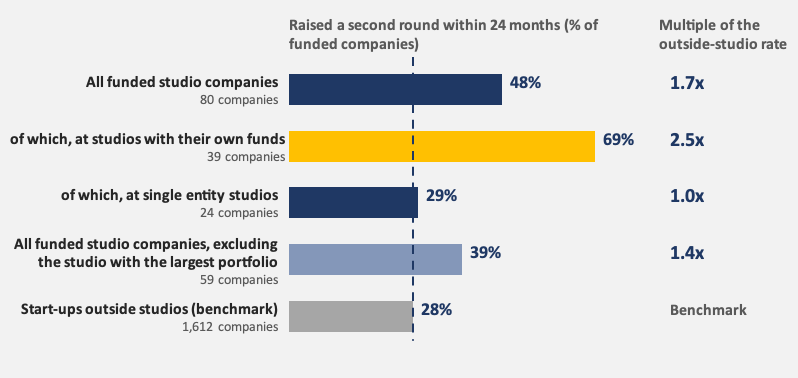
The studio model’s advantage shows after the first outside cheque. Studio companies whose first external round closed between January 2021 and September 2024 raised larger first rounds than other start-ups, at a median of $500k against $200k, and 48% raised again within two years, against 28% of other funded start-ups.
Most of that edge comes from studios that run their own fund. Their companies raised again at 69%, two and a half times the rate of outside studios, while companies at studios without their own fund raised again at about the same rate as start-ups outside studios. One studio, Resilience17, also weighs heavily on the result. It has the largest portfolio in our sample, holding 21 of the 80 companies, and most of them raised again. Without those 21, the studio rate falls to 39%, against 28% outside studios. Studios with funds may also simply back stronger companies, so the data show where the advantage sits rather than what causes it.
A funded studio company therefore has a better record of reaching its next round than other funded start-ups, most clearly where its studio can follow on.
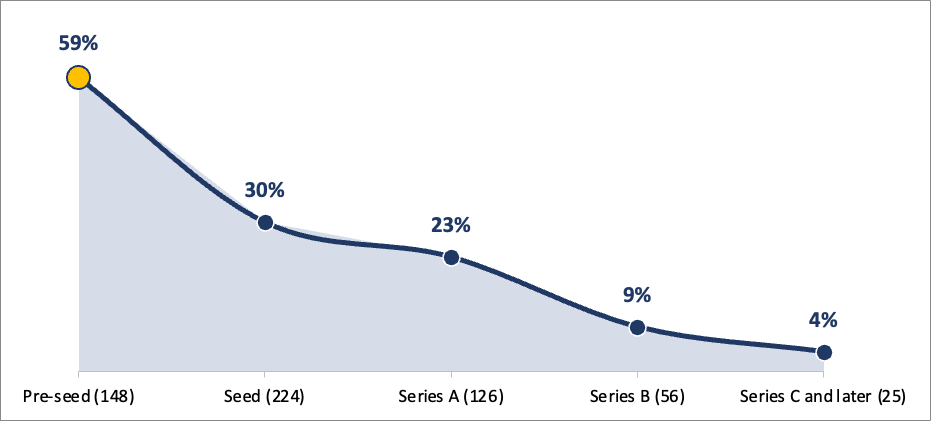
No investor has built a large position in studio first rounds yet, and none has backed more than eight. African investors fill most early seats, holding 59% of investor slots in pre-seed rounds, but their share falls to 23% at Series A and 4% at Series C and later, even though these later rounds carry the largest cheques.
Thirteen rounds at Series B and later account for $1.13 billion, 46% of all capital raised by studio companies. A studio company that clears its early rounds will most likely need investors from outside the continent to grow, while the first-cheque market stays open to any investor ready to back studio companies more than once.

Africa’s venture studios hold an investable pipeline that most first-round investors have so far backed only once. Three in four studio companies have yet to take outside capital, most sit in three markets, equity opens their funding record, and companies at studios that can co-invest reach the first cheque about three times as often as those at studios without one.
Investors seeking first-round deals could start with studios that run their own fund, where companies are three times as likely to reach an outside round, and bring a follow-on partner in early, since most later rounds include no investor from an earlier one.
In turn, studios should plan each company’s route to its first outside investor before the build starts, through their own fund, a partner fund or an agreed syndicate, since that first cheque is the step three in four of their companies have yet to take. Publishing each company’s launch year would also show investors which companies are approaching that step.
The opportunity sits at the first outside cheque, which most studio companies have yet to receive and few investors are yet competing to write.
This blog post is adapted from the African Venture Studio Report 2026: The first external cheque, which maps 68 African venture studios and the funding records of their 456 portfolio companies.
Data from Africa: The Big Deal’s deals and investors databases, January 2019 to September 2026, excluding exits. The database records rounds of $100k or more from 2021, $500k or more in 2020 and $1m or more in 2019. Studio directory and analysis by the authors. Studio companies include every company a studio lists, whether built, co-created or invested in.
Joy K. Mutunga, Dennis Nyunyuzi and Caroline W. Njuguna are fellows of the Dream VC Investor Accelerator and the authors of the report.