
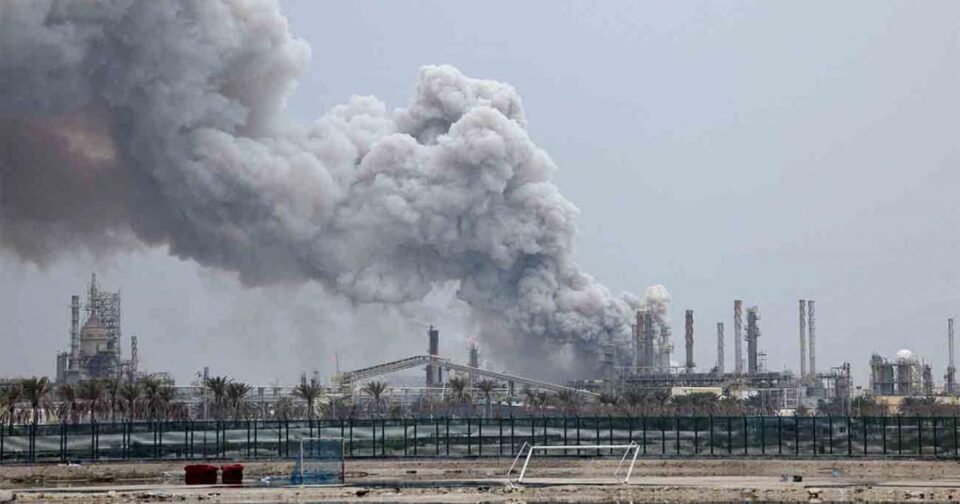
Iran has primarily targeted energy infrastructure
Between 28 February and 30 July, Iran and its backed groups in Iraq have conducted at least 172 attacks on non-military infrastructure across the six Gulf Cooperation Council (GCC) countries of Bahrain, Kuwait, Oman, Qatar, Saudi Arabia, and the United Arab Emirates (see graph below). These attacks have accounted for around 18% of all Iranian land attacks in the GCC countries; the remainder targeted military and other unspecified targets. The UAE (28%) and Kuwait (25%) have been the most exposed to these attacks, followed by Bahrain (20%) and Saudi Arabia (16%), while Qatar and Oman have recorded lower levels.
In these attacks on non-military infrastructure, Iran has primarily targeted energy facilities, including oil infrastructure, gas facilities, and power and desalination plants, which accounted for 48% of attacks. Airports and ports accounted for 27% of attacks, while industrial facilities, financial centers, data centers, and residential and commercial high-rise buildings made up 19%. Attacks targeted at governmental and diplomatic sites made up 6%.
Aside from the breadth of targets, Iran’s attacks on non-military infrastructure have also shown its ability to penetrate defenses. Over 70% of attacks on critical infrastructure caused damage to or resulted in fire at the intended target, while 25 incidents resulted in fatalities or injuries. The UAE, Kuwait, and Bahrain recorded the highest number of successful attacks, most of them targeting oil and gas infrastructure. Even limited damage has disrupted trade, energy supply, and commercial activity. As the war drags on, a decline in interceptor stockpiles has also increased the risk of successful attacks. The United States has reportedly allowed some projectiles to pass when they have not threatened US forces.
In the UAE, the most exposed country, attacks hit oil and gas facilities, transport hubs, industrial areas, and economic zones. Targets have included the Abu Dhabi National Oil Company’s (ADNOC) al-Ruways Industrial City, Jebel Ali Port, Abu Dhabi International Airport, the ADNOC Habshan gas complex, data centers, and Khalifa Economic Zones. Iran has targeted infrastructure that is central to the UAE’s role as a regional hub for investment and technology. Iran has repeatedly attacked many of these targets, which has had an impact beyond the physical damage by weakening the UAE’s image as a stable and safe country for business, investment, and transportation (see map below).

Kuwait has been heavily exposed to Iran’s attacks. Energy sites and airports were most often targeted (see map below). Among the broader targeting of energy sites, strikes were focused on oil refineries, including the Mina Abdullah and Mina al-Ahmadi refineries; oil rigs; power stations; and water desalination facilities, such as the Shuayba power and desalination plant. Some sites, especially the Shuayba plant, oil refineries, and the Kuwait International Airport, have been repeatedly hit.

In Bahrain and Saudi Arabia, attacks were mainly targeted at energy infrastructure. Bahrain also experienced attacks on airports, ports, and industrial sites, while both countries recorded attacks on government and diplomatic sites (see map below). In Bahrain, the Bahrain Petroleum Company oil refinery, Bahrain International Airport, and Khalifa Bin Salman Port were repeatedly targeted. In Saudi Arabia, repeated attacks targeted the Riyadh Diplomatic Quarter; the Saudi Arabian Oil Company (Aramco) Total Refining and Petrochemical Company refinery in al-Jubayl; the al-Jubayl Petrochemical Company; and Aramco facilities in Ras Tanura, Shaybah, and Yanbu.

Periods of military escalation and bilateral relations determine the risk of strikes on infrastructure
Iran’s targeting of infrastructure across the Gulf has varied with the intensity of the conflict. During the first phase, from 28 February to 8 April, attacks on non-military infrastructure accounted for around 19% of Iran’s retaliatory attacks on GCC countries. Attacks declined sharply when the ceasefire came into effect and when negotiations were carried out between 9 April and 17 June. During this time, exchanges between Iran and the US occurred less frequently, and Iran focused its attacks on military targets and maritime attacks in the Persian Gulf and Strait of Hormuz. Since 18 June, infrastructure targeting once again increased, accounting for around 19% of Iranian attacks during the latest exchange of hostility. This suggests that Iran views attacks on critical infrastructure as an effective tactic to pressure the US during periods of escalation, and they are likely to continue informing its military approach.
The geographic pattern of these attacks has also changed throughout these phases. During the first phase, the UAE, Kuwait, Saudi Arabia, and Bahrain faced the greatest exposure to infrastructure damage. Since the memorandum of understanding between Iran and the US was signed on 17 June, however, Iran has not targeted non-military infrastructure in the UAE, Qatar, and Oman. During this period, Kuwait and Bahrain have been the most targeted, recording 10 and seven attacks, respectively.
These shifts reflect different responses by Gulf countries to Iran during the interim period. The UAE has adopted a more conciliatory approach toward Tehran since the start of the ceasefire, including restoring flights and trade while maintaining its relations with the US and Israel. At the same time, Qatar and Oman have played the role of mediator between Iran and the US, which has reduced Tehran’s incentive to target them. By contrast, Kuwait and Bahrain have remained hostile toward Iran. Both countries carried out attacks on Iran in early July and host significant US military bases and assets.
Outlook: Where a re-escalation in conflict could hit in the Gulf
Should the conflict flare up again, Kuwait and Bahrain are likely to remain the most targeted states, though Saudi Arabia’s importance to global energy markets also makes its oil infrastructure a valuable target. The 27 July attack on Saudi Aramco’s Abqayq facility shows that critical oil infrastructure remains a prime target.
Oil and gas facilities, power plants, and water desalination plants are likely to remain key targets for Iran because disruption to these sectors can increase economic pressure on Gulf states, while disruption to global energy supplies increases prices and pressure on the US during periods of escalation. Airports and ports, including Bahrain and Kuwait international airports and Bahrain’s Khalifa Bin Salman Port, are particularly exposed. Important industrial zones will almost certainly remain at risk. Attacks on commercial airports, energy export hubs, and ports disrupt passenger and cargo traffic, trade, and energy flows, thereby increasing the economic burden on Gulf states.
Diplomatic engagement with Tehran appears to have reduced the UAE’s exposure in the short term, but that is likely to change if Iran finds itself facing heavy military attacks on its critical infrastructure. Abu Dhabi’s close relations with the US and Israel can increase its risk of attack, while the Gulf states’ major energy, trade, transport, and industrial infrastructure, including Dubai International Airport, provides Iran with high-value targets that, if attacked, can cause wider disruption should the conflict re-escalate dramatically.
Factors that could shape Iran’s decision to target non-military infrastructure
Bilateral relations: Gulf states that seek de-escalation with Tehran are likely to face lower short-term risk. Saudi Arabia is likely to follow the UAE’s approach of avoiding escalation with Tehran, as frustration with what GCC states see as weakening US security guarantees has pushed them toward a diplomatic approach. For Gulf countries, stability remains important for investment, trade, and energy. The ongoing crisis has been detrimental to these interests and has encouraged efforts at rapprochement as military solutions look increasingly unlikely to change Iran’s behavior. However, Iran’s view of the conflict with the US as a struggle for survival will limit Gulf states’ efforts at de-escalation.
Involvement in the conflict: Gulf states that support US military operations through bases and logistics, such as Kuwait and Bahrain, are likely to remain more exposed. However, any Gulf country that decides to engage in direct action against Iran is likely to face greater risk during escalation.
Target value and vulnerability: Iran is likely to target non-military infrastructure if it assesses that attacks on this infrastructure can cause great national economic disruption, have a high impact on global energy supply, and penetrate the US’ and the region’s air defenses. Iran is likely to further increase attacks during escalation periods, particularly as interceptor shortages make strikes more likely to succeed.
Table 1: Iranian strikes on non-military infrastructure across Gulf countries, by country and target type (28 February – 30 July 2026)
|
|
Energy/oil/gas facilities |
Other commercial infrastructure |
Airports and ports |
Governmental/diplomatic buildings |
Total |
% |
|
Bahrain |
8 |
15 |
10 |
1 |
34 |
20% |
|
Kuwait |
25 |
|
15 |
3 |
43 |
25% |
|
Oman |
2 |
1 |
5 |
|
8 |
5% |
|
Qatar |
8 |
2 |
1 |
|
11 |
6% |
|
Saudi Arabia |
22 |
|
|
5 |
27 |
16% |
|
United Arab Emirates |
18 |
14 |
16 |
1 |
49 |
28% |
|
Total |
83 |
32 |
47 |
10 |
172 |
|
|
% |
48% |
19% |
27% |
6% |
|
|
Table 2: Iranian non-military infrastructure strikes and overall attacks by country and war phase (28 February – 30 July 2026)
|
|
Bahrain |
Kuwait |
Oman |
Qatar |
Saudi Arabia |
UAE |
Total attacks on non-military infrastructure |
|
28 Feb. – 8 Apr. |
27 |
32 |
7 |
11 |
26 |
47 |
150 |
|
9 Apr. – 17 Jun. |
0 |
1 |
1 |
0 |
0 |
2 |
4 |
|
18 Jun. – 31 Jul. |
7 |
10 |
0 |
0 |
1 |
0 |
18 |
|
Total |
34 |
43 |
8 |
11 |
27 |
49 |
173 |
Table 3: Number and impact of strikes on non-military infrastructure (28 February – 30 July 2026)
|
Impact of strikes on non-military infrastructure |
Events that caused material damage (no injuries or fatalities) |
Events that caused material damage, as well as injuries or fatalities |
Interceptions |
No damage, injuries, or fatalities |
Total |
|
Bahrain |
21 |
2 |
11 |
|
34 |
|
Kuwait |
31 |
7 |
5 |
|
43 |
|
Oman |
4 |
3 |
1 |
|
8 |
|
Qatar |
6 |
|
5 |
|
11 |
|
Saudi Arabia |
8 |
|
18 |
1 |
27 |
|
United Arab Emirates |
27 |
13 |
9 |
|
49 |
|
Total |
97 |
25 |
49 |
|
172 |
Source: ACLED