
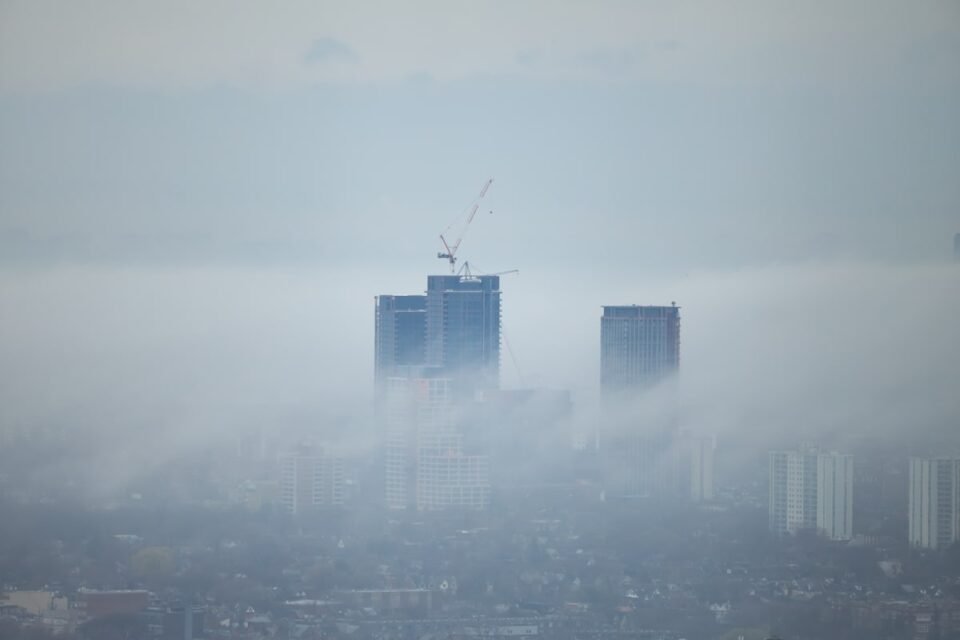
A crane atop a condo development in Toronto on April 16.Cole Burston/The Globe and Mail
The Bank of Canada said the housing downturn is a drag on the country’s economic growth and singled out the glut of small condominiums in major cities for impeding new home construction.
The central bank now expects housing to cut 0.1 percentage points from this year’s gross domestic product growth, according to its quarterly monetary policy report released on Wednesday.
That is a downgrade from its January monetary policy report when the central bank predicted that housing would add 0.2 percentage points to the country’s economic growth.
The recent decline in population along with Canadians’ affordability challenges are constraining demand and “weighing on housing activity,” said the report, which also pointed to the unseasonably cold weather for slowing down home sales over the past few months.
Activity across much of the residential real estate sector has been in a slump for years. March home sales were 20 per cent below the 10-year average and the lowest number for that month since the 2009 global financial crisis, according to the Canadian Real Estate Association.
Opinion: Why Ontario is the problem child in Canada’s housing crisis
Preconstruction home sales have also been dire, with transactions in Toronto, the country’s largest real estate market, at their lowest level in more than three decades.
Developers have had to cancel or postpone dozens of projects, which will lead to a decline in new home construction. The six-month trend in housing starts fell 2.9 per cent from February to March, according to Canada Mortgage and Housing Corp.
The central bank said residential investment is expected to be subdued over the next two years, according to the monetary policy report, and housing demand is forecast to “grow modestly,” in part owing to scant investor interest.
Investors used to account for at least 70 per cent of preconstruction condo purchases in the Toronto region.
However, investors have disappeared because so many of them have lost money. Preconstruction prices are still higher than those for resale condos, and real estate prices are no longer climbing. Many investors are burning through cash every month because they either cannot find renters or the rent is not enough to cover the cost of their monthly mortgage payments, condo fees and property taxes.
Opinion: One grand bargain to fight Canada’s housing crisis
In the first quarter of this year, a record number of 4,295 newly completed condo units were unsold in the Toronto and Hamilton region, according to Urbanation Inc. And that does not include units that developers had to take back because buyers defaulted on their purchases. As developers finish constructing buildings, thousands more unsold units are expected to flood the market over the next few years.
“A substantial inventory overhang of small condominiums in some major centres will restrain new construction,” the central bank’s monetary policy report said.
The Ontario and federal governments have announced an HST rebate on newly built homes in an effort to clear up some of the unsold inventory and kick-start homebuilding.
The policy may help whittle down some of the unsold inventory. But it likely will not bring back hordes of mom-and-pop investors, especially with U.S. tariffs and the Middle East war driving up the cost of living.
The Bank of Canada is now warning that it may have to increase its benchmark interest rate if oil prices remain elevated and they ramp up consumer prices in general. If that happens, it would make variable-rate mortgages more expensive and drive up the cost of funding for fixed-rate mortgages.