
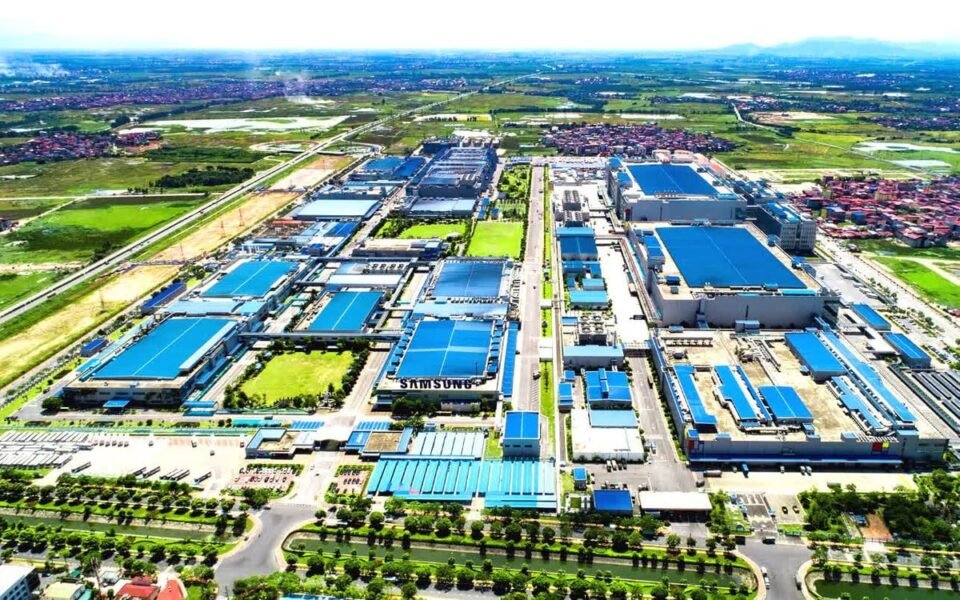
Changes to the criteria for selecting industrial zones.
The Vietnamese industrial real estate market is facing a significant shift. While previously, readily available land, favorable locations, and competitive rental costs were considered key advantages, investors are now increasingly interested in the availability of stable electricity supply, digital infrastructure connectivity, service quality, and the timely commissioning of production facilities.
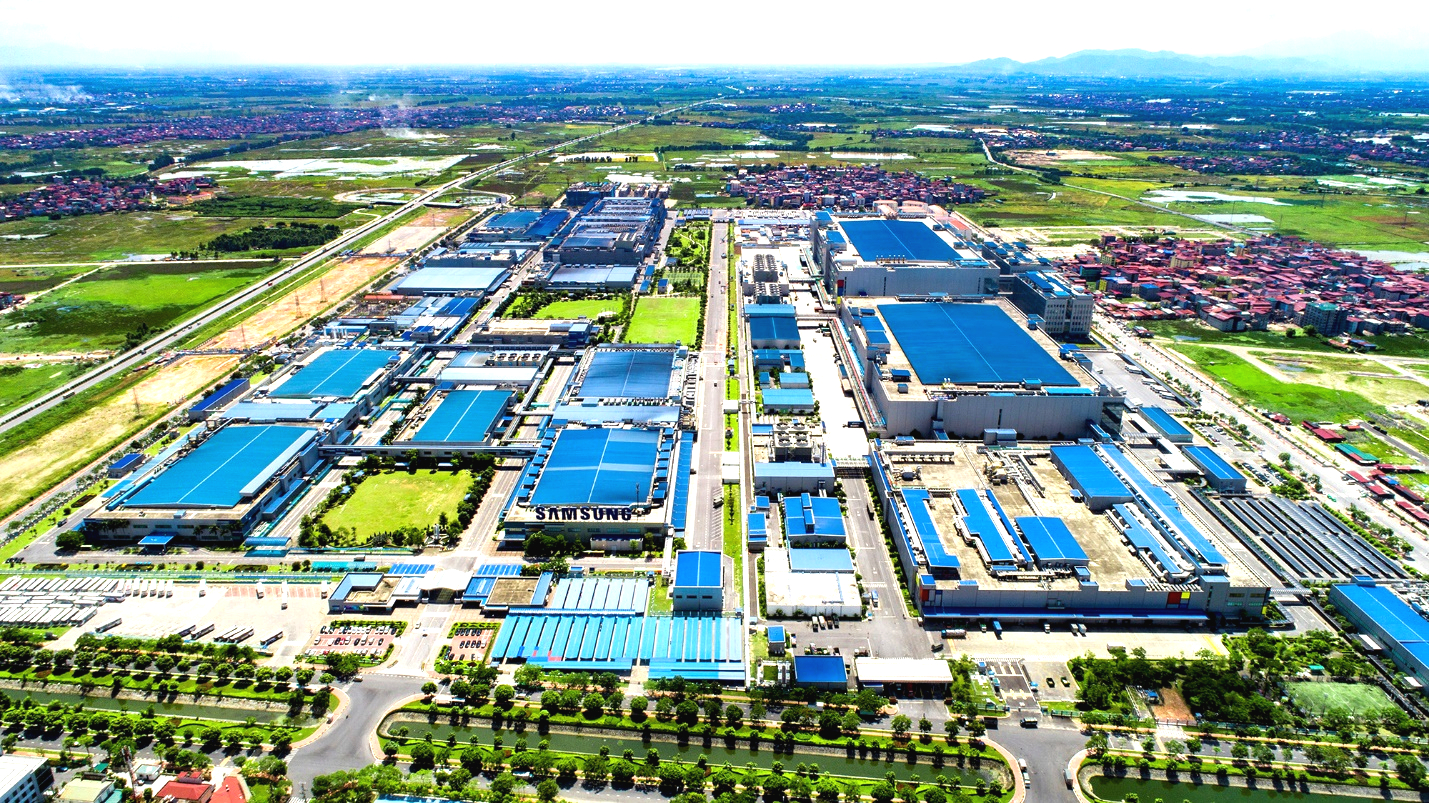
As land costs rise, competitive advantage no longer lies solely in location or rent, but increasingly depends on infrastructure quality, operational efficiency, and the ability to meet the long-term needs of businesses.
This trend is occurring against the backdrop of continued foreign investment flows into the manufacturing sector. According to a recent press release from Savills, total registered foreign investment in Vietnam in the first six months of 2026 reached US$34.65 billion, a 61% increase compared to the same period last year.
Of that total, the processing and manufacturing industry attracted approximately $18.47 billion, equivalent to more than half of the total registered FDI capital.
Notably, the number of new manufacturing projects decreased from 759 in the first six months of 2025 to 468 in the same period of 2026, while registered capital in the processing and manufacturing sector continued to increase sharply.
This development indicates a trend of capital concentration in larger-scale projects, although there is not yet enough evidence to conclude that all capital is shifting to high-tech industries.
Changes in scale and investment requirements have made industrial site selection more complex. Businesses manufacturing electronics, semiconductors, components, and precision machinery need not only land but also a reliable power supply, suitable logistics systems, skilled labor, and a supporting supplier network.
For data centers, the requirements are even more specific, as their operation depends on a continuous power supply, fiber optic connectivity, cooling systems, and redundancy to minimize disruptions.
The development of AI is driving the demand for computing power, thereby opening up new avenues for industrial real estate development, but also placing higher demands on infrastructure at each location.
According to Savills, Ho Chi Minh City has 20 operational data centers and 9 proposed projects. Meanwhile, a study by Arizton published in September 2026 estimates that revenue from colocation services in Vietnam will reach US$212 million in 2025 and could increase to US$760 million by 2031.
This is a forecast of market potential and does not mean that all projected demand will translate into actual operational projects.
John Campbell, Director and Head of Industrial Real Estate Services at Savills Vietnam, commented : “Vietnam has moved beyond its traditional role as a low-cost manufacturing destination. We are seeing increasing demand from high-tech industries, where access to infrastructure, a stable power supply, and high-quality industrial facilities are becoming increasingly important.”
According to John Campbell, site selection today requires a balance between cost competitiveness, operational efficiency, sustainability, and the ability to maintain stable operations in the long term.
This also places new demands on industrial park developers. Instead of simply developing land and then seeking tenants, businesses need to clearly identify their target industries to invest in corresponding infrastructure. A location suitable for an electronics manufacturing plant may not necessarily meet the specific requirements of a data center.
From ESG commitment to measurable operational efficiency
Besides infrastructure, sustainable development is becoming a crucial factor in the competition among industrial parks.
However, the value of green industrial real estate lies not only in building certifications or green space, but also in its ability to control energy consumption, use water efficiently, manage waste, and maintain asset performance throughout its lifecycle.
According to research by the International Facilities Management Association (IFMA), approximately 60-80% of the total lifecycle costs of a building are incurred during the operational phase. This figure shows that optimizing maintenance, resource management, and the use of performance monitoring systems are of great significance to long-term economic efficiency.
Luca Vadala, Head of Integrated Facilities Management Services at Savills Vietnam, believes that the sustainable effectiveness of a building is not only determined by its design or certification, but also depends on how it operates on a daily basis.
Through preventative maintenance, energy management, and reliable operational data, businesses can identify inefficiencies, control costs, and maintain facility performance over time.
In fact, building management systems (BMS), digital platforms, and AI applications can support monitoring electricity and water consumption, equipment status, and maintenance plans. When implemented synchronously, these tools help investors and tenants assess operational efficiency instead of relying solely on general commitments to green development.
Mr. Matthew Jackson, General Manager of LŌ-GOI Group’s Northern Vietnam region, shared: “At LŌ-GOI Yen Phong Industrial and Logistics Park, we believe that sustainable industrial and logistics development must bring tangible value to businesses operating within our facility.”
According to Matthew Jackson, the company focuses on developing modern industrial spaces that meet the operational requirements of tenants, while also integrating environmental factors into the long-term development and management process.
This case illustrates that sustainable industrial park development needs to be viewed as a holistic approach, encompassing design, infrastructure investment, and asset management after commissioning.
While energy-saving and smart management systems may increase initial investment costs, actual effectiveness should be evaluated based on lifecycle costs, resource usage levels, and tenant needs, rather than assuming that green buildings always yield higher returns.