
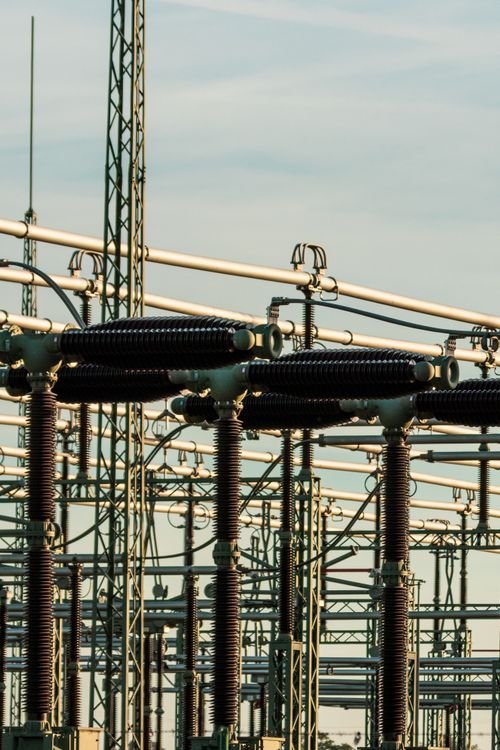
Industrial parks face rising electricity demand, but financing substations before tenants commit to power consumption can expose developers to significant financial risks.
Mexico’s industrial real estate sector faces a growing financial challenge as developers seek to expand electrical infrastructure without committing substantial capital to demand that has yet to materialize. The construction and modernization of substations have become essential for industrial parks seeking to attract manufacturers, logistics operators, and technology companies. However, developing electrical capacity ahead of confirmed tenant requirements can create significant financial exposure, particularly when infrastructure costs must be absorbed long before new facilities begin generating rental income. For chief financial officers (CFOs), the challenge is determining how to finance critical electricity infrastructure while preserving liquidity, controlling investment risks, and maintaining flexibility as industrial occupancy evolves.
According to El Financiero, the Mexican Association of Industrial Parks (AMPIP) estimates that 82 industrial parks planned between 2026 and 2030 will require approximately 2,793MW of additional electricity capacity. These developments represent around 18 million square meters of industrial space and more than US$5.6 billion in projected investment. The figures highlight the scale of electricity demand associated with Mexico’s industrial expansion, but they do not establish that all the projected capacity has already been contracted by future occupants.
For developers, this distinction is critical. Installing equipment based on projected industrial demand may position a property to attract major tenants, but it can also immobilize capital in assets that remain underutilized for several years. Conversely, delaying electrical infrastructure until every tenant has signed a lease may weaken a project’s competitiveness, particularly when manufacturers require certainty regarding power availability before committing to a new location. Balancing these competing requirements has become a central consideration in industrial infrastructure financing.
Phased Investments Reduce Exposure to Uncontracted Demand
One approach is to structure substation investments in phases, linking capital expenditures to confirmed electricity requirements rather than long-term market projections alone. Under this model, developers can initially finance engineering studies, land requirements, permits, and essential connection infrastructure while postponing additional transformers or other expandable equipment until demand reaches predefined thresholds.
For example, an industrial park designed to accommodate 30MW of eventual demand might initially secure commercial commitments representing only 12MW. Rather than financing the full projected electrical capacity immediately, the developer could evaluate a first-stage installation aligned with committed requirements and prepare for subsequent expansion when additional tenants are secured. This example is illustrative; actual equipment sizes, connection arrangements, and expansion stages depend on technical studies and approval by the relevant electricity authorities.
A phased strategy can reduce the amount of capital exposed to uncertain occupancy while preserving the possibility of future expansion. However, delaying equipment purchases may increase procurement costs or create longer lead times. Financial planning must therefore compare the cost of installing capacity early against the risk of construction delays, equipment price increases, and lost leasing opportunities.
This approach is particularly relevant in industrial markets such as Nuevo Leon, Coahuila, Guanajuato, Queretaro, and the State of Mexico, where manufacturing and logistics investments can require considerable electricity infrastructure. Demand projections should distinguish between preliminary tenant inquiries, signed leasing agreements, contracted electricity requirements, and operational consumption rather than treating all potential demand as equally certain.
Shared Investment Models Offer Alternative Financing
Mexico’s electricity framework provides mechanisms for eligible users to contribute to infrastructure necessary for grid connections. Under the Electricity Sector Law published in March 2025, electricity users and connection applicants may, under applicable conditions, finance required infrastructure works individually or jointly, or make contributions to the transmission or distribution provider.
The Electricity Sector Law Regulations published in October 2025 establish provisions concerning financial contributions for specific infrastructure works, expansions, and modifications. These provisions allow different contribution arrangements, subject to technical feasibility, applicable calculation methodologies, and regulatory procedures. Where infrastructure exceeds an applicant’s specific requirements, the rules generally limit its contribution to the proportion attributable to its connection needs, subject to the prescribed methodology.
For industrial developers, the provisions create opportunities to evaluate shared-cost arrangements involving several electricity users. Nevertheless, private contributions do not automatically grant developers ownership or operating rights over public distribution infrastructure. Transmission and distribution remain strategic activities reserved for the Mexican state, making coordination with CFE and the relevant authorities essential.
A shared financing arrangement could distribute approved infrastructure costs among participating industrial occupants according to their connection requirements. Developers might also negotiate contractual mechanisms to recover eligible infrastructure expenditures through tenant contributions or occupancy-related payments. Such arrangements would depend on project-specific legal agreements and should not be assumed to provide automatic regulatory reimbursement.
Contractual Commitments Strengthen Financial Viability
For CFOs, the financial viability of substation expansion depends on the quality of the commitments supporting the investment. Letters of intent and preliminary leasing negotiations may indicate commercial interest, but they do not provide the same financial certainty as enforceable agreements with identified electricity requirements and occupancy schedules.
Developers can seek tenant-funded infrastructure contributions, deposits, guarantees, or contractually agreed payments to reduce exposure before proceeding with capital-intensive works. These mechanisms may be particularly important when accommodating electricity-intensive manufacturers or facilities requiring specialized transformers, dedicated feeders, or higher levels of service reliability.
Financing agreements can also establish milestones linking investment disbursements to technical approvals, signed tenant commitments, equipment procurement, and construction progress. Such arrangements help prevent the premature deployment of capital while allowing projects to advance when their commercial fundamentals become stronger.
Banks and institutional lenders may evaluate these projects based on contracted occupancy, the creditworthiness of participating tenants, expected cash flows, construction risks, and the enforceability of cost-recovery agreements. In the absence of sufficient contractual commitments, developers may need to rely more heavily on equity, corporate credit facilities, or financing supported by other income-producing assets.
An important distinction is that electricity infrastructure does not necessarily generate an independent revenue stream. Where an asset becomes part of the regulated distribution system, financing cannot automatically be structured around privately collecting electricity network charges. The financial return may instead arise indirectly through higher occupancy, improved property competitiveness, tenant contributions, or stronger long-term rental income.
CFE Expansion Creates Opportunities and Constraints
The investment challenge is developing alongside Mexico’s broader electricity modernization program. According to the German-Mexican Chamber of Industry and Commerce, CFE’s 2026–2030 Development Program contemplates approximately MX$51.8 billion for electricity distribution infrastructure, including 97 new substations and the expansion of 95 existing facilities.
The program also considers mixed-investment mechanisms and other financing instruments across CFE’s broader portfolio. However, financing structures applicable to electricity generation should not be assumed to apply automatically to distribution projects, which operate under different regulatory conditions.
For industrial park developers, coordination with CFE’s network expansion plans can help identify where public infrastructure improvements may reduce the need for private contributions. Projects located near planned substations or distribution upgrades could benefit from improved connection conditions, although capacity availability and timing must be confirmed through formal technical procedures.
Developers should also distinguish between having physical infrastructure nearby and obtaining approval to connect a specified electrical load. A nearby substation does not necessarily guarantee sufficient available capacity, nor does an investment agreement automatically secure electricity supply.
Financial Discipline Will Determine Expansion Strategies
As industrial developments become more electricity-intensive, financial departments will need to incorporate infrastructure planning into broader investment decisions. Relevant indicators include committed electricity demand, capital expenditure per MW, connection costs, projected occupancy, financing expenses, implementation schedules, and the financial consequences of unused capacity.
Scenario analysis can help compare gradual expansion against immediate construction, taking into account delayed tenant arrivals, higher equipment costs, and additional grid requirements. Developers may also establish internal investment thresholds requiring contractual commitments or creditworthy guarantees before approving subsequent construction phases.
The objective is not simply to minimize initial spending, but to ensure that electrical infrastructure investment supports realistic commercial demand without compromising project liquidity. In markets where electricity availability influences industrial site selection, developers must balance the advantages of early infrastructure preparation against the financial risks of overinvestment.
Mexico’s growing industrial electricity requirements will continue creating opportunities for engineering firms, equipment suppliers, infrastructure financiers, and real estate developers. The projects most capable of sustaining expansion will be those that coordinate technical planning, tenant commitments, and financing structures from the earliest development stages. For CFOs, the central priority is ensuring that every additional investment in substation capacity is supported by a credible path toward utilization and financial recovery.