
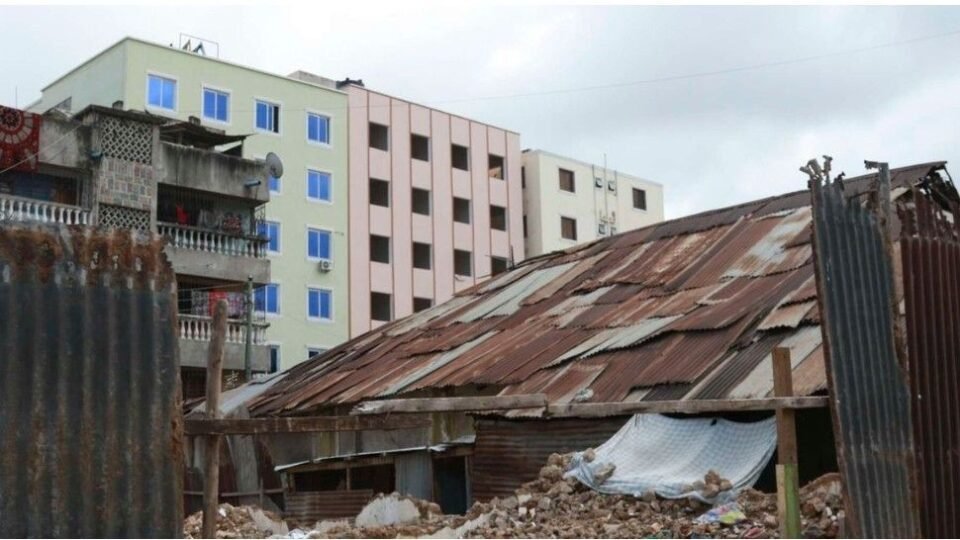

Modern apartment blocks under construction in Majengo, Mombasa, as traditional Swahili-style homes are gradually being replaced by newer buildings..
Population growth and urban land demand are reshaping neighbourhoods once defined by courtyard homes along the coast.
Mombasa’s traditional Swahili homes are becoming less common as modern apartments and high-rise buildings continue to change the city’s skyline. The shift is especially visible in areas where demand for housing and commercial space has increased.
Swahili houses have long formed an important part of Mombasa’s built environment. Many of the older homes were designed around courtyards, narrow entrances and shaded spaces that helped residents cope with the coastal climate.
The houses also reflected the history and culture of communities that have lived along the Kenyan coast for generations. Their designs incorporated features such as carved wooden doors, decorated walls, verandas and inner courtyards.
However, population growth and increasing demand for urban land have changed the way property is developed in parts of Mombasa. Land that once contained single-storey or low-rise homes can now accommodate multi-storey residential and commercial buildings.
Developers are responding to the need for more housing within limited urban space. High-rise apartments can accommodate many families on a smaller piece of land, while commercial buildings provide space for shops, offices and other businesses.
The change has also affected the appearance of neighbourhoods that once had a more traditional coastal character. In some areas, older homes are being renovated, replaced or surrounded by newer structures that have different architectural designs.
For residents and property owners, the redevelopment of old neighbourhoods can bring practical benefits. New buildings can provide modern facilities, additional accommodation and business opportunities, while improved roads, drainage and other services may accompany development.
At the same time, the disappearance of traditional homes raises questions about the preservation of Mombasa’s architectural heritage. Some historic buildings have cultural value beyond their use as residential properties and can provide a link to the city’s past.
Conservation efforts have therefore become important in areas with significant Swahili architecture. Maintaining selected traditional buildings while allowing suitable modern development could help preserve the character of the coastal city as its population and economic activities continue to grow.
Mombasa’s changing skyline reflects the pressure facing many growing cities. The challenge is finding space for new homes and businesses while protecting buildings and architectural features that tell the story of the city and its Swahili heritage.
Reach Kenya’s construction industry.
Get your brand in front of contractors, architects, engineers & developers.