
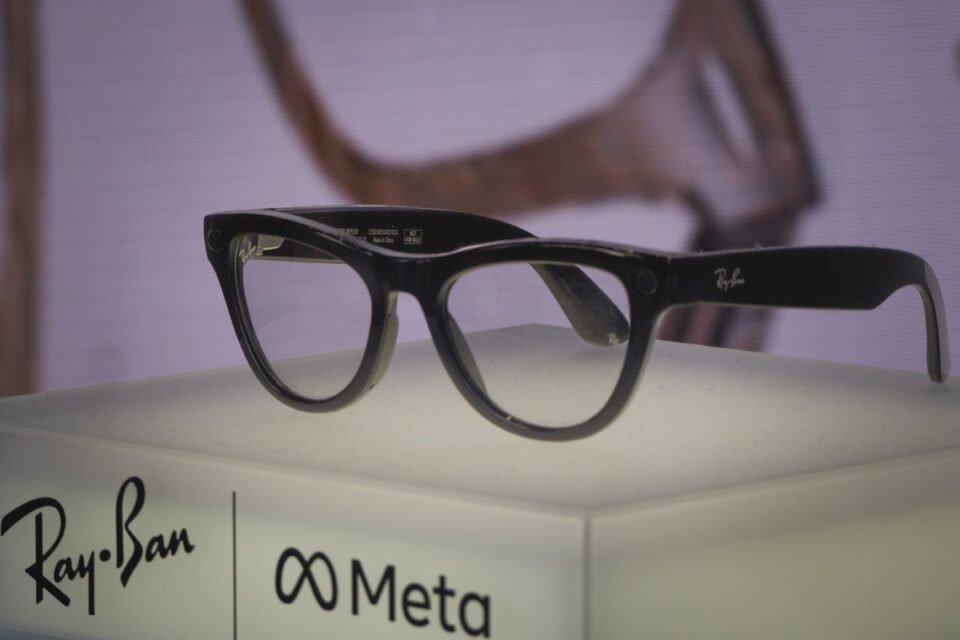
The smart glasses market got crowded this year, and it is getting more crowded by the month. Meta just launched a new in-house line of AI glasses starting at $299, including a display-equipped Ray-Ban model around $799. This is not a fringe gadget anymore: Meta sold more than 7 million smart glasses in 2025, roughly tripling the year before, and by one estimate now holds around 80 percent of the AI glasses market. Google and Samsung are bringing their own Android XR glasses to market this fall, built with the eyewear brands Warby Parker and Gentle Monster. And below the giants sits a fast-growing layer of independents: Lucyd, which makes audio smart safety glasses, and Mentra, which builds an open-source operating system and hardware for developers, with more arriving constantly.
For commercial real estate, that flood of hardware should read as a signal, not noise. Because for all of these devices hitting the market, almost no one outside a few heavy industries has built the actual use cases. The frames are here. The software that would make them genuinely useful inside a building is not. The obvious first move is front-of-house, a leasing broker livestreaming a point-of-view walkthrough to a remote prospect, but that is the use everyone reaches for first. The deeper, unbuilt ROI is in operations.
Enterprise wearables are not speculative. For the better part of a decade, frontline technicians in energy, manufacturing, and logistics have worn assisted-reality headsets from RealWear and Vuzix to do three things, all hands-free: connect to a remote expert who sees what they see and guides a repair in real time, follow digital work instructions in their line of sight, and capture photos and notes as the work happens. The results are documented. When Boeing put smart glasses on its wire-harness technicians, it cut production time by 25 percent and drove error rates to near zero. The hardware that delivers this, rugged devices like the Vuzix M400 with a 4K camera and voice control, runs around $1,500 a unit and up, with RealWear’s Navigator line a few thousand dollars apiece.
PROPMODO PARTNER OFFER

Master Commercial Property Tax Automation with Cotality
See Cotality’s Commercial Tax Portal dynamic dashboard, which features near real-time refund status, automated calls to action, and streamlined user management.
Introducing the All-New Commercial Tax Portal
Those devices proved the model, but they are expensive, single-purpose, and locked to their own software, which kept them on refinery decks and factory floors rather than in the built environment. The new wave changes that on both cost and flexibility. Meta’s AI glasses start at $299, and its Ray-Ban Display, while not full augmented reality, puts a heads-up display in the wearer’s line of sight, exactly what a hands-free work order or the next step of a procedure needs. Lucyd’s ANSI Z87.1 safety glasses run about $149 with no camera, just open-ear audio, a push-to-talk channel, and an AI assistant. And Mentra Live, around $299, runs an open-source SDK so developers can build and deploy custom apps across multiple brands of glasses. The barrier is no longer the hardware or its price. It is whether anyone builds the workflows.
Picture what that looks like in a property portfolio. Building operations have a labor problem that AI for leasing does nothing to solve. The engineers and superintendents who keep mechanical systems running are aging out, and their hard-won knowledge of how a building behaves walks out the door with them. Meanwhile, every hour a critical system is down, whether a chiller in July, an elevator bank, or a failed pump, is an hour of tenant complaints, emergency vendor costs, and renewal risk that hits NOI directly. The real ROI comes from equipping engineers with smart eyewear to slash maintenance downtime, streamline compliance checks, and enable hands-free operating procedures.
One of the first ways that smart glasses will likely be used in property manage is the ability to instantly acces expert assistance. A second-year engineer is sent to a rooftop unit they have never serviced. Instead of calling for a truck roll or pulling a senior engineer off another property, they open a live session, a specialist watches the feed, points to the right valve, and talks them through it. The fix happens on the first visit. Porsche has used the same see-what-I-see support to cut remote diagnosis time by 40 percent. In a portfolio, that means one senior engineer covers several buildings in an afternoon without leaving the desk, and the institutional knowledge gets transferred instead of lost.
The second use case for smart glasses is compliance. Fire and life-safety inspections, preventive maintenance rounds, unit turnovers, and a growing stack of local mandates from New York’s Local Law 97 to Boston’s BERDO all require proof that work was done correctly. A wearable turns each into a timestamped, location-tagged visual record that syncs straight to the work-order or maintenance-management platform. Instead of a checkbox and a signature, an owner gets a verifiable audit trail across the entire portfolio, and the engineer never breaks stride to fill out a form.
The third benefit of smart glasses is hands-free opperations. Instead of balancing a binder or a tablet, the engineer follows the procedure in their line of sight, both hands on the equipment. For an owner running many buildings, the same SOP can be pushed to every property, and the platform can confirm it was actually executed the same way at each one. Operational consistency, almost impossible to enforce across a scattered portfolio, becomes observable.
None of these are off-the-shelf products you can buy today for real estate. They are applications waiting to be built, and that is the point. With open platforms like Mentra, an owner or its technology partner can build SOPs and even fully custom applications tuned to its own buildings, and integrate them with the systems it already runs, from a Building Engines or Yardi operations platform to the building management system and the CMMS. The hardware is finally cheap and varied enough that this is a pilot a single property can run, not a six-figure commitment.
There are real risks to adopting smart glasses that are worth taking seriously. A camera worn by staff inside tenant suites, residential units, and shared amenity spaces raises legitimate questions about consent and surveillance, and getting it wrong is a fast path to tenant distrust and liability. The answer is to design around restraint. Footage used to guide a repair or confirm a task should be processed in the moment and discarded, not quietly retained and pooled into a permanent archive. Recording indicators should be visible, and rules about where and when the glasses are active should be explicit and shared with tenants. For the large share of operational work that needs hands-free communication and audio guidance but not video, camera-free safety glasses like Lucyd’s satisfy the PPE requirement and sidestep the privacy question entirely, because there is nothing to record. Where a camera is genuinely needed, the rugged headsets are built to be worn with hard hats and safety eyewear, and standard safety glasses fit over the lighter consumer frames.
The temptation in any technology cycle is to spend on what is visible to the customer, which in real estate means leasing tools and tenant-facing apps. But the durable, compounding returns come from the parts of the business no tenant ever sees. The hardware is arriving faster than anyone is building the software to use it, and in property management almost no one has built it at all. The owners and operators who build and integrate these workflows now, while the field is wide open, will not just have a flashier app. They will define how the category works, and run tighter, safer, more consistent buildings.