
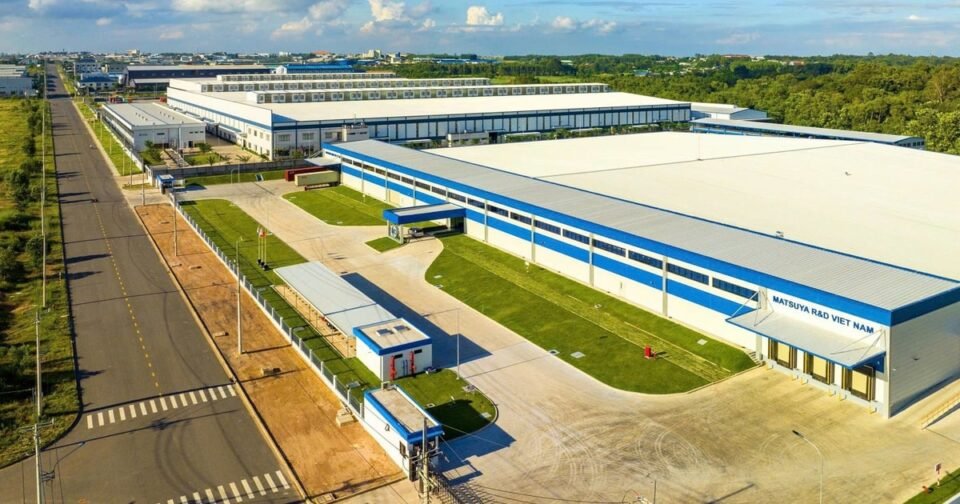
High-quality FDI is “flowing into” industrial real estate.
Industrial real estate is entering one of its most remarkable growth cycles in recent years. Foreign direct investment (FDI) continues to flow into Vietnam, particularly in manufacturing, electronics, technology, semiconductors, and other high value-added sectors. According to the General Statistics Office, realized FDI in the first eight months of 2026 is estimated at US$17.25 billion, a 12% increase year-on-year, the highest figure for the first eight months of the past five years. Of this, the processing and manufacturing industry continues to play a leading role with US$14.24 billion, accounting for 82.6% of the total. Notably, the North attracted approximately US$8.63 billion in FDI for manufacturing, accounting for 80.5% of the total new FDI for manufacturing nationwide. The computer, electronics, and optical products sector alone led with over US$7.03 billion, equivalent to nearly 66% of the total.
This influx of capital is creating more room for industrial real estate, amidst the ” China +1″ strategy continuing to drive the restructuring of supply chains. For years, China has been considered the “world’s factory,” with a significant advantage in medium and low-cost manufacturing segments. However, its economy is gradually shifting towards higher technology and value-added processes. Meanwhile, Southeast Asian economies, including Vietnam, still handle a substantial portion of manufacturing, processing, assembly, and raw material supply.
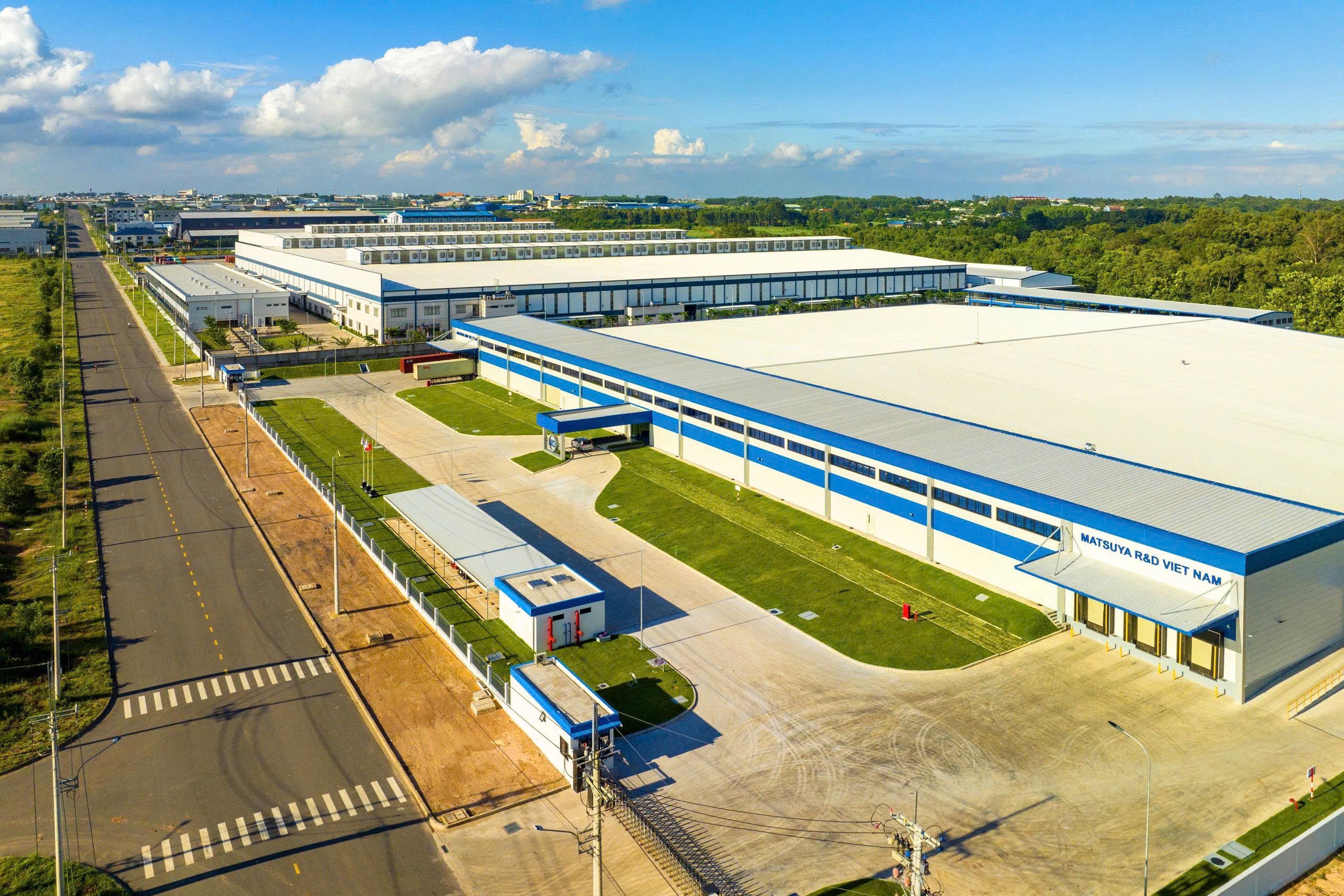
Industrial real estate is a bright spot in attracting FDI.
Global economic volatility is driving multinational corporations to redesign their supply chains to diversify risk, increase regionalization, and reduce dependence on a single market. While North America and Europe are accelerating industrialization, bringing some manufacturing closer to consumer markets, Asia is strengthening intra-regional linkages and redistributing roles among economies. In this context, global corporations are no longer applying a single production model to all markets. Apple, Nike, Coca-Cola, and others have expanded part of their manufacturing operations from China to other markets such as India, Vietnam, and Malaysia .
According to Truong Bui, an economic expert and partner at the global strategic consulting firm Roland Berger, China is shifting from its position as the “world’s factory” to a more sophisticated ecosystem within its value chain. This shift opens up significant opportunities for Vietnam, especially as Vietnam is considered one of the destinations benefiting from the trend of relocating supply chains away from China.
Prefabricated factories and warehouses are becoming popular.
Besides increasing demand for industrial land, the new wave of FDI is also bringing about changes in tenant demand. Dr. Tran Viet Anh, General Director of SCCI, said that a notable trend is the rapid development of ready-built factories. This reflects a change in how international investors calculate costs. “For them, the time it takes to get a factory up and running is increasingly becoming a very significant expense. A business that already has orders, a supply chain, and global customers will not want to spend several more years just to find land, go through procedures, and build a factory. They are willing to pay for speed and certainty,” Dr. Viet Anh analyzed.
According to Mr. Tran Viet Anh, therefore, industrial real estate in the coming period cannot just sell “square meters of land” but must also sell time. A factory that helps customers shorten the time to get their plant up and running by 6-12 months can create enormous value. Behind a factory is not just the production area. It’s an entire ecosystem including construction, factory buildings, warehouses, logistics, transportation, industrial catering, housing for workers and experts, machinery maintenance, energy, environmental treatment, software, security, finance, along with a series of suppliers of raw materials, components and services.
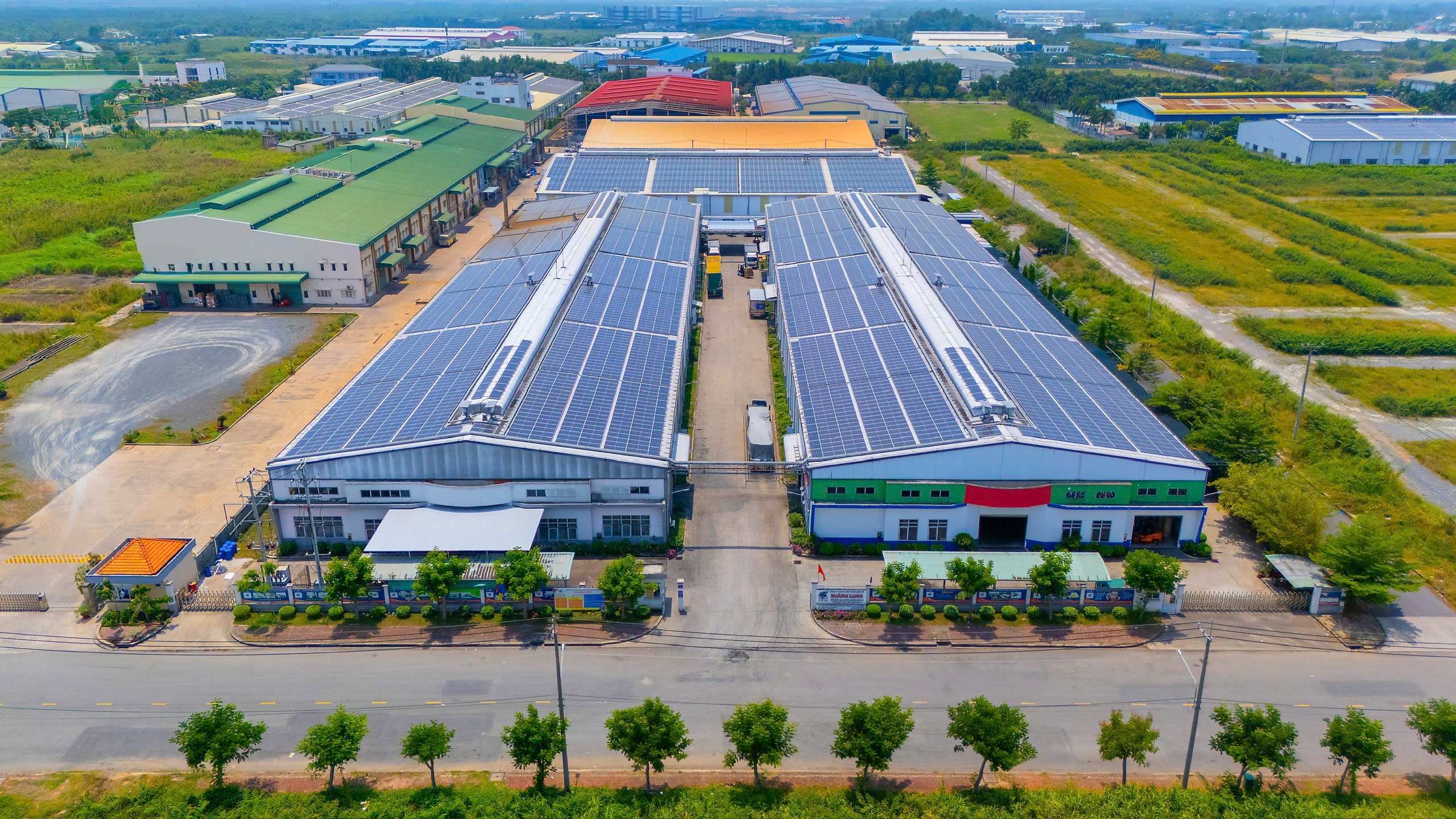
Industrial real estate is a bright spot in attracting FDI.
Mr. Truong Gia Bao, Vice Chairman of the Vietnam Industrial Real Estate Association (VIREA), also agreed, noting that the most noteworthy trend currently lies in the ready-built factory and warehouse segment. The supply of ready-built factories reached approximately 6.85 million m², with an occupancy rate of around 92%, and an average rental price of US$4.9/m²/month. Ready-built warehouses totaled approximately 6.6 million m², with an occupancy rate of 91.6%, and an average rental price of US$4.6/m²/month. The fact that both segments have occupancy rates exceeding 90%, significantly higher than industrial land with an average rate of around 76.3%, indicates that businesses are increasingly prioritizing models that can be put into operation quickly, flexibly, and with reduced initial investment pressure. The tenant structure is also changing. Besides traditional manufacturing industries, there is increasing demand for high technology, electronics, supporting industries, logistics, and high value-added sectors. Investors are also paying more attention to infrastructure quality, connectivity, energy sources, the environment, and ESG standards.
Mr. Nguyen Phuoc Thuan, Director of Industrial and Office Leasing at Cushman & Wakefield Vietnam, noted that modern, multi-story factories and warehouses are becoming a suitable option for efficiently utilizing increasingly limited land resources. This type of factory is suitable for industries such as electronics, semiconductors, medical equipment, and R&D, while multi-story warehouses meet the needs of logistics, e-commerce, and cold storage in areas near consumer centers or transportation hubs. In the long term, the development of multi-story factories and warehouses will not only solve the land shortage problem but also contribute to improving the quality of industrial real estate supply.
Industrial zones are not just for leasing land.
Along with the changing tenant demographics, the industrial park development model is also facing the need for transformation. Mr. Truong Gia Bao stated that industrial parks are trending from a multi-sector model to a specialized, ecological, and smart model. Investors cannot simply develop infrastructure and lease land; they must build a complete production ecosystem, encompassing logistics, energy, technology, environment, and support services. “The orientation of industrial real estate in the South is not just about providing production space, but about providing the capacity for businesses to operate efficiently right within the industrial park,” Mr. Truong Gia Bao said.
According to Mr. Truong Gia Bao, this transformation process has begun but is not yet uniform. Some investors have invested in wastewater treatment systems, clean energy, digital infrastructure, and smart operating solutions. However, there is still a gap in readiness among industrial parks. High initial investment costs and long payback periods mean that the transformation process cannot be solely a matter for individual businesses. VIREA recommends the early establishment of criteria and mechanisms for recognizing eco-industrial parks, promoting direct electricity trading mechanisms, expanding access to green credit, and removing obstacles related to planning and investment procedures.
Dr. Tran Viet Anh believes the bigger issue lies in the value that Vietnamese businesses can retain from the FDI wave. If Vietnamese businesses only lease land, while foreign companies develop factories, handle logistics, import technology and equipment, and primarily supply first and second-tier suppliers, then Vietnam may attract a lot of FDI, but the value retained by domestic businesses will remain limited. Therefore, Vietnamese businesses need to shift from “landowners” to “developers of industrial ecosystems.” New-generation industrial park developers should not only own land and build basic infrastructure, but also be able to provide a complete ecosystem including industrial land, ready-built factories, custom-built factories, warehousing, logistics, energy, digital infrastructure, environmental treatment, investment support services, and amenities for workers and experts. Further afield, this includes eco-industrial parks, smart industrial parks, and specialized industrial clusters. At that point, the business is no longer simply selling a real estate product, but is selling a platform for other businesses to manufacture and operate.
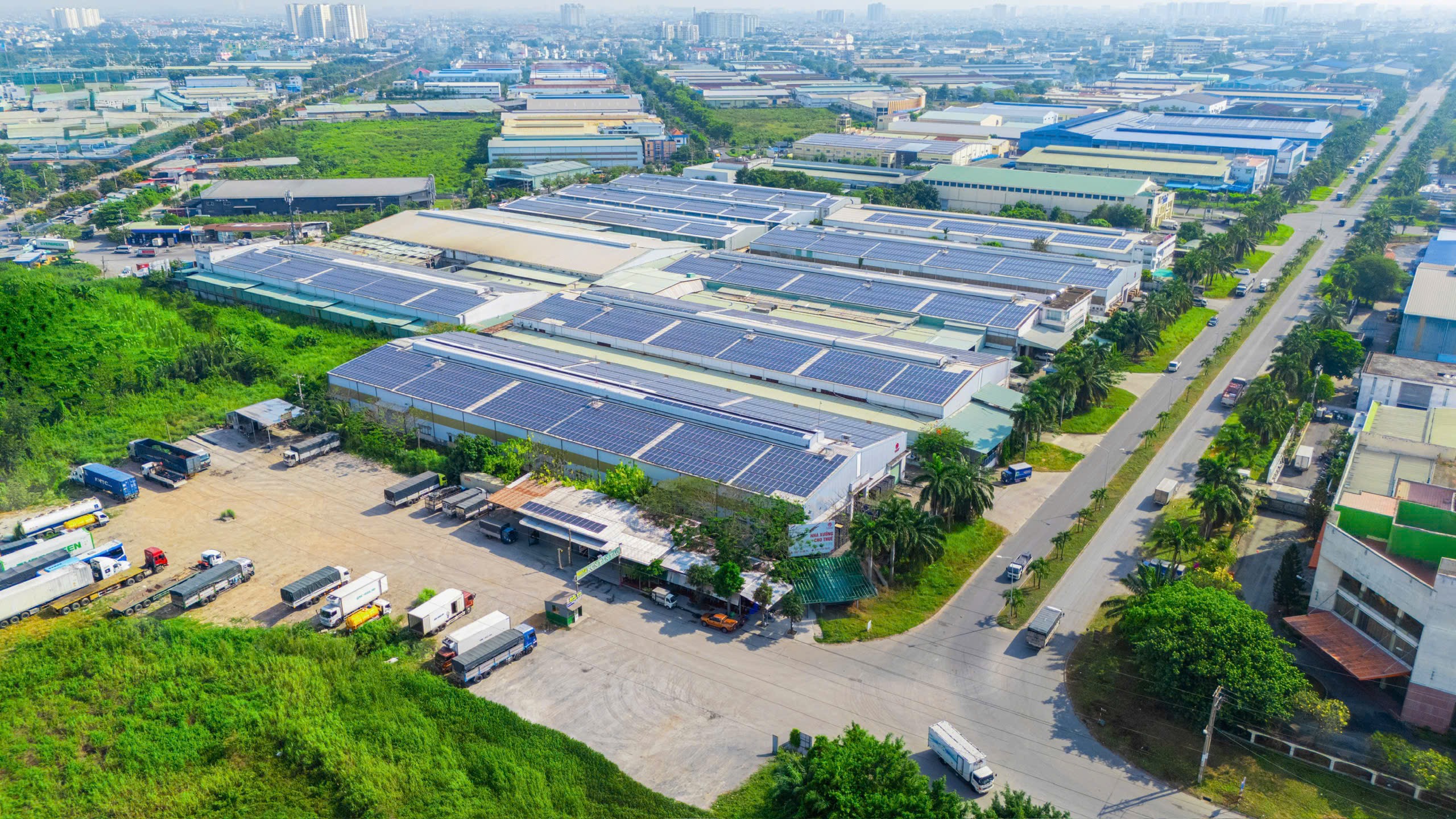
Industrial real estate is a bright spot in attracting FDI.
“The growth in FDI is creating a major impetus for industrial real estate, while strengthening Vietnam’s role in the global supply chain. Previously, Vietnam’s advantages were primarily seen in labor costs, land availability, and geographical location. Now, the appeal is gradually shifting to its ability to provide an industrial ecosystem that meets the increasingly high demands of multinational corporations, from infrastructure, transportation, and energy to environmental standards and service quality,” Dr. Tran Viet Anh commented.
In Ho Chi Minh City, Mr. Le Van Thinh, Deputy Head of the Management Board of Export Processing Zones and Industrial Parks of Ho Chi Minh City, said that after the restructuring process, the city not only expanded in scale but also faced the need to reorganize industrial space to suit the new development phase. In the first nine months of the year, although the number of newly approved FDI projects decreased compared to the same period last year, the capital scale of newly approved projects increased sharply. This shows that capital flows are tending to concentrate on large-scale projects with strong financial capacity and high technological content. An example is the AI Data Center project in Tan Phu Trung Industrial Park with a total investment of 2.1 billion USD.
Mr. Le Van Thinh acknowledged that this shift also poses new demands on investment attraction efforts. The goal is not only to attract large-scale projects but also to select projects that align with the new industrial development orientation, possessing high technological content, innovation, research and development, digital transformation , green transformation, and the ability to create linkages with domestic businesses. In other words, the value of FDI flows lies not only in the registered capital. More importantly, it’s about the technology, knowledge, management capacity, and new value chains that accompany that capital.
When these conditions are prepared in a coordinated manner, export processing zones and industrial parks will not only be places to receive FDI projects but can also become platforms for forming new production ecosystems, increasing linkages with domestic businesses and improving the quality of investment capital flows. Because the ultimate goal is not just to bring FDI into Vietnamese industrial parks, but to integrate Vietnamese businesses into the value chain of FDI. This is the way for the booming industrial real estate market to create greater spillover value for the economy.
Resolution No. 10-NQ/TW of the Politburo requires a shift from attracting investment based on administrative boundaries to attracting investment based on industry clusters, value chains, and innovation ecosystems. The goal is to have approximately 10,000 domestic enterprises participating in the supply chains of foreign-invested enterprises, including around 500 to 1,000 Tier 1 suppliers. Therefore, the measure of an industrial park’s success is not just the number of hectares leased, but also the number of Vietnamese engineers working within it, the number of Vietnamese suppliers selling their goods there, and the percentage of electricity generated from green energy.