
In the real estate landscape of 2026, the traditional “billboard” approach to social media has officially become obsolete. Gone are the days when an agent could post a high-gloss photo of a kitchen, tag it with #JustListed, and expect a flood of qualified leads. The digital marketplace has matured into a sophisticated ecosystem where transparency, education, and community-building are the primary currencies of trade.
As we navigate this mid-decade shift, the “silent shift” in real estate marketing is no longer about visibility-it is about utility. For the modern educator-agent, social media is no longer a megaphone; it is a classroom and a networking lounge. To succeed this year, professionals must pivot from being “broadcasters” to being “connectors.”
1. The Rise of the Micro-Community: Instagram’s “Private” Pivot
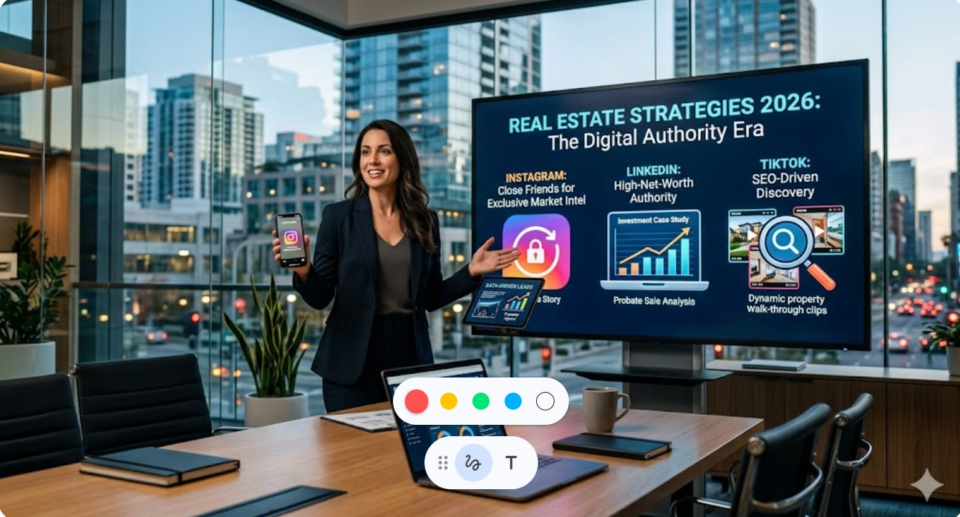
Instagram remains a powerhouse, but its utility for agents has shifted from the public grid to private, high-value circles. In 2026, the algorithm heavily prioritizes “Close Friends” and “Direct Message” interactions over public feed scrolling.
The Educational Strategy: Top-performing agents are using the “Close Friends” feature to curate educational hubs for specific niches. Instead of shouting into the void, they create lists of first-time homebuyers or seasoned investors. Within these circles, they share:
- Real-time market volatility reports.
- “Behind-the-curtain” looks at home inspections.
- Advanced tutorials on navigating current mortgage interest rates.
By gatekeeping this high-value information, agents create a sense of scarcity and professional exclusivity. This isn’t about hiding secrets; it’s about providing a focused curriculum to those who are most ready to learn and act.
2. LinkedIn: The Professional Knowledge Exchange
For years, residential agents treated LinkedIn like a digital resume-a place to park a headshot and forget about it. In 2026, however, LinkedIn has emerged as the premier platform for “Local Market Authority.” As the lines between residential and commercial investment blur, high-net-worth individuals are looking for data-driven professionals.
The Educational Strategy: The “Case Study” format is the most effective tool here. Instead of posting about an award you won, write a detailed breakdown of a complex transaction.
- The Problem: A property with significant title issues or probate complications.
- The Process: The specific steps taken to mediate between parties and legal entities.
- The Result: A successful closing and a lesson learned for the community.
This approach educates peers and potential clients simultaneously, positioning you as an expert who solves problems rather than just a salesperson who opens doors.
3. TikTok and YouTube Shorts: The Search Engine Revolution
In 2026, the younger demographic of investors and homebuyers is bypassing traditional search engines. They are searching for “how to buy a multi-family home” or “property taxes in [City]” directly on TikTok. This shift toward Search-Optimized Video is the biggest educational opportunity of the decade.
The Educational Strategy: Authenticity is the prerequisite for trust. Polished, cinematic videos often feel like “ads,” which users are trained to skip. Instead, the 2026 agent uses raw, educational content:
- The “One-Minute Masterclass”: Explain a single term, like “Escrow” or “Appraisal Gap,” while walking through a real property.
- The Reality Check: Show the unglamorous side of real estate-failed inspections or the paperwork mountain.
- The Local Guide: Reviewing neighborhood schools, commute times, and local zoning laws.
By answering the specific questions your audience is typing into the search bar, you become the primary educator in their home-buying journey.
The Data-Driven Backbone: Filtering Noise from Opportunity
A significant challenge in 2026 is the sheer volume of digital “noise.” An agent may receive dozens of comments and direct messages, but without a strategy to verify intent, social media becomes a time-sink rather than a tool.
The most successful agents are pairing their social presence with robust Data Intelligence Systems. They use advanced property data tools-independent of the social platforms-to verify ownership records, motivation signals (such as pre-foreclosure markers), and equity positions.
The strategy is simple: Use social media to build the relationship, but use professional data to prioritize your time. When you know a lead is not just “curious” but actually has the “motivation” to sell (based on public records and market data), your educational outreach becomes a targeted solution rather than a random guess.
Implementing the 3-2-2 Consistency Rule
To avoid the burnout common in digital marketing, agents should follow a structured weekly curriculum:
- 3 Days of Content Creation: Focus on one deep-dive educational post (LinkedIn), one visual walkthrough (TikTok), and one community-focused update (Instagram).
- 2 Days of Active Engagement: This involves responding to inquiries with voice notes or personalized videos. In an AI-heavy world, the human voice is a premium asset.
- 2 Days of Data Mining: Use professional property databases to research the leads generated through your content. This ensures that when you follow up, you are armed with facts.
The Verdict for 2026
Success in the “Education” category of real estate media requires a departure from vanity metrics. Thousands of “likes” from people outside your geographic area do not pay the bills. In 2026, the goal is to be meaningfully famous to a few hundred people in your specific market.
By focusing on high-intent platforms, utilizing verified property data to filter your leads, and maintaining a commitment to teaching rather than selling, you build a resilient brand. In an era where algorithms change weekly, the “authority” you build through education is the only asset that cannot be de-platformed.