
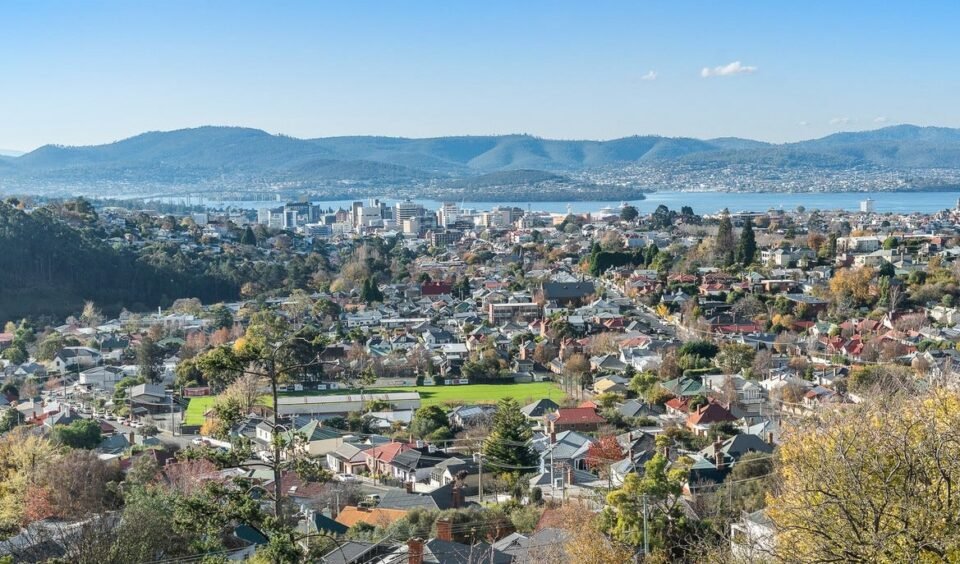
Home buyers are showing a little caution in this underrated capital city thanks to higher interest rates, but local agents say buyers are pouncing on homes that are correctly priced, sparking bidding wars and pushing sale prices well above expectations.
After staging a quiet turnaround, home values in Hobart returned to an all-time record high in May, surpassing the previous peak reached in February 2022.
Rising interest rates and budget jitters have caused some of that momentum to pull back, agents say, resulting in a property market that feels steady and more balanced, giving buyers a greater chance to get onto the property ladder.
But they noted homes that are correctly priced, especially affordable properties, are still attracting solid buyer demand and multiple offers during the typically quieter winter period.
Jump ahead to see the Hobart suburbs with the fastest annual price growth.
Hobart’s median home price increased 9.4% to $732,000 in June compared to a year ago, and was 16.5% higher than five years ago, according to the latest PropTrack Home Price Index.
Nationally, home price growth has been softening since the Reserve Bank started hiking interest rates this year, cutting borrowing power and dampening market confidence.

Hobart’s median home price increased 9.4% to $732,000 in June compared to a year ago. Picture: Getty
Harry Coomer, real estate agent and director at Peterswald, said home prices in Hobart have remained fairly consistent, with quality homes standing out to buyers.
“We listed new properties last week and multiple ones sold within the week for above the asking price because the demand is still there,” Mr Coomer said.
“We saw properties sell for $50,000 to $60,000 above expectations on multiple homes.”
It comes as the number of homes for sale in Tasmania’s capital has decreased, with 1.2% fewer new listings in May than a year ago, and the total number of homes for sale 21.6% lower than a year ago.
Fastest growing suburbs in Hobart – houses
| Suburb | City | Median sale price | Annual median price change |
| Austins Ferry | Hobart | $738,000 | 23.0% |
| Bridgewater | Hobart | $511,000 | 21.7% |
| Midway Point | Hobart | $735,000 | 19.5% |
| Chigwell | Hobart | $590,000 | 18.6% |
| Rosetta | Hobart | $733,000 | 18.2% |
| Mornington | Hobart | $704,000 | 17.5% |
| New Norfolk | Hobart | $541,000 | 17.0% |
| Seven Mile Beach | Hobart | $1,285,000 | 16.8% |
| Risdon Vale | Hobart | $535,000 | 16.3% |
| Glenorchy | Hobart | $650,000 | 14.7% |
Elders Real Estate agent Abi Freeman said Hobart’s market was currently steady, with a more balanced dynamic between buyers and sellers compared to previous peak periods.
“Buyer enquiry remains consistent, particularly for well-presented and appropriately priced properties, however purchasers are taking more time and being more selective,” Ms Freeman said.
“This is resulting in slightly longer days on market in some segments, while quality homes continue to attract strong interest and competitive outcomes.”
This three-bedroom house in Austins Ferry sold for $865,000 in July. Austins Ferry had the fastest growing house prices in Hobart for the year to June. Picture: realestate.com.au/sold
Many property investors have retreated from the real estate market nationwide since the federal government overhauled negative gearing and the capital gains tax discount in its May budget.
Jake Towns, real estate agent and director at Petrusma Property – Howrah, said property investor numbers had dropped in Hobart since the May budget.
“We were on a trajectory where vendors could probably be a little bit cheeky and still get lucky, but that’s not the case anymore,” Mr Towns said.
“We still have investors, but they’re not doing the big deals, they’re focusing on more affordable stock where they’re less concerned by some of these changes.”
Fastest growing suburbs in Hobart – units
| Suburb | City | Median sale price | Annual median price change |
| West Hobart | Hobart | $705,000 | 20.5% |
| Lindisfarne | Hobart | $648,000 | 16.1% |
| South Hobart | Hobart | $622,000 | 13.1% |
| West Moonah | Hobart | $548,500 | 13.1% |
| Glenorchy | Hobart | $511,000 | 12.9% |
| Moonah | Hobart | $485,000 | 7.0% |
| Kingston | Hobart | $660,000 | 6.9% |
| Claremont | Hobart | $512,000 | 6.2% |
| Howrah | Hobart | $652,000 | 4.2% |
| Warrane | Hobart | $567,500 | 4.1% |
While the federal government argues the negative gearing and CGT changes are aimed at helping first-home buyers get into the market sooner, Mr Towns said the changes were actually making it harder for first-time buyers.
“First-home buyers can’t afford established areas… so they’ve been pushed to the fringes, where developers have been putting up bulk affordable housing,” he said.
“It’s where first-home buyers were doing really well and getting a foot in the market, but now investors have piled into those same areas.”
This two-bedroom villa in West Hobart sold for $710,000 last month. West Hobart had the fastest growing unit prices in Hobart for the year to June. Picture: realestate.com.au/sold
Looking ahead, Ms Freeman expects conditions to remain relatively stable during the winter months.
“Activity may soften slightly due to seasonal factors, but limited housing supply should continue to underpin property values,” Ms Freeman said.
“Buyer confidence is gradually improving, and assuming interest rates remain steady, we would expect a lift in activity and momentum as we move towards the spring market.”
But Mr Coomer said there might be more in store for Hobart, which tended to follow what happens in markets such as Sydney and Melbourne.
“I’d probably err on the conservative side and say we’re hovering at a balancing point,” he said.
“My hope is that we can maintain that for 12 months, but the stronger downturn in Sydney and Melbourne makes me think we might have some questions asked of us in the future.”