
Time to read [12 minutes]
-
Incorporation by reference lets laws quietly adopt outside documents (often private rulebooks) as binding law without presenting their actual text.
-
It’s used to incorporate MLS rules, USPAP, and technical codes, creating obligations that are often hard to find or understand.
-
This builds in “hidden” or paywalled rules, driving up compliance costs and legal uncertainty, and exposing practitioners and consumers to enforcement based on standards they may never fully see.
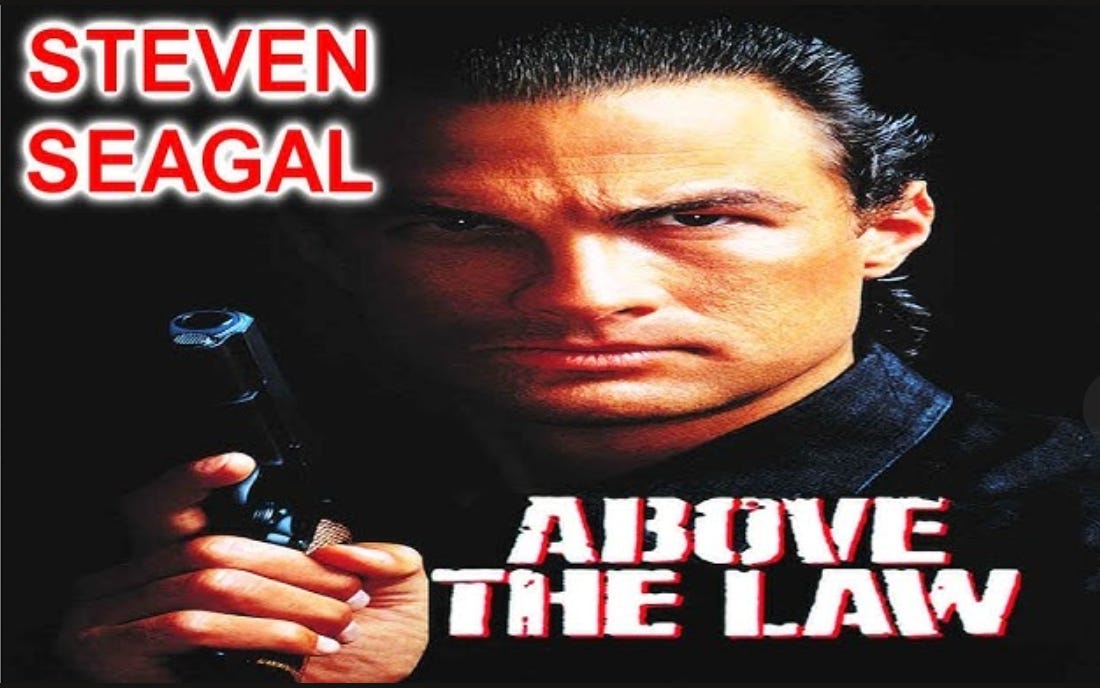
I went full wonk today as my longest post ever that I’m pretty passionate about today’s “Incorporation by Reference” topic, so I felt I had to go down the Steven Seagal “B” movie title rabbit hole to sustain your interest…plus, I have the stats.
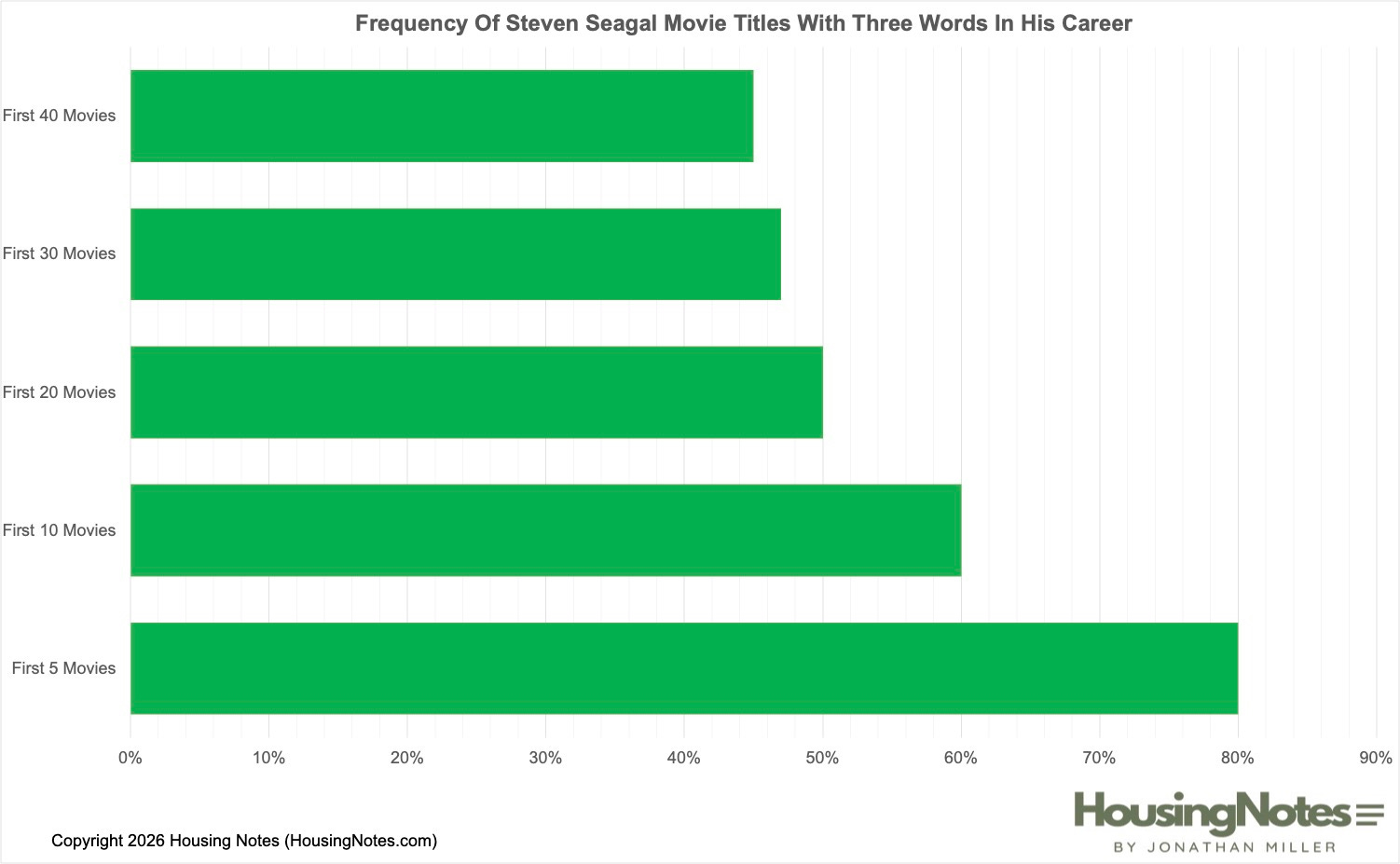
The deadly 3-word phrase “incorporation by reference” sounds like a Steven Seagal “B”- movie title at his peak, before he became a cartoon character. So before I get into it, I need to digress into movie titles. Seagal’s 3-word movie titles comprised 80% of his first 5 movies, 60% of his first ten movies, 50% of his first 20 movies, 47% of his first 30 movies, and 45% of all his 40 movies. Even though his top 3 grossing movies were not 3-word titles and most of his later movies were direct-to-video, I see a pattern here, so let’s not get bogged down in technicalities. I contend their quality deteriorated as he moved away from the early 3-word title formula, and we should definitely move away from “incorporation by reference.” Here are all his 3-word movie titles:
-
Above The Law
-
Hard to Kill
-
Marked For Death
-
On Deadly Ground
-
The Glimmer Man
-
Fire Down Below
-
Half Past Dead
-
Out of Reach
-
Into The Sun
-
Today You Die
-
Mercenary for Justice
-
Flight of Fury
-
Driven To Kill
-
A Dangerous Man
-
Against The Dark
-
Force of Execution
-
The Asian Connection
-
Sniper: Special Ops
But I digress…
“Incorporation by reference” is when the government says “follow those outside rules” instead of printing the rules within the law itself, so outside rules effectively become legally binding without ever appearing in the statute or regulation. I believe this is dangerous to the real estate profession because it allows powerful actors within a profession, such as regulators, trade groups, and private entities, to impose complex, often paywalled or undisclosed rules without putting the actual text into the law. This raises legal risks and costs for real estate professionals because it shifts control over “what the law really says” to private organizations and lawyers, and makes it harder for both real estate professionals and consumers to understand the rules that are supposed to be followed.
State real estate regulations sometimes incorporate other documents, like advertising standards, professional codes, or external statutes that bind licensees, while brokers’ listing agreements often pull in MLS rules, office policies, or standard addenda by reference instead of attaching everything, and regulatory bodies and municipalities may incorporate building codes or technical standards into their rules, which in turn define what brokers can or must disclose.
Incorporation by reference is risky because it can add extra rules and duties to an agent or broker without them or the client really seeing or understanding them. If those hidden rules are broken, it can lead to lawsuits, commission fights, or disciplinary action by regulators, and courts may refuse to enforce unclear or hard‑to‑find terms. The more this occurs, and the occurrence is rising, the higher the risk to the professional.
Since I spent one year as a real estate agent and 40 years an appraiser, I’ll relate incorporation by reference to my appraisal industry experience but the same principles apply to other real estate industries.
The Appraisal Foundation (TAF), the long-time bureaucracy that I’ve spilled a lot of ink over on the damage they have caused to my appraisal industry, is the keeper of the USPAP certification wording. Its language is the basis of our appraisal certifications, and their ecosystem is based on the concept of “incorporation by reference.” This means they can make a rule, and it becomes enforceable as law in each of the 50 state governments and 5 territories by pointing to USPAP in the law, even if the public has to pay to read it.
The real problem here is that, TAF often flip-flops the content for USPAP largely to generate revenue by updating and selling more USPAP books. Here’s an example:
In the early 2000s, the Appraiser Qualifications Board (AQB) – part of TAF – moved toward requiring a bachelor’s degree, with full college‑degree mandates for Certified Residential and Certified General appraisers adopted in 2004 and implemented in 2008. The idea was to professionalize the field after the housing bubble problems that cast a shadow on appraisers (largely because their largest trade group, The Appraisal Institute, did literally nothing to stand up for the profession) and critics often follow the path of least resistence. The new policy promised quality through higher formal education, especially for work used in federally related transactions, without any evidence that this was the problem.
Over time, those college degree requirements worsened appraiser shortages and did not correlate with better appraisal performance. As I mentioned, that’s because unqualified individuals, mostly appraisers preferred by executive leadership at TAF, made the college requirement decision, not using any formal study or analysis to understand the impact of the change. Then, in 2018, the AQB relaxed the degree mandate for Certified Residential, and by late 2025, TAF even proposed eliminating the college‑degree requirement altogether for certain certifications. That hasn’t happened yet, but if it does, just imagine all the people who pursued college degrees in hopes of getting state appraisal certification when USPAP was updated, only to find out later, with several hundred thousand dollars in student loan debt, that the rule is on the verge of being rescinded by the same unqualified people who brought in the requirement? In other words, USPAP changes frequently,, and those changes, no matter how dumb or short-sighted, become the law of the land without real debate in each state legislature.
The Appraisal Foundation’s latest USPAP book is $179.99, and if you have money burning a hole in your pocket and lack the ability to think critically, you might ask yourself, “whats the big deal?” But what about this situation, as described in the Third Order Substack that writes about regulatory issues:
The Boiler and Pressure Vessel Code, which is 19,808 pages long, describes modern standards used in the safe design, manufacture, inspection, testing and maintenance of boiler and pressure vessels, power-producing machines and nuclear power plant components. If prevailing price is any indicator, then it must be a useful set of standards, because it costs about $20,000 to purchase. In fact, if these standards were free to all, they’d arguably be a public good.
I learned the following thought process from my Dad: exaggerate a scenario to make your point. If a solution doesn’t work at the extremes, it probably isn’t a long-term solution, hence The Boiler and Pressure Vessel Code.
When those rulebooks are private and paywalled, it means people can be both governed and punished under standards they will never see (unless they buy them), a practice critics describe as a form of “secret law.” This probably gives industry leaders the thought that they don’t have to follow the law, like actually following the US Constitution.
And the Appraisal Institute, my industry’s largest trade group, still remains out of touch with the industry it serves. As evidence, this is what Scott DiBiasio, Director of Government Relations for the Chicago-based Appraisal Institute, said about the South Carolina situation (presented in the next section):
State appraiser regulatory programs exist to protect the public trust and operate pursuant to statutory and administrative processes that have been developed and refined over many years. Respondents are entitled to challenge disciplinary actions and raise concerns regarding procedure, due process or the application of professional standards.
If we strip it down, Scott DiBiasio is essentially saying that state regulatory systems are mature, legitimate, and functioning as intended, and NCLA’s challenge just proves that due process is available to appraisers. He frames the controversy as evidence that the system is working, not that something might be fundamentally wrong with how appraisers are investigated, charged, or disciplined. To someone stuck in a silo like he is, his misunderstanding of the damage to “public trust” that the Appraisal Institute has caused is somehow twisted into proof of fairness. To someone inside their policy silo, a constitutional challenge in South Carolina is only an example of due process in action, not a red flag. That’s absolutely wrong. Remember, the Appraisal Institute, as the industry’s largest trade group, doesn’t see itself as a protector of appraisers, as evidenced by its decades of inaction. That’s why its membership is down 74% since 1991.
In reality, working appraisers often see state boards as slow, inconsistent, and, at times, captured by lenders, appraisal management companies, or political interests, with appraisers bearing all the downside risk and very little protection when complaints are frivolous or retaliatory. In the case explained below in South Carolina, a state appraisal board failed to follow due process, as guaranteed by the US Constitution.
The current USPAP wording doesn’t appear in South Carolina law but sits behind a private entity’s paywall, which is why what is happening there is so scary for real estate professionals.
The two issues that are seen occurring in South Carolina can be summarized as:
-
Incorporation by reference allows rules by private institution to become law without vetting by qualified experts, which leads to:
-
This lack of transparency lets these boards “forget” about due process.
I gave my friend and colleague in California, Jeremy Bagott, an appraiser, author, and writer about my industry, a nickname after the release of his book, Dispatches from the Cosmic Cobra Breeding Farm, which is critical of the broken appraisal industry governance structure. Jeremy comments on the Appraisal Institute’s anti-appraiser position taken by DiBiasio, who I mentioned earlier, who sees New Civil Liberties Alliance (NCLA) assertions as part of a successful regulatory system. Jeremy says:
It’s like calling open-heart surgery “a minor adjustment to circulation.”:
Brilliant!
Jeremy gave me his approval to share his press release on the South Carolina incident – even if you’re not an appraiser, it is a fascinating read:
*** FOR IMMEDIATE RELEASE ***
PUBLIC-INTEREST LAW FIRM FILES MOTION CHALLENGING ROGUE APPRAISAL REGULATOR
VENTURA, Calif. (May 29, 2026) – Imagine a profession in which practitioners are hired to render independent opinions regarding the value of property. Now imagine the state appointing those practitioners’ competitors as regulators and contract investigators. If an appraiser’s conclusions conflict with the regulators’ views, those same regulators may impose fines or revoke the appraiser’s license altogether. And when one appraiser reviews another appraiser’s work, the state may ultimately end up issuing an opinion about an appraiser’s opinion of another appraiser’s opinion. Welcome to the bureaucratic theater of appraiser licensing.
One particularly abusive board of appraisal regulators in the Palmetto State has now attracted the attention of a national nonpartisan civil rights organization based in Arlington, Virginia.
The New Civil Liberties Alliance (NCLA) has filed an opening brief in Kirton v. South Carolina Department of Labor before the South Carolina Administrative Law Court. The brief challenges what NCLA describes as unlawful and arbitrary actions taken by the South Carolina Real Estate Appraisers Board against certified residential appraiser Joseph Kirton.
The sanctions stem from an appraisal Kirton performed in 2021 — more than four years before the board held a disciplinary hearing. After years of unexplained delays, the board prosecuted him in a juryless, in-house administrative proceeding before the same agency body that had authorized the charges against him.
The NCLA found the regulator had sanctioned Kirton under a continually changing set of appraisal standards that it had not legally adopted at the time he performed the appraisal at issue. Those standards were not enacted by South Carolina’s Legislature — or even promulgated by a government body — but by a private organization known as theAppraisal Foundation. It wields, says NCLA, unconstitutionally delegated power to write binding rules regulating citizens of South Carolina.
The New Civil Liberties Alliance is asking the Administrative Law Court to reverse the board’s Final Order, vacate the sanctions, and reaffirm that South Carolina agencies must obey the Constitution when they seek to punish the people they regulate.
The rogue board’s Final Order also relied in part on a theory that was never charged, never investigated as a basis for discipline, and appeared nowhere in the formal complaint, surfacing for the first time during questioning at the disciplinary hearing itself.
Scott DiBiasio, Director of Government Relations for the Chicago-based Appraisal Institute, a professional organization for appraisers, believes NCLA’s legal challenge is evidence the system is working.
“State appraiser regulatory programs exist to protect the public trust and operate pursuant to statutory and administrative processes that have been developed and refined over many years. Respondents are entitled to challenge disciplinary actions and raise concerns regarding procedure, due process or the application of professional standards.”
Jonathan J. Miller, co-founder of the New York-based real estate appraisal and consulting firm Miller Samuel, isn’t so sure, He is critical of groups like the Appraisal Institute for failing to provide advocacy to the professionals they claim to represent. He said he is heartened by NCLA’s legal challenge, calling the South Carolina board “power-hungry” and “lawless.”
Casey Norman, Litigation Counsel for NCLA, believes the Kirton case drives home the importance of due process and fundamental constitutional rights, including the right to a jury.
“These protections are not courtesies that agencies may extend when convenient and disregard when expedient,” said Norman. “They are nonnegotiable, constitutional requirements. Mr. Kirton has had the misfortune of experiencing firsthand what happens when the Administrative State treats those requirements as optional.”
Russ Ryan, Senior Litigation Counsel for NCLA, points out that the South Carolina Constitution honors the sanctity of due process and jury trials every bit as much as the federal constitution does.
“In our constitutional republic, neither state nor federal officials can punish citizens without first proving their accusations to a jury of peers,” said Ryan.
The New Civil Liberties Alliance is a 501(c)(3) nonprofit public interest law firm. Founded in 2017 by Columbia Law School professor Philip Hamburger, it operates on a pro bono basis to defend constitutional civil liberties from what it views as the overreach of the “administrative state.”
Its core legal initiatives include challenging government agencies that operate outside the scope of their statutory authority by exercising unconstitutional legislative and judicial powers; defending due process and the right to trial by jury; defending individuals against administrative controls, licensing, and restrictions that the NCLA argues limit free inquiry and publication; and opposing doctrines (such as the former Chevron deference) that compel courts to defer to administrative agencies’ interpretations of the law.
# # #
Become my Patron! My name is Jeremy Bagott. I’m a licensed real estate appraiser, author, and former newspaper editor. I investigate the shadowy intersection where federal guarantees, sponsorships, and grants meet private enterprise — a space rife with self-dealing, cronyism, and taxpayer exploitation. Each week, I expose corruption and abuse in the federally backed housing sector — stories often ignored by mainstream media. I don’t hide my reporting behind paywalls or offer exclusive content, but this work requires time, independence, and resources. I rely solely on readers who believe truth-telling still matters. If you’d like to support this effort, please consider supporting me on Patreon here (patreon.com/jeremy_bagott). I accept no support above $5.00/month from any patron.
Incorporation by reference lets states quietly make private, paywalled rulebooks (like USPAP, MLS rules, and technical codes) operate as binding law without sharing the actual text, which means appraisers and agents are regulated and punished under standards they often can’t easily see or afford, while a small, unaccountable set of institutions (TAF, state boards, large trade groups) repeatedly change those standards, sometimes for revenue or political reasons rather than to maintain the public trust, creating whiplash on issues like education requirements, inflating compliance costs, and enabling due‑process abuses that even Steven Seagal can’t beat.
The Actual Final Thought – Inflated grades are another form of inflation (NSFW) we are grappling with.

Join leading industry experts on Tuesday, June 16, at 3:00 pm at The Greenwich for a timely conversation on the trends reshaping New York City’s residential real estate market.

My Housing Notes column also appears several times a week over at The Real Deal!
