
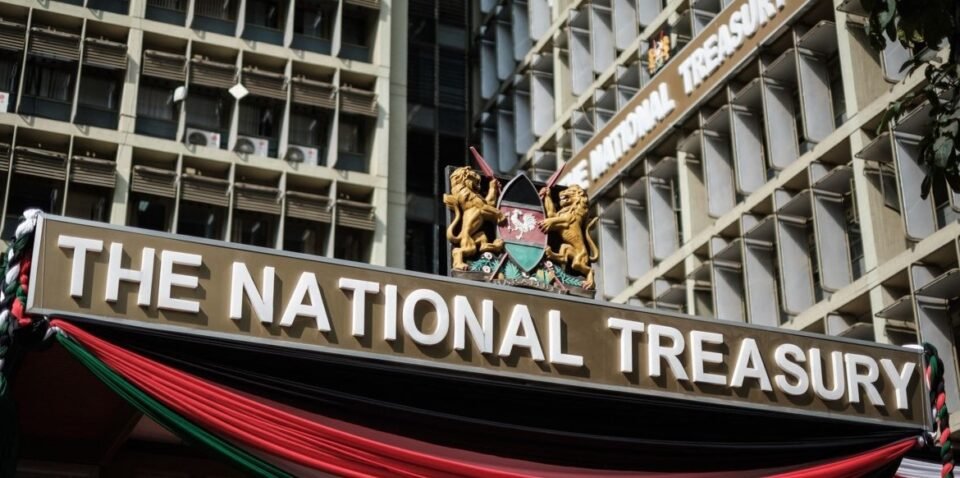
Counties will be integrated into the Treasury Single Account framework from the 2026/27 financial year as the National Treasury moves to tighten control of public funds.
The Treasury Single Account consolidates government funds held in multiple accounts, allowing the Treasury to have better visibility over cash balances and payments.
The reforms are aimed at improving cash management, enhancing transparency and strengthening oversight of public resources. They also target thousands of unauthorised county bank accounts that auditors have warned are being used outside public finance laws, creating loopholes for the misuse of public funds.
The move follows concerns raised by the Office of the Auditor General and the Controller of Budget over more than 5,476 undeclared county bank accounts operating outside the established financial management framework.
Auditors have warned that such accounts bypass financial controls, make it difficult to track expenditure and increase the risk of public funds being misappropriated.
Treasury Cabinet Secretary John Mbadi said the Treasury will first automate county exchequer requisition processes before gradually migrating counties to the Treasury Single Account system already being used by the national government.
“Building on this momentum, the government will operationalise, in collaboration with the Central Bank of Kenya, a granular data integration system to deliver real-time visibility of counties’ cash and liquidity positions,” he said.
Mbadi said the system introduced for ministries, departments and agencies links payments to verified invoices and approved obligations, helping improve accountability in the release of public funds.
“The TSA reforms have substantially improved the efficiency of government exchequer operations, delivered transparency in cash management, and ensured that public funds are released only against verified and approved obligations. This lays the foundation for managing pending bills,” he said.
According to the Treasury, the reforms will provide the government with a consolidated view of cash balances across public entities, reducing cases where funds remain idle in different accounts while the government continues borrowing and paying interest.
Treasury Principal Secretary Chris Kiptoo, in a circular dated February 15, directed ministries, departments and agencies, as well as county governments, to submit details of all bank accounts they operate as part of the Treasury Single Account rollout at the Central Bank of Kenya.
The Treasury says implementation of the framework at the national level has already generated savings.
Mbadi said the government reduced the cost of overdraft financing from the Central Bank by 61 per cent in the current financial year following the rollout of the Treasury Single Account across ministries, departments and agencies.
The savings have been attributed to improved visibility of cash balances, enabling government entities to use available funds before seeking additional borrowing.
The reforms are anchored in the Public Finance Management Act. Section 28(2) requires the National Treasury to establish a Treasury Single Account into which all revenues received by national government entities are deposited and from which payments are made.
Section 28(6) further requires the Treasury to maintain complete and updated records of all government bank accounts under its mandate.
At the county level, Section 119(2) requires each county treasury to establish a Treasury Single Account at the Central Bank of Kenya or another approved bank through which all county government payments are processed.
Auditor General Nancy Gathungu has repeatedly expressed concern over the large number of bank accounts operated by counties, telling the Senate County Public Investments Committee that some counties run more than 200 accounts.
“There are instances where you find a dormant account for more than three years, and suddenly money is channelled into it and disappears,” Gathungu told senators.
“When you find a county operating more than 10 bank accounts, it is already a concern. So operating more than 200 accounts does not make sense.”
Auditors say some dormant accounts have been revived to facilitate questionable transactions, making it difficult to track the movement of public funds and increasing the risk of fraud.
The Treasury says the Treasury Single Account will close such loopholes by providing real-time visibility of cash balances and transactions across both national and county governments.
The current framework operates under a hybrid model that allows state corporations, semi-autonomous government agencies and selected public entities to retain commercial bank accounts, while ministries, departments and agencies maintain their accounts at the Central Bank.
“As part of the implementation process, the National Treasury is updating records of all bank accounts held by public entities at both national and county levels,” Kiptoo said.
The reforms are expected to strengthen accountability and reduce borrowing costs, although they could affect commercial banks that hold government deposits.
Treasury officials maintain that the gains from improved transparency, efficiency and lower financing costs outweigh any impact on the banking sector.
Mbadi described the reforms as a major step in modernising public cash management. “They are already delivering measurable savings, deepening fiscal transparency and strengthening our capacity to deliver value for every shilling of public money,” he said.