
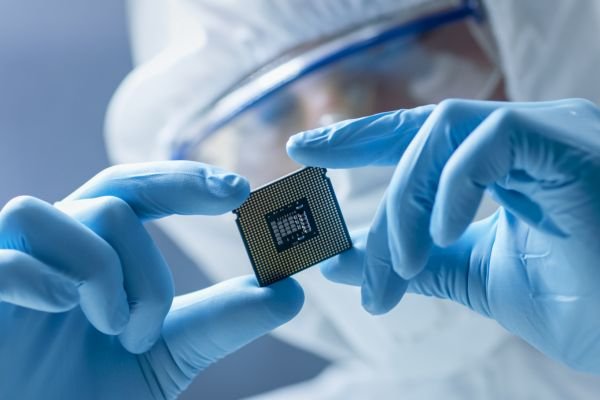

For decades, India’s electronics industry has largely been associated with assembly-led manufacturing. Today, that perception is beginning to change as the country accelerates investments across semiconductor fabrication, advanced packaging, and electronics manufacturing capabilities. India’s semiconductor ambitions are entering a key phase. The domestic semiconductor market is projected to reach $100–110 billion by 2030 reflecting not just demand growth but the country’s larger push to transition from an assembly-led ecosystem to a more value-driven manufacturing hub. As investments accelerate under the India Semiconductor Mission (ISM) 2.0 pushing fabrication, assembly, and packaging from blueprint to execution, the build-out of production capacity is now becoming a reality.
As India continues to expand its semiconductor and electronics manufacturing capabilities, collaboration across the global semiconductor supply chain will remain important to supporting industry growth, technology advancement, and manufacturing stability. Alongside investments in fabrication, packaging, design, and talent development, access to high-performance materials and advanced manufacturing expertise will continue to play a key role in the evolution of India’s semiconductor ecosystem.
As India expands its semiconductor ecosystem beyond assembly into higher-value manufacturing, consistency in material quality and process reliability becomes increasingly important. At the heart of this transition lies a less visible but highly critical layer: advanced materials, including precious metals.
Among these, precious metals, a group of eight metallic elements including platinum (Pt), gold (Au), silver (Ag), and platinum group metals (PGMs) including palladium (Pd), iridium (Ir), rhodium (Rh), ruthenium (Ru), and osmium (Os), play a critical role in enabling the performance, reliability, and longevity of semiconductor devices. Often confused with rare earth elements, these metals are distinct in their exceptional electrical conductivity, resistance to corrosion, thermal stability, and bonding characteristics.
As chips become smaller, faster, and more complex, these properties are not just beneficial, they are essential.
The Materials Behind Semiconductor Performance
Semiconductors today operate at extreme levels of precision. Whether in smartphones, electric vehicles, or data centres, even the smallest inefficiency at the material level can affect overall device performance.
At advanced nodes, where circuits are densely packed and operating speeds are high, signal integrity becomes highly sensitive to the materials used in interconnects and packaging. Any inconsistency in conductivity or bonding can introduce latency, energy loss, or device instability. In effect, material-level imperfections can cascade into system-level inefficiencies.
Why Precious Metals Matter in Semiconductor Applications
Precious metals bring a combination of properties that few other materials can match.
High electrical conductivity enables efficient signal transmission, particularly in high-frequency and high-speed applications. Corrosion resistance ensures long-term durability, even in demanding operating conditions. Thermal stability allows components to function reliably under high temperature and fluctuating environments, while superior bonding reliability supports strong, stable interconnections in advanced packaging.
These properties make precious metals indispensable across semiconductor value-chain:
- Gold is widely used in wire bonding due to its reliability and conductivity
- Silver plays a key role in conductive pastes and interconnects
- Precious metal-based plating solutions are used in front-end semiconductor process as well as packaging
- Platinum group metals are critical in front-end semiconductor process, enabling the formation and testing of highly advanced and fine circuit patterns.
In each case, material consistency and reliability directly influence semiconductor manufacturing stability, device performance, and long-term operational durability.
From Materials to Device Reliability
The importance of material stability becomes particularly evident in high-reliability applications where long operational lifecycles and continuous performance are required.
Automotive electronics already account for a significant share of a vehicle’s total value, a contribution that is set to rise sharply through 2030 as vehicles become increasingly software-defined. Semiconductor components used in these systems must maintain reliable operation over long lifecycles and under demanding environmental conditions, including vibration, thermal cycling, and high temperatures. A similar principle applies to AI infrastructure and data centres, where even minor signal disruptions or thermal inefficiencies can affect operational efficiency at scale. India’s data centre capacity is expected to triple by 2030, further increasing demand for high-performance semiconductor materials capable of supporting stable and energy-efficient operation.
Across these applications, the tolerance for material variation continues to shrink. Semiconductor manufacturers must meet increasingly stringent specifications to support advanced packaging, miniaturization, and next-generation device architectures. This places greater emphasis on precision-engineered materials capable of delivering stable electrical performance, manufacturing consistency, and compatibility with advanced semiconductor processes.
Precision Materials as a Strategic Enabler
As semiconductor technologies evolve, the tolerance for variation continues to shrink. Materials must meet exacting specifications to support next-generation device architectures and packaging innovations.
This places a premium on precision-engineered precious metals that can deliver consistent electrical performance, stability under demanding conditions, and compatibility with advanced manufacturing processes.
For industry leaders this elevates materials from a procurement decision to a performance differentiator. The ability to integrate high-performance materials seamlessly into production workflows will influence both product quality and long-term scalability.
Companies with expertise in precious metal processing, and materials engineering are becoming increasingly important in supporting advanced semiconductor manufacturing requirements. As a precious metals company supporting semiconductor and electronics applications, TANAKA works with customers across global manufacturing ecosystems in areas such as advanced packaging, interconnects, and electronic components.
Looking Ahead: Building Long-Term Semiconductor Competitiveness
India’s semiconductor ambitions have strong momentum, supported by policy initiatives, growing domestic demand, and increasing industry investment. However, long-term competitiveness will depend not only on manufacturing scale, but also on the ability to consistently deliver high-quality semiconductor manufacturing performance aligned with global standards.
Achieving this will require continued collaboration across the global semiconductor value chain, including engagement with experienced industry partners that contribute advanced materials expertise, manufacturing knowledge, and process discipline.
For India, the next phase of semiconductor growth will be defined not only by how much the country manufactures, but also by how effectively it builds manufacturing reliability, process consistency, and long-term ecosystem resilience.
While often invisible within finished devices, precious metals continue to play a foundational role in enabling the semiconductor technologies that support modern electronics, digital infrastructure, and future industrial growth.
.