
- South Korean financial institutions need to adopt a strategy centered on digital-asset wallets and secure interoperability for on-chain finance.
- Demand for on-chain financial infrastructure will grow as deposit tokens, tokenized securities, on-chain payments and stablecoins expand.
- In the tokenized-securities market, diversity among financial-institution validators and protection of transaction-data privacy will be important.
Forecast Trend Report by Period


South Korean financial institutions need to build wallet-centered service strategies and secure interoperability for on-chain finance as the country prepares to formalize digital-asset regulations.
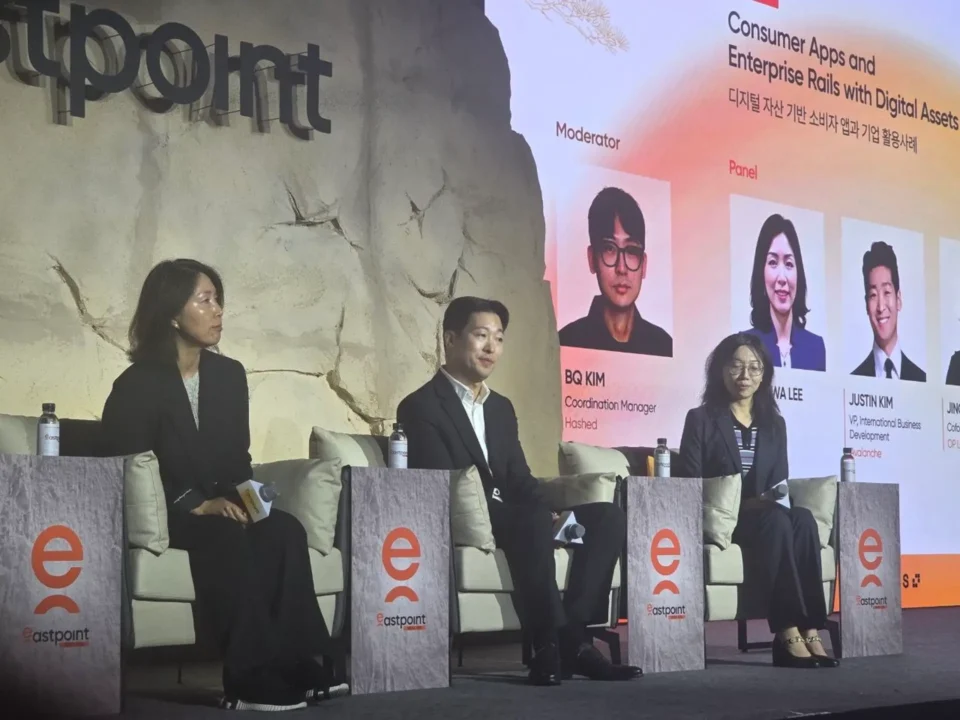
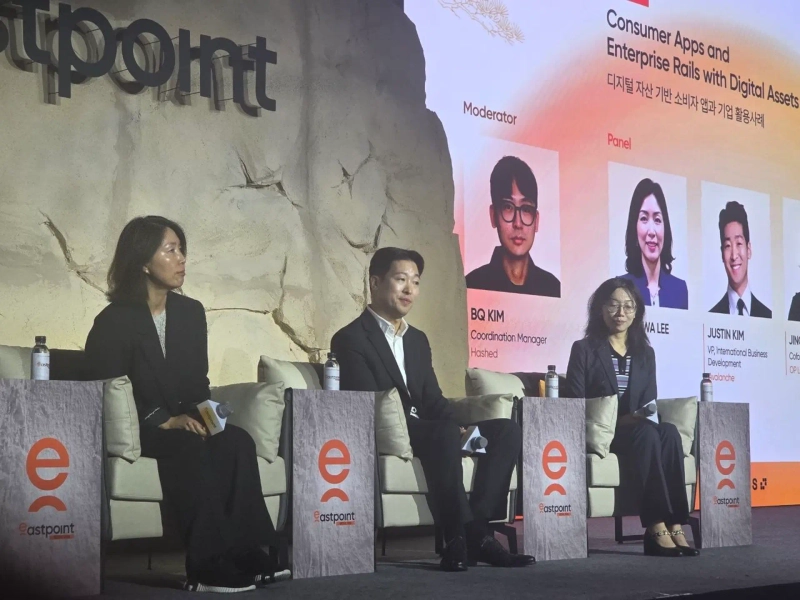
That was the message from a panel at EastPoint: Seoul 2026, a global private Web3 conference held on September 28 at the Westin Seoul Parnas in Samseong-dong, Seoul. The discussion featured Lee Jeong-hwa, a director at LG CNS, Justin Kim, Avalanche’s head of Asia-Pacific, and Wang Jing, co-founder and chief executive officer of OP Labs.
Lee said domestic financial institutions are fleshing out business strategies in step with regulatory developments, including the proposed Digital Asset Basic Act. Early efforts mainly focused on proof-of-concept projects reviewing stablecoin business models and partnership structures. More recently, attention has shifted to preparing for a swift service launch once the regulatory framework is in place.
Lee pointed to digital-asset wallets as a key area for financial institutions to watch. He said wallets can become a core touchpoint for new financial services rather than simply a tool for holding assets. Combining wallets with existing financial superapps and linking them to a range of on-chain financial services will be important, he said.
He also said interoperability will be essential as financial services expand into deposit tokens, tokenized securities, on-chain payments and stablecoins. LG CNS is testing interoperability technology designed to connect different blockchains and financial systems. Once related rules are in place, demand in South Korea for on-chain financial infrastructure will expand, Lee added.
Kim said diversity among financial institutions participating as validators and privacy for transaction data will be critical in the tokenized-securities market. Using a structure in which domestic financial institutions participate as validators, a certain level of decentralization can still be achieved even without a fully open blockchain, he said. South Korea’s tokenized-securities policy is also aligned with that direction, he added.