
National Assembly’s Finance and Economy Committee, Finance Ministry, and Economy Minister
“Expected 3% growth rate of South Korea this year
Fast forward policy for public sentiment”
Development of close-to-people items Price stability
Housing expansion and support for ordinary people’s finance
Development Strategy for Green Transformation
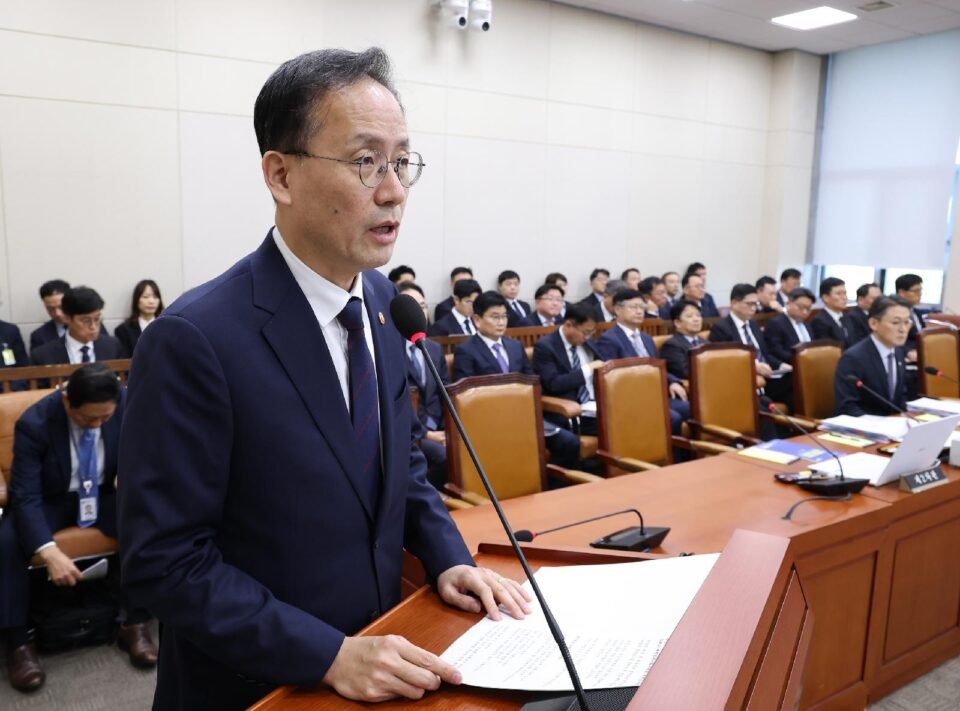
![Deputy Prime Minister and Minister of Finance and Economy Lee Hyung-il is reporting on his work at the parliamentary audit of the Finance and Economy Planning Committee held at the National Assembly on the 6th. [Yonhap News]](https://wimg.mk.co.kr/news/cms/202610/06/rcv.YNA.20261006.PYH2026100605490001301_P1.jpg)
While this year’s regular parliamentary audit began in earnest on the 6th, the National Assembly’s Finance and Economic Planning Committee started its schedule for about a month due to the audit of the Ministry of Finance and Economy. Deputy Prime Minister and Finance Minister Lee Hyung-il, who attended the ministry’s parliamentary inspection, stressed that the ministry’s main goal is to raise growth potential while focusing on managing the economy of people’s livelihoods and resolving polarization.
In his opening remarks, Deputy Prime Minister Lee diagnosed the current situation, saying, “With the burden of people’s livelihoods such as prices continuing due to prolonged oil prices, structural problems such as polarization by sector and slowing potential growth rates exist, and external uncertainties such as the Middle East war are also high.” He said, “We will do our best to stabilize the economy of people’s livelihoods and ease polarization by stabilizing prices of close-to-people items such as oil and food, and strictly responding to unfair activities that disturb prices.”
“The Korean economy is expanding recently, with major economic indicators such as exports and investment expected to grow around 3%, thanks to the global semiconductor boom,” he said. “We will speed up policy tasks in five directions to achieve results that the people can feel.”
Measures for people’s livelihoods included stabilizing oil and food prices, housing, jobs, and financial support for the common people.
Deputy Prime Minister Lee said, “We will try to stabilize prices of items close to people’s livelihoods, such as petroleum and food, respond strictly to unfair activities that disrupt prices, and reduce the burden of living expenses for the vulnerable.” “We will continue to promote and develop three key social policies for housing, jobs, and low-income finance that have a great impact on the lives of the people,” he said. “We will prioritize the expansion of supply by supporting the rapid supply of 1.19 million public housing units.”
“We will actively adjust the accumulated debt and strengthen customized financial support for vulnerable borrowers who are likely to increase their debt burden,” he said. “In addition to jobs, we will provide comprehensive support for young people in each stage of growth such as education, housing, asset formation, marriage and parenting.”
Regarding improving the corporate investment environment, he said, “We will speed up the three major mega projects and quickly resolve the difficulties of companies in the field.” “As a next-generation growth engine, we will fully support the seven SEED projects, establish a fund to strengthen the momentum of strategic exports, and actively explore new tasks while pushing for existing ultra-innovative economic projects without a hitch,” he said.
Regarding the service industry, he said, “We will push for the enactment of the Basic Act on the Development of the Service Industry so that the service industry, which accounts for a large portion of our economy, can become another pillar of our economic growth, and discover and foster various fields such as high value-added and life-friendly services.” Regarding investment in the U.S., he said, “We will promote the Korea-U.S. strategic investment project in consideration of commercial rationality and strategic interests and help Korean companies enter the U.S. market through $150 billion in shipbuilding cooperation investment.”
Regarding carbon neutrality, he added, “We will come up with a Korean-style green transition strategy within this year to strengthen green competitiveness through achieving carbon neutrality goals and decarbonizing industrial structures.”
Deputy Prime Minister Lee cited stabilizing the foreign exchange market and securing supply chains as tasks to cope with external risks. “We will actively try to stabilize the foreign exchange market, where the uncertainties of the upper and lower parts due to the Middle East war and monetary policies of major countries coexist,” he said. “We will respond to external uncertainties through the introduction of alternative supplies and supply and demand stabilization measures, and fundamentally improve the supply chain structure in the long run to increase the resilience of the supply chain.”
Regarding tax reform, he also said, “We will reorganize the tax system to support a rebound in potential growth rates, strengthen support for young people, ordinary people, and local regions, and realize fair taxation such as rationalization of the real estate tax system and redesign of family business inheritance deductions.” Regarding the reform of public institutions, he said, “We will strategically rearrange the functions of public institutions to respond to complex changes in the policy environment such as AI transformation and regional extinction. We will reorganize the public service supply system around consumers by integrating similar and redundant functions, and integrate subsidiaries and small institutions to reduce costs and eliminate management blind spots.”