
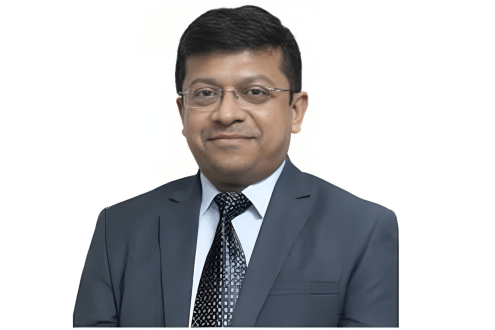
As India’s asset management industry becomes deeper, more formalised, and more sophisticated, alternative investment managers are being pushed to deliver more than product access. Clients increasingly want differentiated portfolios, institutional discipline, alignment, governance, and advisory relevance.
For Aniruddha Sarkar, Co-Founder of Equinova Investment Managers, that shift sits at the centre of the firm’s proposition. Established in 2025, Equinova brings together nearly 75 years of collective founder experience and focuses on long-only listed and unlisted equity strategies for investors seeking differentiated exposure to India’s growth story.
The firm’s approach is built around founder alignment, agile long-term investing, and a balance between value and growth. Sarkar says the opportunity is not simply to participate in India’s expanding wealth market, but to build an alternatives platform that can respond to changing client expectations, broader investment preferences, and the next phase of financial deepening across the country.
Key Takeaways
- Equinova is built around investor interest alignment and founder ownership: The founders have invested their own capital into the firm’s strategies and retain full ownership of the business. Sarkar says this creates strong alignment with investors and supports a high-conviction investment culture.
- Agility is central to the firm’s long-term investment approach: Equinova describes itself as a long-term investor, but not a passive one. The firm seeks to move across market capitalisations and sectors as earnings cycles, valuations, and structural tailwinds change.
- The investment philosophy balances governance, quality and timing: Sarkar focuses on management quality, corporate governance, capital allocation, business moats, sector tailwinds, and earnings inflection points. The objective is to identify mispriced opportunities across both value and growth segments of the market in the right sectors with tailwinds ahead of the market.
- Indian wealth clients are moving from product access to holistic advisory: Clients are increasingly focused on consistency, process, portfolio construction, private market access, and differentiated strategies. Sarkar says the market has moved beyond purely RM-led distribution towards a more family office-style advisory model.
- Equinova’s near-term priority is to build performance credibility at scale: Though he has been managing money for over 11 years now at other institutions, but since at Equinova PMS and AIF offerings were launched in January 2026the firm is focused on building a top-quartile track record, engaging selected wealth managers and advisers, and launching another Category III AIF combining listed equities with pre-IPO opportunities.
- India’s asset management industry is entering a structural growth phase: Sarkar expects formalisation, digitisation, consolidation, financial deepening, technology adoption, and rising participation from Tier-2 and Tier-3 cities to reshape the industry over the next decade.
A Firm Built Around Alignment and Agility
Equinova Investment Managers was established in 2025 with a clear ambition: to become one of India’s respected alternative investment managers. For Sarkar, the starting point is alignment. The founders have invested their own capital into the firm’s strategies and retain full ownership of the business, creating a direct connection between investment decisions and investor outcomes.
“We have skin in the game,” Sarkar says. “The founders have invested their own capital into the strategies, and that creates strong alignment with investor outcomes.”
That ownership structure also shapes the firm’s investment culture. Sarkar sees it as supporting conviction, accountability, and long-term focus, particularly in a market where investors are becoming more discerning about process and manager behaviour.
Equinova’s second point of differentiation is agility. Sarkar describes the firm as a long-term investor, but not a passive one. In his view, long-term investing should not mean ignoring changes in earnings cycles, valuation, sector leadership, or market structure.
The firm therefore seeks flexibility across market capitalisations and sectors. Sector concentration and sector rotation are core parts of the approach, rather than tactical add-ons. Equinova aims to go overweight on sectors with tailwinds, avoid or be underweight on sectors facing headwinds, and remain unconstrained by index weights where the fundamentals do not justify exposure.
“We are long-term investors, but agility is key in today’s world of ever-changing dynamics,” he says. “The ability to move between market caps and across sectors is an important part of our proposition.”
The third element is balance. Sarkar does not see Equinova as being confined to either value or growth. Instead, the firm looks for mispriced opportunities across both parts of the market, provided they meet its standards on governance, business quality, earnings potential, and valuation.
Investing Through Governance, Quality and Earnings Inflection
Equinova’s investment philosophy has been shaped by multiple market cycles over more than a decade. Sarkar frames the approach around four core disciplines: management quality, business quality, sector positioning, and earnings inflection.
The first filter is governance. Equinova looks for management teams with strong corporate governance records, sound capital allocation policy, and the ability to navigate downturns while continuing to gain market share. Sarkar sees this as especially important in India, where the difference between strong and weak management teams can be decisive over a full market cycle.
The second filter is business quality. The firm seeks companies with superior operating characteristics, growth potential, and durable moats. These qualities matter because Equinova is not simply looking for cheap stocks or popular themes. It wants businesses capable of compounding value and defending their position against peers.
The third discipline is sector selection. Sarkar is prepared to take active views on where the portfolio should be positioned, particularly when structural tailwinds or headwinds become visible. This is where agility becomes part of portfolio construction.
“The objective is to identify where the tailwinds are, where earnings are inflecting, and where the portfolio should be positioned,” he says.
Earnings inflection is the fourth pillar. Equinova focuses on identifying the point at which a company’s earnings trajectory begins to change meaningfully. Sarkar sees this as critical to both entry and exit decisions. The firm’s aim is to capture the phase where fundamentals improve and market recognition follows.
A More Sophisticated Indian Wealth Client
Sarkar says Indian investors have matured significantly over the past two decades. The earlier model was often product-led, distribution-led, and heavily focused on returns. That is changing.
Clients are now asking more detailed questions about portfolio role, risk, process, consistency, and suitability. Returns still matter, but they are no longer the only lens through which investors assess an opportunity.
“Earlier, many clients were seeking products,” Sarkar says. “Now they are looking for holistic advisory. Returns remain important, but consistency of returns and consistency of investment approach have become much more important.”
This shift is visible among HNIs, UHNIs, and global Indians. Many clients are moving away from a purely relationship manager-led distribution model and towards a more family office-style advisory model. They want investment ideas placed in context, not simply presented as standalone products.
They are also more open to unlisted opportunities. Sarkar notes that client appetite for private company exposure has increased meaningfully, while global diversification through the Liberalised Remittance Scheme has also become more prominent.
This is changing the role of alternative investment managers. The opportunity is no longer just to offer access. It is to offer differentiated strategies that sit clearly within a broader portfolio.
For Equinova, portfolio uniqueness is therefore central. The firm runs long-only strategies across listed and unlisted companies and believes Indian markets offer a much wider opportunity set than the large, widely owned companies that dominate investor attention.
“There are many more opportunities in Indian markets beyond the headline companies,” Sarkar says. “Portfolio uniqueness and the underlying holdings are key aspects of our offering.”
Equinova also runs customised and concentrated PMS schemes for clients with specific requirements. These structures allow the firm to build portfolios that reflect individual objectives, existing exposures, and desired levels of concentration.
Priorities for the Next Phase
Equinova launched its PMS, Category II AIF, and Category III AIF offerings in the first week of January 2026. As a new platform, its next 12 to 18 months are focused on execution, credibility, and selective expansion.
The first priority is performance. Sarkar wants the firm to build a top-quartile performance track record supported by high-quality portfolios. Just as importantly, he wants that record to show continuity with the investment discipline and track record he has built over previous roles in the last 11 years.
“Our first priority is to build a top-quartile performance track record with a high-quality portfolio,” he says. “It is important that the continuation of my past track record is clearly visible.”
The second priority is distribution alignment. Equinova wants to engage with selected wealth management firms, IFAs, and advisers who understand the firm’s investment approach and can introduce it to appropriate clients.
This selectivity matters. Sarkar is not looking for broad distribution at any cost. In alternatives, the right advisory channel is important because investors need to understand strategy, risk, time horizon, concentration, and suitability.
The third priority is a new product launch. Equinova plans to launch another Category III AIF during calendar year 2026, blending listed equity opportunities with pre-IPO exposure. This reflects Sarkar’s view that sophisticated Indian investors are increasingly looking for differentiated structures that combine public market discipline with access to private or pre-public opportunities.
Equinova has also been built with operational scale in mind. Sarkar says the firm did not want investors or distribution partners to feel they were dealing with a thinly staffed start-up. From day zero, the firm assembled a 27-member team across Mumbai, Delhi, and Bangalore, with experienced professionals across key functions.
“From day zero, we wanted the right people in the right roles,” he says. “The team is already equipped to manage significant growth in AUM over the next couple of years.”
India’s Asset Management Industry Enters a New Cycle
Sarkar believes India’s asset management industry is entering a major structural growth phase. He compares the coming evolution to the transformation seen in Indian banking between 2005 and 2020.
The industry, he says, will become larger, but also broader, more specialised, more digital, and more global. Formalisation, digitisation, consolidation, and financial deepening will all play important roles.
“India is at the cusp of a major change in asset management,” Sarkar says. “The industry will not just become larger. It will become broader, more technology-driven, more specialised, and more global.”
Several forces are driving this change. SIP culture has become mainstream. Younger investors are more comfortable with market-linked assets. Rising incomes are creating more investable surplus. Tier-2 and Tier-3 cities are also expected to contribute more meaningfully as wealth creation spreads beyond India’s largest financial centres.
Among HNI and UHNI clients, Sarkar sees a clear structural shift towards alternatives. These investors increasingly want customisation, concentration, private market access, differentiated strategies, tax structuring, and global diversification.
Technology and AI will also reshape the industry. Sarkar expects AI to influence research, portfolio construction support, execution, and distribution. Greater efficiency could make the industry more cost-effective and may eventually support lower-expense products for investors.
However, he does not frame technology as a replacement for investment judgement. For concentrated portfolios and alternatives, governance assessment, business analysis, manager discipline, and fiduciary responsibility remain central.
Client demographics are changing as well. Sarkar expects the next decade of Indian wealth to be shaped by start-up founders, ESOP millionaires, professionals, technology entrepreneurs, SME owners, IPO wealth creators, global Indian executives, and women investors.
These clients are likely to be more comfortable with equities, more digitally engaged, more open to risk, and more demanding of institutional-quality access. The asset managers that succeed will need to combine performance with process, transparency, differentiated exposure, and advisory relevance.
Key Priorities
Equinova Investment Managers’ agenda over the next 12 to 18 months is shaped by three priorities:
Building a High-Quality Performance Track Record: Establishing a top-quartile record across its newly launched PMS and AIF offerings, while demonstrating continuity with Sarkar’s previous investment approach and performance history.
Working with Aligned Distribution Partners: Engaging selected wealth management firms, IFAs, and advisers who understand Equinova’s investment philosophy and can represent the strategy appropriately to clients.
Launching a New Category III AIF: Developing another Category III AIF during calendar year 2026, combining listed equities with pre-IPO opportunities for investors seeking differentiated exposure.
Into the Future
India’s asset management industry is likely to become larger, broader, more technology-driven, more specialised, and more global over the next decade. Sarkar expects the next phase of growth to be driven by formalisation, digitisation, consolidation, and financial deepening.
Retail participation should continue to expand as SIP culture becomes more embedded, younger investors embrace market-linked assets, and rising incomes create more investable surplus. At the same time, HNI and UHNI investors are expected to allocate more actively to alternatives, including concentrated strategies, private market opportunities, pre-IPO exposure, tax-aware structures, and global diversification.
Technology and AI will become major enablers across research, portfolio construction, execution, reporting, and distribution. These tools may help reduce costs and broaden access, but Sarkar’s view of the future remains grounded in investment discipline. Technology can support decision-making, but it cannot replace governance assessment, fiduciary responsibility, manager judgement, and behavioural understanding.
The client base will also change. Start-up founders, ESOP millionaires, professionals, technology entrepreneurs, SME owners, IPO wealth creators, global Indian executives, and women investors will become increasingly important. These investors will expect faster access, stronger advice, digital convenience, and institutional-quality opportunities.
For asset managers, the next decade will not reward scale alone. It will reward firms that combine performance, trust, process, differentiated access, and client relevance.
Getting Personal with Aniruddha Sarkar
Aniruddha Sarkar comes from a military family. His father served in the Indian Army and retired as a Colonel, which meant Sarkar’s upbringing was spread across several parts of India. Although he was born in West Bengal, he was educated across West Bengal, Uttar Pradesh, Assam, Jammu and Kashmir, Maharashtra, and Punjab.
He completed his graduation at St Xavier’s College, Kolkata, before earning an MBA in Finance from IMI, New Delhi.
A defining professional chapter came during his long stint at 360 ONE Wealth & Asset Management. Sarkar says a typical equity analyst often receives exposure mainly to company research, but his own career developed across equity analysis, advisory, non-discretionary PMS, discretionary PMS, and AIF-related investment management.
That breadth shaped the way he thinks about investing. It allowed him to connect company analysis with portfolio construction, client engagement, investor behaviour, and investment objectives.
“It gave me a holistic perspective,” he says. “I was able to analyse companies, use that work in portfolio construction, engage with investors, and understand the behavioural side of investing.”
Outside work, Sarkar values activities that help him keep a calm mind and avoid daily noise. He occasionally plays tennis on weekends with his son, and also enjoys reading and travelling.
His advice to young professionals entering the industry is clear: build strong fundamentals, read widely, and do not look for shortcuts.
“For young people entering the industry, my message is that there are no shortcuts to success,” he says. “Build strong fundamentals, read as much as possible, and never compromise on ethics.”
For Sarkar, fiduciary responsibility is central to the profession. Investment managers are entrusted with other people’s hard-earned wealth, and that trust should shape every decision.
“You must value other people’s money even more than your own,” he says. “That is the responsibility we carry when investors entrust their wealth to us.”