
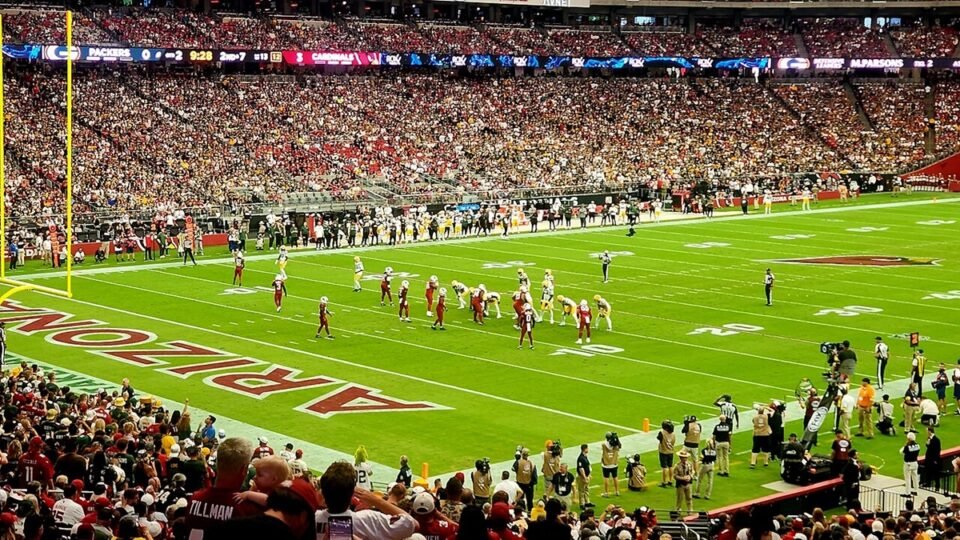
In March, BetMGM opened Jeremiyah Love at 30-1 to be the third player taken in the 2026 NFL draft, ESPN reported. Two days before the draft, the former Notre Dame running back was around 2-1. Before a pick had been made, DraftKings reported that more bets and more money had gone on Love to go No. 3 than on any other player offered. The Arizona Cardinals took Love third overall.
On July 17, the NFL suspended Ryan Gold, then the Cardinals’ director of college scouting, indefinitely. The league said it had determined that Gold, in his 13th season with the club, provided confidential, non-public information about Arizona’s 2026 draft selections before they were announced, and bet parlays on NFL and college games.
“Although there is no reason to believe the integrity of any NFL game was affected, the League takes any violation of the gambling policy with the utmost seriousness,” it said.
The league also said the Cardinals cooperated fully and that it had seen no indication that any other member of the organization, coach or player was aware of or involved.
Gold denies wrongdoing. His appeal is scheduled for Sept. 23. It will address the NFL’s findings against him. It may leave a separate question unanswered: what the league’s draft-betting monitors saw as the Love market moved.
Massachusetts Received No Draft Alerts as Arizona Declines to Say
The Arizona Department of Gaming confirmed in July that it was looking into the case. A spokesperson told ESPN the department had been notified of the incident and that it “regularly work[s] with integrity monitoring organizations and sports leagues in situations like this.”
A month later, the Massachusetts Gaming Commission said it was examining unusual betting patterns made in the state. Thomas Mills, the commission’s communications division chief, told Gambling Insider the review generally concerns betting patterns rather than an individual, and that the commission receives reports “from various sources, including integrity monitors as well as licensees.” He would not go further, citing the open investigation.
Mills did answer whether either reporting channel had produced anything concerning the draft during March or April, when the Love market was moving. No Massachusetts licensee filed a suspicious-activity report on an NFL draft market during those two months, he said.
The integrity-monitor channel was no different. Mills said he checked separately: “the commission did not receive integrity reports regarding the draft during these two months.”
There is no baseline to judge that against. The commission “does not collect data on how many suspicious activity reports or integrity alerts are received each season,” he said.
The draft is within the state’s remit. The commission’s guidance is that “the wagering on drafts is allowed for all approved league drafts,” and the NFL is an approved league.
The commission’s wagering catalog imposes conditions on when draft betting must close: before the first pick for bets on the draft as a whole, before a round begins for round-specific markets, and before an individual selection approaches.
Mills confirmed those rules were in force in March and April. They govern when draft wagering must stop. They do not establish how operators or monitors should respond to a price moving weeks beforehand.
Arizona says less. Jessica Roza, assistant director of government and community affairs at the Arizona Department of Gaming, told Gambling Insider the matter is under preliminary review, after which the department “will determine if a formal investigation into the licensee is deemed necessary.”
Asked who notified the department, whether it received any report on the draft or the Love market, and whether it had been in contact with Massachusetts or the NFL, Roza said the information “relates to an active regulatory review” and could not be disclosed. She noted that operators and integrity monitoring providers are required by statute and regulation to report suspicious wagering to the department.
Arizona publishes aggregate totals for those reports. It has not said whether one concerned the Love market or the 2026 draft.

NFL Says Its Integrity Monitoring Covers the Draft
The NFL says its integrity monitoring covers the draft as well as games. Its 2024 summary of gambling-policy education and integrity monitoring states that for every NFL game, “[and key NFL events; i.e., Draft],” two external third-party monitors, Genius Sports and IC360, review odds, line movements and betting activity that may indicate game manipulation or a leak of non-public information. Alerts, it says, “are made in real-time.”
The same document puts the draft inside the betting prohibition: “NEVER bet on the NFL: Includes other NFL events such as Draft, Combine, Pro Bowl, & NFL Honors.”
What that monitoring saw in the Love market, if anything, has not been disclosed.
Months after the market moved, the NFL said Gold had provided confidential, non-public information about the Cardinals’ draft selections — a finding he denies and is appealing. The league’s statement does not identify Love, the No. 3 pick market or any betting activity arising from Gold’s alleged disclosure.
The NFL, IC360, BetMGM and DraftKings did not respond to questions about whether monitoring of the draft markets flagged the Love market in the spring and, if so, to whom an alert was reported. Genius Sports did not respond by publication time.
Nothing disclosed publicly establishes that an operator or integrity-monitoring provider failed to meet a reporting obligation. Nor does the absence of a report in Massachusetts establish that no alert was generated elsewhere.
The league had identified the underlying risk before the draft, asking prediction market operators to stop offering contracts on outcomes “knowable in advance,” with draft picks among its examples. “Some people are going to have that information … that they can then share,” said Jeff Miller, an NFL executive vice president.
Ryan Gold Denies NFL Gambling Policy Findings
Gold’s attorney, Mike Caspino, filed the appeal with the NFL in July and rejects the findings.
“Ryan Gold did absolutely nothing wrong here, and we look forward to clearing his name,” he told ESPN.
In a statement, Caspino said Gold could not have divulged the picks because he did not know them — only owner Michael Bidwill and general manager Monti Ossenfort did. The parlays, he said, were $10 weekly bets placed by Gold’s wife with a group of her high school friends, and Gold was not involved.
Ossenfort said on draft night that the club had settled on Love “at the start of this week.” The Love price had begun moving in March. The league has not said what Gold allegedly shared, with whom or why, or whether the alleged disclosure had any connection to betting on Love.
Nor is it public who will decide the appeal. Gold filed it with the league, not a court, and neither the NFL nor his attorney has named a hearing officer or forum.
The league’s 2022 gambling policy, the most recent in public circulation, covers “club employee” but sets out no appeal mechanism.
The NFL did not respond to questions about who will hear the appeal or whether its outcome will be published. The Cardinals, which said in July they “fully support the league’s decision in this matter, which involves a single employee,” did not respond to questions about Gold’s current status.
What Gold’s NFL Appeal Will Not Settle
Gold’s appeal will test whether the NFL’s findings against him should stand. It will not necessarily establish what happened in the betting market before Arizona selected Love.
The NFL says two outside firms monitor the draft in real time for betting activity that may indicate a leak of non-public information. Massachusetts says it received no suspicious activity or integrity report concerning the draft during March or April. Arizona has declined to say whether it received one.
The NFL has not publicly connected Gold to the Love market. Whether that market generated an integrity alert as its price moved, and where any such alert went, remains undisclosed.
Stay updated with GI
Follow Gambling Insider for independent news, analysis and industry expertise.


Gambling Insider delivers the latest industry news, in-depth features, and operator reviews that you can trust. Our team combines rigorous editorial standards with decades of specialized expertise to ensure accuracy and fairness. We are committed to delivering clear, impartial, and dependable coverage across the global gambling sector.