


© TommL / E+ via Getty Images
While much attention is paid towards China’s financial and military rivalry with the US, it’s easy to overlook how China is viewed by the rest of the Pacific Rim. China’s many centuries of emigration has led to a significant Chinese expat and intermarriage regional population. However, Chinese hegemony and wealth has become a major source of friction within other Pac-Rim nations. The Riady family, founder of Lippo Group, are among the most recognized ethnic Chinese tycoons in Indonesia. When the 1998 Asian Financial Crisis triggered major upheaval in Thailand and Indonesia, Riady-owned businesses and many ethnic-Chinese were scapegoated, leading to murder, rape, vandalism, and robbery.
In an effort to mitigate Chinese encroachment into their economic and political affairs, several Pac-Rim nations joined together to form ASEAN in 1967. Membership has since expanded to incorporate Vietnam, Laos, and Cambodia as well. Throughout that period, the nation with the unequivocally greatest financial and political success has been Singapore. That’s why it comes as no surprise that Singapore just launched the Silver Singapore (SSP) Futures Contract on the Abbax Exchange on May 22, 2026.
As the SSP is US Dollar denominated and delivers physical silver, it is likely to cause increasing problems for the COMEX, SFE and the LBMA, but be a good sign for silver investors holding physical silver or ETFs that hold shares in silver producing mines. Some ETFs to thus consider might include:
Silver Backwardation Woes

Skyrocketing industrial demand for silver has led to backwardation in Western futures markets and buyers paying double-digit premiums for spot delivery in Asia.
It’s no secret that industrial demand for silver has skyrocketed of late due to its unparalleled properties for use in digital technologies, semiconductors, flat screens, smartphones, EVs, and solar panels. The latest demand escalation has been due to A.I. As a result, this is the sixth consecutive year that silver production, which is mostly a by-product of copper or iron mining, will fall short of demand. Analysts estimate that the total cumulative shortfall could reach over 210 million oz. by the end of this year.
Mysteriously, the futures markets have not appeared to acknowledge this supply and demand discrepancy for decades, until Diwali-fueled Indian physical silver buying activity threatened to force the UK’s LBMA into a default, throwing the market into backwardation (when near term prices jump higher than long term prices). Help from Shanghai’s SFE prevented the default but the shockwaves also spread to the COMEX in the US: The emperor had no clothes, and long-suspected price-fixing collusion by the futures exchanges was now being uncovered.
Large financial institutions have long engaged in “spoofing” – illegally posting fake sell orders to artificially manipulate metals’ futures pricing. There have been few instances of getting busted (ex.: JP Morgan Chase fined $920 million for trades from 2008-2016) since 90% of contracts historically just transfer title or expire worthless, without any physical exchange. With demand for actual metal product now exploding for industrial use, the exchanges are being caught flat-footed in their ponzi scheme-like structure. The COMEX is currently seeing more silver leave its coffers faster than it can procure and register fresh bullion.
Compelling Pricing Transparency

Singapore’s SSP futures contract will help to curtail arbitrage in the silver markets.
The market decoupling between paper and metal has accelerated of late in plain view. Buyers in China especially, have been paying double-digit premiums above spot for delivery of silver for over a year – and the SFE requires sellers to deposit physical bullion before writing a contract, unlike with COMEX or LBMA. The pricing discrepancies have diverged even wider, as efforts to contain prices in the futures markets falter and increase the risks of delivery defaults.
The Singapore Silver Futures Contract is a futures contract that also operates on the SFE model of upfront physical deposit requirements. Traded on the Abaxx Exchange, it also has the following features:
- SSP is denominated in US dollars.
- 1,000 troy ounces, 0.9999 fineness, physically deliverable into approved Brink’s vaults in Singapore.
- Specifically created to address the physical vs. paper price discrepancy by providing greater transparency and a more accurate market pricing for Asian technology manufacturers, as the majority of globally used electronics and digital hardware is produced there.
SSP – A Net Plus For Buyers
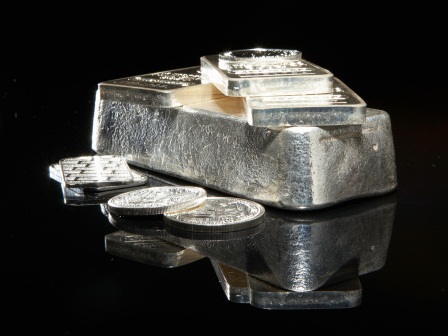
Singapore silver futures contracts, settling in physical delivery, will reflect a more accurate real world supply and demand global market price.
SSP contracts offer a number of advantages over COMEX, such as:
- Lower Singapore taxes and vault charges.
- SSP 1,000 oz. contracts are more practical for industrial use than 5,000 oz. COMEX contracts, which better suit leveraged traders and speculators.
- Greater delivery reliability from SSP than COMEX or LBMA, since more actual buyers take delivery for industrial use.
- Will reduce arbitrage from price fragmentation between SFE in Shanghai vs. COMEX in the US, as the bulk of actual users and stackers (physical silver investors) will send more business to Singapore for fairer pricing and improved mark-to-market accuracy.
- Genuine Asian located contract price discovery based on actual supply and demand will supplant, dominate, and eventually replace, speculative Western paper futures contracts once confidence in paper futures drops sufficiently. SSP will be a game changing factor in this process.
- SSP contracts may be utilized and incorporated into the larger financial infrastructure deployed by mBridge (Hong Kong, UAE, Thailand and China) for cross-border settlements, as well as in BRICS member international trade.
A Win-Win For Physical Silver ETFs and Stackers

ETFs holding silver mining stocks that deliver to Asia will likely get an extra boost as the SSP futures contract gains momentum.
The double-digit silver price discrepancies between the COMEX and SFE are creating huge arbitrage opportunities for traders buying in the West and selling in the East. The fact that buying in China remains so strong is more indicative of real-life pricing, so ETFs holding silver bullion will inevitably continue to rise until the gap is closed.
Concurrently, the ever-growing demand for more silver puts companies that mine silver in the catbird’s seat, since barely 15% of annual silver consumption is derived from recycled or recovered silver. As an essentially depleting asset becoming increasingly scarcer as its importance continues to rise, sources of new silver will be in a commanding position moving forward. Silvercorp Metals (NYSE: SVM) is one of the only western companies specifically developing mines and mineral properties in China. It even recently filed for a Hong Kong Stock Exchange listing. Pan American Silver Corp. (NYSE: PAAS) is a mining company which produces silver concentrate, a majority of which is acquired annually by Asian offtake buyers. For ETF investors seeking upside inclusion of these companies:
- Global X Silver Miners ETF (NYSE: SIL): its #2 holding is PAAS (13.12%)
- iShares MSCI Global Silver Miners ETF (CBOE: SLVP): its #5 holding is SVM (4.60%)
- Themes SIlver Miners (NASDAQ: AGMI): its #6 holding is PAAS (4.43%)