
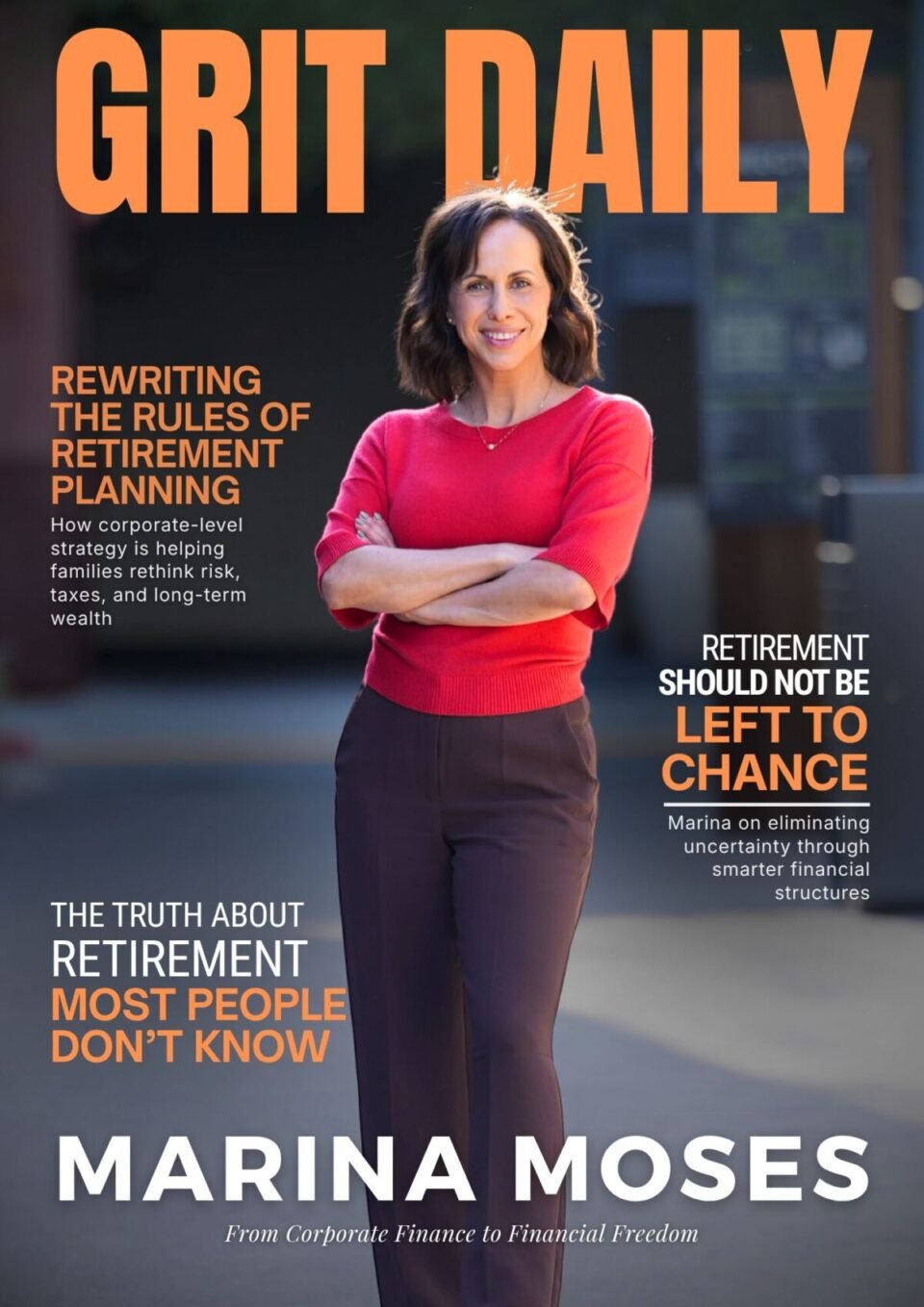
For more than a decade, Marina Moses sat inside the engine room of corporate finance, building the models that organizations like Koch Industries’ Invista, Georgia-Pacific, Aristocrat Gaming, and Amazon used to plan their futures. It amounted to a long seminar in how the wealthiest organizations in the country protect and grow their money. Everything she does now is built on what she learned in that room.
“Most people were never taught how money actually works, especially in this convoluted, debt-based system we operate in,” Marina says. “We’re all simply told to follow the traditional path and hope everything works out.”
What she saw from the inside was a gap, a quiet, structural one. Large organizations and wealthy individuals have access to a set of tools built around long-term thinking, tax control, and risk management: instruments designed to blunt the IRS’s reach, dull the shock of volatility, and manufacture a kind of stability money doesn’t generate on its own. Everyday families get something else entirely, a one-size-fits-all retirement plan, sold with the quiet implication that this is simply how it works. With today’s ever-increasing market volatility and currency instability, that one-size-fits-all approach amounts to little more than gambling at the Wall Street casino.
Closing that gap became the business. Marina’s approach rests on a handful of ideas, simple to state, harder to practice. These are her Core Principles:
- Think in decades, not quarters: the same patience that lets corporations compound returns over a generation works just as well on a household balance sheet.
- Control your tax bracket: the IRS, of all institutions, hands out tools for managing how and when you’re taxed, tools most people never touch because no one has bothered to explain they exist.
- Watch the fees: a single percentage point, waved off as immaterial, can quietly devour a third of a portfolio’s growth over thirty years.
- Let go of the assumption that growth requires risk. There are strategies built with a floor, so a bad year in the market doesn’t erase a decade of gains.
“When properly structured, these strategies are designed to reduce risk, not increase it,” Marina says. “The problem is most people have never been educated on them.”
Clients tend to notice the difference less in the plan itself than in the way she delivers it. “I really learned to trust her as a person. I felt like she had my best interests at heart,” says Ms. Richards, one of Marina’s clients. For Marina, that’s more or less the entire point. “I’ve had clients tell me they trust me like family even though we’ve never met in person,” she says, laughing. More than one relationship that began as a single consultation has settled, over time, into something like friendship, the kind of bond, she says, that keeps her doing this work.
Marina’s path to finance wasn’t the conventional one. She arrived in the U.S. from Brazil as a teenage exchange student, finishing high school in Kansas, a long way from anything familiar. Years later, she went back to school as a single mother of three, pursuing a double degree in finance and accounting, and graduated at the top of her class.
Looking back on what she’d come through, she arrived at a kind of reckoning: none of it, she came to believe, had been hers alone to claim. Later in her career, she describes receiving the grace of the Holy Spirit, a moment that made plain to her that whatever perseverance and success she’d found were rooted in God the Father and His son, Jesus Christ. Today, Marina is a devout Catholic, and that faith is the ground she works from, at home and in business alike.
“It taught me discipline, adaptability, and how to keep moving forward even when things feel uncertain,” she says. “That mindset became the foundation for both my personal life and my business.”
Today, Marina’s ambitions reach well past any one financial plan. “This is bigger than just finance,” she says. “It’s about helping people realize they do not have to stay stuck in dated systems that no longer serve them.” What she wants, for her clients and eventually for a much wider audience, is simple to say and hard to deliver: real control over a financial future that, for most people, has always felt like someone else’s to manage.
Jordan French is the Founder and Executive Editor of Grit Daily Group , encompassing Financial Tech Times, Smartech Daily, Transit Tomorrow, BlockTelegraph, Meditech Today, High Net Worth magazine, Luxury Miami magazine, CEO Official magazine, Luxury LA magazine, and flagship outlet, Grit Daily. The champion of live journalism, Grit Daily’s team hails from ABC, CBS, CNN, Entrepreneur, Fast Company, Forbes, Fox, PopSugar, SF Chronicle, VentureBeat, Verge, Vice, and Vox. An award-winning journalist, he was on the editorial staff at TheStreet.com and a Fast 50 and Inc. 500-ranked entrepreneur with one sale. Formerly an engineer and intellectual-property attorney, his third company, BeeHex, rose to fame for its “3D printed pizza for astronauts” and is now a military contractor. A prolific investor, he’s invested in 50+ early stage startups with 10+ exits through 2023.