
Jeevun Sandher MP
The budget today draws a clear line between our moral purpose and that of our opponents on the right. For us, every person should be able to live a decent life – something that can only be guaranteed through our common endeavour. For them, only some need to do well.
These moral differences lead us to starkly different material ends.
The choices we made in this budget, informed by our moral purpose, mean more money in the pockets of workers, paid for by taxing big banks. When workers have more, they spend more in local businesses, and these businesses can invest more too. Our moral purpose means every person does well and we build a more productive economy.
Our opponents’ choices would mean less money for workers. They oppose our taxes on big banks. They would cut taxes for oil and gas giants and their crypto-billionaire patrons. They’d strip away rights for workers. Our economy would become weaker as spending fell and businesses went under. Their immoral purpose would lead them to a less productive economy.
After the second world war, when our nation teetered on the edge of a deep recession, we could have left the markets to it and cut taxes for the richest. We didn’t. We took the collective sacrifice of our struggle against fascism and turned it to the common endeavour to guarantee every person a decent life. The postwar decades saw unprecedented prosperity as a result.
This budget is one full of values. It draws a line that separates us clearly from our opponents. They believe that only some need do well; we believe that our common endeavour is the route to a better society and a more productive economy.
Hannah Peaker, deputy CEO at New Economics Foundation
The chancellor said this was going to be a budget to help people through “this difficult moment”. With households preparing for a wave of price rises this winter, there’s no doubt that is exactly what was needed.
However, while the chancellor has shown the right instincts, he has not yet delivered at the right scale.
According to latest NEF analysis, the typical energy bill is set to rise by £420 in the first six months of next year. In this context, the £100 energy bills support announced in today’s budget will provide some welcome relief, but it will not meet the scale of the crisis we face, and too many who need support will miss out. By our calculations, more than 1 million low-income households will not be eligible.
Designed properly, it would have taken a mere £700m to make this offer universal – and if applied to unit rates, rather than a cash payment, it would have reduced inflation, thereby easing pressure on the Bank of England to increase interest rates.
The decision to tax the bumper profits of banks was also the right one. Yet once again, an extra 3 per cent for 15 months is not commensurate to the challenges we face. A rate of 8 per cent, along with much-needed reforms to capital gains tax, could have provided enough for a National Energy Guarantee providing every household with a cheap block of energy to meet their essential needs, as well as other vital measures such as rent controls and free travel for under-25s.
Without such policies, and with the dire predictions of price rises this winter, it’s hard to imagine how the chancellor will not come back later in the winter with another package of support for households.
This budget was an opportunity to start to unravel 40 years of neoliberalism, but to do so it needed a substantial offer to lower housing, energy and transport costs, and to reform the taxation of wealth. This would have helped get living standards back on track. It would also have eased inflation, reducing the likelihood of future rate rises and giving the government space to invest in reviving our NHS and other public services.
Daniella Jenkins, executive director at Women’s Budget Group
We heard a few much-needed measures to address the cost of living, primarily by shielding households from even steeper energy bills. But many women, particularly single parents on low incomes, won’t see enough help with the scale of financial pressures they face going into this winter.
Housing was one of the clearest omissions. The focus was on supporting aspiring homeowners, but for many women the immediate challenge is making next month’s rent. Women now spend an average of 57 per cent of their earnings on private rent, compared with 41 per cent for men, leaving many financially exposed. While increasing funding to end rough sleeping is welcome, preventing homelessness is equally important. By failing to unfreeze local housing allowance, the chancellor has missed a crucial opportunity to ease pressure on renters and protect more women from being pushed into poverty and homelessness.
The government has promised to unlock growth in every postcode and boost living standards across the UK, yet this budget continues to overlook the social infrastructure that makes economic participation possible. Investment in care, childcare and support for families is too often treated as secondary to traditional infrastructure spending. That comes at a significant cost. Our analysis estimates that the UK loses £113 bn in economic output because women’s skills and labour are underutilised.
There were some positive steps. Extending statutory paternity pay to self-employed fathers and removing the carer’s allowance earnings cliff edge are important reforms that recognise the value of unpaid care, much of which is carried out by women. Yet these changes will take years to reach families, leaving many waiting until the end of the decade for meaningful support.
The chancellor did say the changes to paternity pay were a ‘downpayment’ on wider reforms to parental leave; yet he also needed to address the inadequacy of maternity pay, which continues to put many mothers under severe financial pressure. Our analysis has shown that improving maternity pay would put more than £1bn in families’ pockets and deliver social and economic gains.
And while a new fund to tackle misogyny is welcome, £5m a year for three years is barely scratching the surface of the challenge. It is, notably, just half the amount allocated to a single new parkway station in Cardiff.
Duncan Weldon, economics writer and author
Over the decade and a half or so that it has existed, the Office for Budget Responsibility has often given chancellors a nasty headache. They make all sorts of claims in their budget speech only for the OBR’s blue book to immediately point out the gaps and omissions in their own red book. Sometimes, though, having an independent forecaster can be very useful. Today was one of those days, as the OBR – in a far more candid manner than the government itself can manage – pointed out the obvious fact that President Trump’s war in the Gulf has had a major and negative impact on Britain’s economy and public finances. Higher energy costs are, in the jargon of economics, a negative terms of trade shock for an energy importer such as the UK, they make the country as a whole worse off than it otherwise would be.
The big policy call made at the Treasury has been to allow the so-called ‘headroom’ – the forecast margin by which it will hit its fiscal targets – to fall and absorb some of the fiscal shock. While the budget was full of policy – much of it well targeted and politically astute – it was, in macroeconomic terms, a non-event.
The overall package may be small but it offers both some ‘breathing space’ for households and has enough to keep financial markets on side. What happens next is harder to call. There is now, in the words of the OBR, ‘a broadly equal chance’ of the fiscal situation either becoming materially worse or improving quite considerably in the months and years ahead. With big decisions on defence funding and welfare spending yet to be made, the next fiscal event looks set to be tougher. The chancellor and the prime minister will no doubt be hoping for a healthier global economy to ease some of that pain.
Anna Valero, director of the growth programme at LSE’s Centre for Economic Performance
The chancellor’s first budget had to do three things at once: maintain a credible fiscal buffer; support households struggling with a prolonged cost of living crisis; and nurture the green shoots of growth that have emerged despite significant global headwinds (or indeed, as the chancellor put it, ‘storms’).
With regard to the first two, the OBR confirmed that the chancellor is forecast to meet the fiscal rules by 2029-30 with headroom of £15bn against the stability rule (rising to £22bn in 2030-31) and a package of support for households (and some businesses) has been set out.
On growth, the budget has protected public sector investment, which in the UK has tended to be low and volatile. The £20.4bn boost to the Public Finance Institutions will further catalyse private capital, while the new AI package and the Energy Wealth Fund are important for digital and green transitions. Yet quality matters as well as quantity. The main risk is reprioritisation away from other areas important for growth (as identified in the 2025 industrial strategy), with departments finding savings to fund defence.
For businesses, the absence of new broad-based taxes is welcome, as are targeted reliefs including for entrepreneurs and retail and hospitality. But deeper reforms to address complexity and distortions are still needed. For high growth firms, scale-up support – including pensions reforms, catalytic capital and bolder action on procurement and regulation (as emphasised by the chancellor) – is likely to matter more. Energy support should not dampen incentives to invest in cheaper, more resilient, clean alternatives and the longer-term reforms set out are positive.
Finally, the devolution roadmap sets out specifics on business rates and income tax retention, a significant and positive change for the UK. Well-designed fiscal devolution will align incentives and levers for growth locally, provided capacity is built and effective coordination between national and regional policy is achieved.
The budget gives a clear direction of travel, but delivery as well as intent will determine success. There will be difficult decisions to be made during next year’s spending review (particularly given the impact of higher inflation on departmental budgets); these will be informed by the forthcoming 10-year plan and the outcomes of the Milburn, Timms and other reviews. A central challenge will be protecting and delivering investment and pro-growth reforms while competing pressures, including those related to funding defence and responses to any continued global economic storms, mount.
Joe Wright, policy and advocacy manager at Tax Justice UK
Today’s budget is a holding budget: a drop in the ocean of what is needed to meet the challenges people in this country are facing. People will feel some relief at the cost-of-living measures involving council tax and energy bills in response to Trump’s war in the middle east. However, there were no structural changes to the tax system, and the vast fortunes of the richest people and corporations remain mostly untouched. We will have to wait for the government’s 10-Year Plan later in the year to hear how Burnham plans to end 40 years of neoliberalism.
Healey pledged a 2 per cent rise in income tax on property income and savings income, bringing taxation of wealth closer to taxation from work. This is a positive step, although will only raise a modest amount of money. To properly equalise how the tax system treats income from wealth and work, the government should have equalised capital gains tax rates with income tax alongside an investment allowance, raising £20bn a year and supporting economic growth when other loopholes are removed.
The government raised the corporate tax surcharge on banks from 3 per cent to 6 per cent for 15 months. This will raise £950m in its full year of operation, a negligible measure compared to alternatives on the table, such as a similar windfall tax on the oil and gas sector, which could raise £19bn this year.
The government has announced some investment in HMRC capacity and published their Wealthy Plan. This includes a very welcome pledge to publish an “offshore tax gap” estimate –showing how much money is being lost by tax abuse overseas – and significant investment in the skills of HMRC staff working on ‘wealthy compliance’ to better understand and reduce the wealthy tax gap.
These moves are modest positive steps, but given the huge scale of challenges the nation faces – a cost of living crisis, crumbling infrastructure, an aging population, social care, a housing crisis and widespread poverty – are simply not enough to deliver the transformation we have been promised.
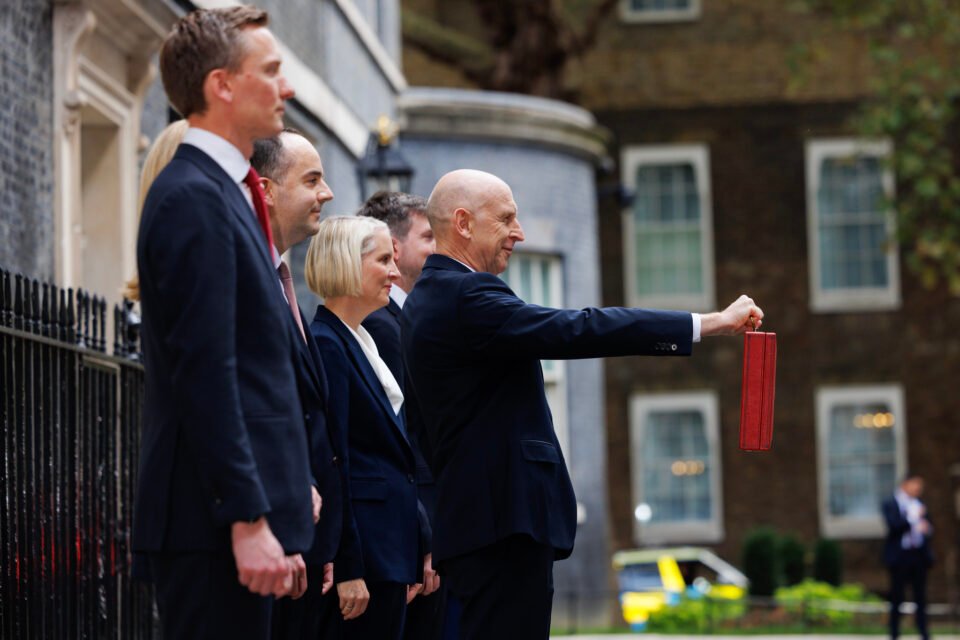
Image credit: HM Treasury via Flickr