
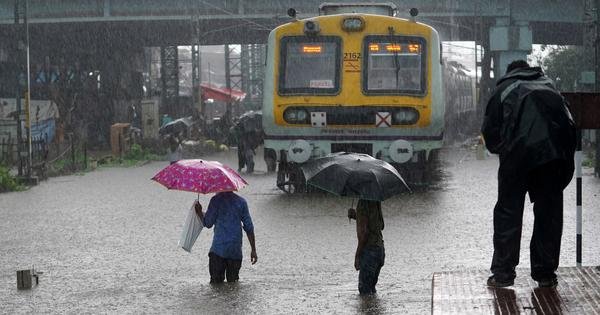
Cities account for 60% of India’s GDP. Since economic activities create an avenue for mobilising tax revenues, our city governments should have been rich too. But you only need to feel the AQI levels in Delhi or experience the crumbling roads of Bengaluru to realise that the pipeline connecting economic activities to revenues is broken. Here are some figures from the RBI’s annual report on municipal finances from 2024 to put this imbalance in context. One, even though urban areas contribute 60% of India’s GDP, the total self-generated revenue of all municipal corporations combined is merely 0.4%. It’s not a typo. Two, even in an urbanised state such as Tamil Nadu, which has several mid-sized cities, the ratio of the tax revenue raised by all municipal corporations to the tax revenue raised by the state government is an abysmal 1.8%. And three, of all large states, only in Maharashtra is the ratio of municipal corporations’ revenue to state government revenue greater than 10%.
Let’s make sense of these numbers through an example. A city typically houses various businesses, such as factories and other business establishments. A factory would have to pay corporate taxes on the profit it generates. The managers and factory workers will have to pay income taxes on the salaries they earn each month. The Union government’s tax machinery collects these corporate and income taxes. This money is then distributed between the Union and state governments based on the formula proposed by the Union Finance Commission. Next, the factory would require various inputs, on which it would have to pay GST. This will again be shared between the Union and the states. Excise taxes on the fuel consumed by the factory would be levied by the states. The factory employees would spend their incomes on various goods and services, paying GST, which would again be divided between the Union and the states.
As you can see, all the different kinds of economic activities a city creates translate into revenue for the Union or the states, and there’s hardly any source of direct income for our cities. In the immortal lines from the movie Swades (2004), this situation is like “Apne chaukhat ka diya (giving light to neighbour’s house)”.
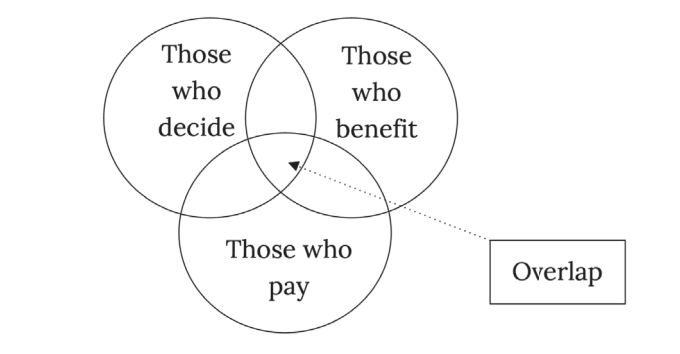
This is a violation of a core principle of public finance called the Wicksellian Connection. The principle states that the higher the overlap between “those who decide”, “those who pay”, and “those who benefit”, the better the quality of public services. The people in Kanpur would prefer to have better waste management infrastructure, while people in Bengaluru would want better pavements. However, the authority (ie the Union) deciding the priorities is too far (and likely disconnected) from the potential beneficiaries (ie the local government) to realise the different preferences. It results in misplaced priorities and suboptimal outcomes. The same applies to tied transfers from the states to local bodies.
When people’s preferences and service delivery do not match, it impacts the perception of the local bodies among the citizens, possibly reducing the value they should ascribe to it.
The Constitution of India divides the tax-raising powers between the various levels of the government. It assigns income (except agricultural) tax, customs duties, corporate tax, etc., to the Union government. The states are given the authority to raise revenue from land through stamp duty on property transactions, registration fees on vehicles, excise duty on liquor, etc. These are all specified in the Seventh Schedule and Articles 268 to 293 of the Constitution. After the 74th Constitutional Amendment, the Constitution provided avenues for the urban local bodies to finance their functions. As per Article 243X, the state governments can authorise urban local bodies to levy, collect and appropriate taxes, duties, tolls and fees. However, there is a catch: the Constitution does not provide these local bodies with any direct taxation powers. It’s the state government’s discretion to confer taxation power on the municipal bodies. Thus, the rates of various local taxes, such as property tax, entertainment tax and the quantum of revenue raised thereby, vary from state to state. Many states prefer not to devolve these taxation powers to the local governments. For instance, while BBMP collects the property taxes, the valuation method and slabs are fixed by state rules. Similarly, the Municipal Corporation of Delhi collects property tax, but the Delhi government approves the rates, exemptions and methods.
Thus, while the Union and states have direct taxation powers derived from the Constitution, the urban local governments derive their powers from the state governments. Some commentators have compared the urban local bodies’ limited constitutional mandate to raise revenue to that of a “birth defect”, i.e. these bodies’ limited fiscal autonomy compared to the Union or the states can be traced back to the constitutional amendment that created them.
To understand why local governments have been left at the mercy of the state governments, we need to understand the anatomy of decentralisation in India.
The state of India’s city governments is the tell-tale sign of a half-hearted decentralisation. At one point in time, the term “decentralisation” was touted as the solution to all ills. But many PhD dissertations, journal papers and World Bank projects later, we understand it better now. Throwing some light on this concept can help us put a finger on what’s exactly wrong with Indian cities.
Let’s begin by understanding the three forms of decentralisation: de-concentration, delegation and devolution.
De-concentration is the simplest form of decentralisation. As the name suggests, it means decentralising functions and responsibilities. For example, if you can submit a passport application in Mysuru instead of having to come to the state capital, this function can be said to have been de-concentrated. The various government branch offices and grievance centre kiosks are examples of de-concentration.
Delegation means that specific functions are carried out by another organisation or the government nearest to the citizen on behalf of the more distant government. In the Indian case, the plethora of state public-sector enterprises for public transport, power distribution and water distribution are examples of delegation. For example, Bengaluru Electricity Supply Company Limited (BESCOM) is a Government of Karnataka company tasked with the responsibility of supplying electricity to the state capital.
Devolution is the most comprehensive form of decentralisation. Devolved units hold defined spheres of autonomous action. Policy implementation and authority shift to the government closer to the citizen. This typically means having elections at the subnational level. For example, Indian states are devolved units with clearly defined responsibilities, and tax revenue is handled in the Constitution.
With these definitions at hand, we have one way to diagnose the dismal situation of our city governments: the Union–state government relationship is characterised by devolution, while the state-local government relationship is characterised by delegation and de-concentration. State governments tightly control resources, personnel and plans, treating local governments as deconcentrated implementing agencies. The core bottleneck is one of public finance.
Decentralisation literature talks about 3 Fs: funds, functions and functionaries. While the constitutional recognition has provided city governments with functions (responsibilities) and functionaries (offices and administrative staff), the problem lies in the domain of funds.
Decentralisation can happen in three dimensions: political, administrative and fiscal. These dimensions are further characterised by four factors: authority, autonomy, accountability and capacity. The USAID Democratic Decentralisation Programming Handbook has a helpful framework that combines these three dimensions and four characteristics.
This framework can offer valuable insights into India’s urban governments. First, they are characterised by poor capacity across all three dimensions of decentralisation. But here’s something more interesting: Urban governments in India do pretty okay on administrative decentralisation, not so well along the political dimension, but score a big zero on the fiscal dimension.
A classic example is that of the local government in Bengaluru. The Greater Bengaluru Authority (GBA) is the elected city government responsible for roads and drains. However, the Bangalore Development Authority (BDA), a state-controlled body, is in charge of long-term planning and creating new layouts. The Bangalore Water Supply and Sewerage Board (BWSSB), another state agency, is in charge of water. The city’s public bus transport, Bengaluru Metropolitan Transport Corporation (BMTC), is a monopoly owned by the state government. So, you have a situation where one agency (BWSSB) digs up a road to lay pipes, another (GBA) is supposed to fix it and a third (BDA) might have a grand plan for the area that neither of the other two is fully aware of, while the BMTC bus suffers since it has to ply on the dug-up road. This creates a coordination nightmare and a complete lack of accountability. Who do you blame for a broken, flooded road? The mayor? Or the chief minister who controls the BDA, BMTC and BWSSB?
Political scientist Devesh Kapur writes, “At the heart of state-building is a fiscal story.” And so, it’s not unexpected that the sorry state of fiscal decentralisation is a powerful reason behind the abject failure of our urban governments.
Excerpted with permission from Fiscal Fables: A Citizen’s Guide to Public Finance, Sarthak Pradhan and Pranay Kotasthane, Penguin India.