
October 8, 2026
Let’s build an economy where patients, renters, and even youth hockey teams are given priority over investor profits.
With AI leaders publicly weighing the odds that their technology triggers human extinction, less-apocalyptic industries rife with bad actors—the big banks, health insurers—seem almost tame in comparison.
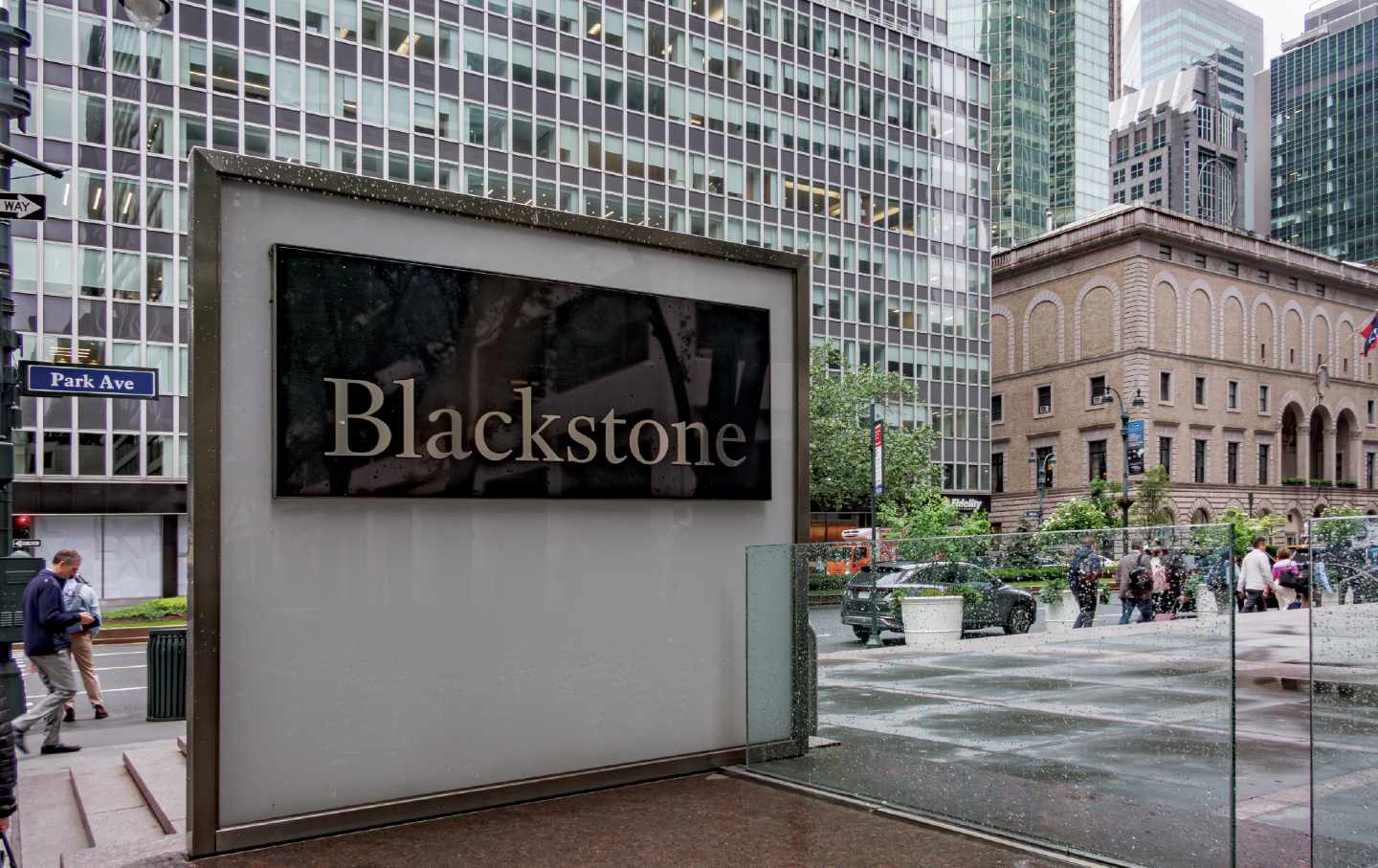
But until the machine uprising, at least, ours is a world profoundly shaped by those more familiar corporate malfeasants. And though they’ve been displaced in the headlines by the likes of OpenAI, Anthropic, and Meta, they’re still making American life more expensive, inequitable, and dangerous. And increasingly, if you go up the chain far enough, you will find the ultimate culprit: private equity.
Across sectors ranging from veterinary medicine to mobile home parks, ownership by these investment firms has been linked to deteriorating working conditions, degraded customer experiences, and devastatingly poor service outcomes—all to line investors’ pockets.
Today, over 33,000 businesses employing more than 13 million US workers are PE-owned. Unlike a traditional entrepreneur, who launches or buys a business to generate wealth but is also personally invested in its long-term viability, private equity often acquires companies to get in, get out, and extract as much profit as possible along the way. If that means shedding staff, stunting wages, raising prices, offering a cheaper-to-produce (i.e., worse) product, and triggering a death spiral for the organization—so be it.
According to Megan Greenwell, author of Bad Company: Private Equity and the Death of the American Dream, “The only incentive is to make money for the private equity firm. Sometimes that can mean strengthening the portfolio company, because you want to take it public…. Sometimes that means weakening your own portfolio company. And it does not matter which of those strategies is morally correct.”
This story has played out on the national stage with household-name brands like Toys “R” Us and Red Lobster. To minimize their own risk, firms acquire businesses with the help of massive loans that the target companies are responsible for repaying. Blame for Red Lobster’s 2024 bankruptcy was cast at the feet of its generous all-you-can-eat shrimp deal—Icarian hubris, crustacean style—but less often mentioned was the $375 million in debt its former PE owner, Golden Gate Capital, foisted upon the chain. Golden Gate also sold the land beneath the restaurants, with the firm pocketing $1.5 billion to cover its purchase of the company while Red Lobster was forced to pay rent for property it previously owned.
Current Issue

In filing for Chapter 11, Red Lobster and Toys “R” Us were far from alone. PE-owned companies are 10 times more likely to declare bankruptcy than other businesses. It’s bad enough when customers lose access to beloved toy stores and an unlimited bounty of shrimp linguini alfredo, and far worse when workers lose their jobs. But over the decades, private equity has increasingly staked its claims in sectors providing critical public goods, and the results can be disastrous.
When healthcare providers go under—and 44 percent of 2025’s largest healthcare bankruptcies were linked to PE—communities lose their hospitals. In PE-owned nursing homes, residents are at greater risk of winding up in the ER, while in PE-owned ERs, patients are at greater risk of death.
Meanwhile, in housing, investment firms—who’ve been found to raise rents more steeply than other landlords—are projected to own 40 percent of single-family rentals nationwide by the end of the decade. Tenants across PE-owned apartments often report major maintenance issues, but the good news is that they don’t have to deal with those poor conditions for long, because corporate landlords are more likely to file eviction papers.
And even when the stakes are lowest, private equity manages to plumb depressing new depths. PE giants are now devouring the $40 billion youth sports industry, where inflated prices mean fewer youngsters get the chance to play. In Michigan, one PE-backed rink told a local kids’ league that parents were banned from livestreaming hockey games. If relatives wanted to tune in from afar, they’d have to shell out for a $215.99 streaming subscription.
There are signs, however, that the bubble may be about to burst. As it turns out, businesses that have been stripped to the bone aren’t exactly hot prospects for resale. Recent reporting found that the number of unsold PE portfolio companies is at an all-time high, and these days, their returns have significantly lagged the S&P 500.
In Congress, progressive lawmakers have proposed a regulatory framework that could thwart future resurrections of the private-equity vampire. Earlier this month, Senator Elizabeth Warren reintroduced her Stop Wall Street Looting Act, which would close the carried interest loophole, make PE firms liable for the debts their businesses accrue, and expand worker protections. And for years, Representative Ro Khanna has been pushing the Stop Wall Street Landlords Act, which would nix subsidies for large institutional investors buying mortgages on single-family homes. Real progress has also been made at the state level, with the rate of private equity deals in healthcare slowing amid new regulations in states including Connecticut, Massachusetts, and Oregon.
Senator Warren succinctly summed up the industry late last year when she said that “private equity guts everything.” But if Americans can summon the guts to fight back—to create regulations that stop vulture capitalism in its tracks—we can build an economy where patients, renters, and even youth hockey teams are prioritized over investor profits.
More from The Nation

Establishment Democrats obsessing over Hasan Piker’s every move seem to have no issue talking to Maher, despite his decades of open bigotry.

Houthi attacks on Saudi oil infrastructure heighten regional tensions and push up oil prices.

With more than 900,000 Puerto Rican voters, Florida can be won in 2026 and put in play for 2028. Give Angie Nixon the chance she deserves.

Talking to Tyler Hack, who leads the nation’s only political action group dedicated solely to getting trans rights supporters elected.
The disgraced former congressman was a better representative of the GOP than the party would like to admit.