
One of the seven named plaintiffs, an immigrant from Russia, had his work authorization documents and his wedding band seized by ICE and has been unable to retrieve them after five months.
WASHINGTON (CN) — The Trump administration faces a challenge to the apparent refusal by the U.S. Immigration and Customs Enforcement to return personal items to individuals held in and subsequently released from immigration detention.
The American Civil Liberties Union filed the class action in the U.S. District Court for the District of Columbia, seeking an injunction to order the government to return wrongfully held items — such as work authorization papers and wedding bands — and halt any further withholdings.
According to the ACLU, ICE has a de facto policy of holding onto the personal property of individuals detained following civil immigration arrests “long after any legitimate governmental interest in the property has expired.”
Since President Donald Trump returned to office in January 2025, ICE has routinely failed to return important items after seizing them, including government-issued documents like passports, Employment Authorization Documents and driver’s licenses, as well as money, jewelry, cell phones, car keys and clothing. Such items have been held for months after individuals have been released from ICE custody, the ACLU argues.
“Since January 2025, ICE has routinely failed to return important items seized from people detained for civil immigration purposes after releasing them,” the ACLU wrote. “ICE has deprived people of such items for far longer than any conceivable governmental interest would justify, often months after the individuals were released from ICE custody. Across the country, federal judges have held government officials in contempt, or threatened to do so, due to ICE’s failure to return items that had been seized from people released from ICE detention.”
The lawsuit includes seven named plaintiffs who have been detained by ICE and have been unable to obtain their possessions since their release. At least five months have passed for each plaintiff in their recovery efforts.
As a result, the plaintiffs have lost their jobs, feared leaving their homes due to their lack of documentation and suffered other personal and economic hardships, the ACLU said.
The plaintiffs include migrants from Venezuela, El Salvador, Cuba, Colombia, Guatemala and Russia.
The Cuban migrant fled to the United States 46 years ago when he was 11 years old, and had his Social Security card and Florida driver’s license taken by ICE. The Russian migrant, Vladimir Izmailov, came to the United States to seek asylum and had his wedding band, belt, wallet, driver’s license and employment authorization documents taken by ICE.
Izmailov said in a statement announcing the lawsuit that ICE’s refusal to return his belongings has made “a horrible experience even worse.”
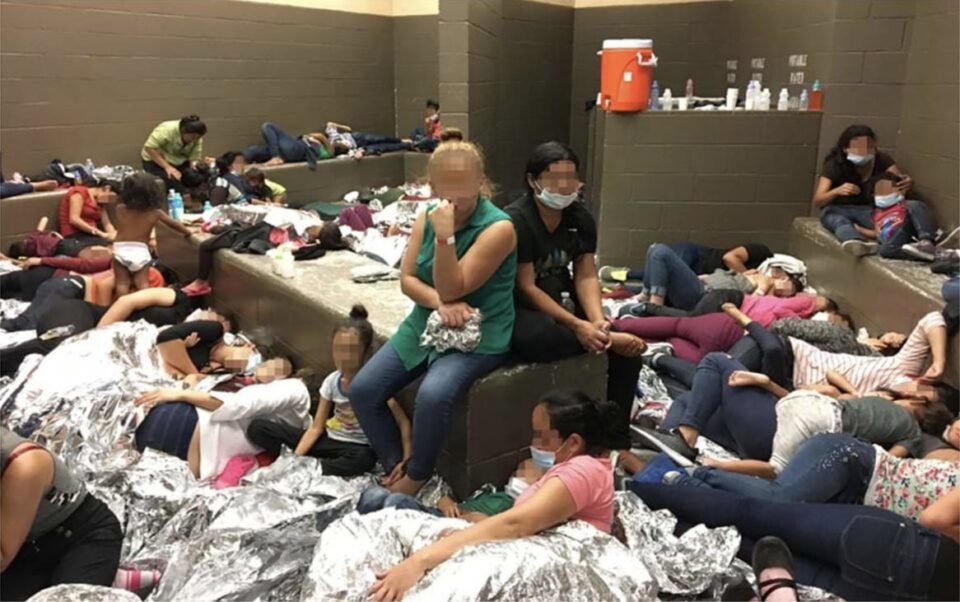
“ICE detained me in terrible conditions, without proper nutrition and medical care for months,” Izmailov said. “Now, I’m struggling to provide for my family because ICE still has my documents that show I am authorized to work. ICE even still has my wedding ring, which holds great sentimental value for me and cannot be replaced.”
According to the ACLU, ICE has two relevant directives meant to govern its handling of detainees’ property that have clearly been ignored.
The first, the “Confiscation Directive,” governs instances where ICE seizes documents from civil immigration detainees and requires that any decision to retain documents be based on a “clearly articulated operational need.” Under the de facto policy, ICE has authorized individual officers to decide when to return documents, even when they lack a legitimate justification.
The second — the “Detention Directives” — governs other forms of property and requires that they be safeguarded and returned to detainees upon their release, again unless there is an ongoing, legitimate governmental interest. ICE has also ignored this directive to allow its officers to choose when they return property upon release.
Michael Perloff, senior staff attorney at the ACLU of D.C. and lead attorney in the case, pointed to a 2024 decision by the U.S. Court of Appeals for the District of Columbia Circuit in *Asinor v. District of Columbia,*which held that a similar practice by the Metropolitan Police Department clearly violated the Fourth Amendment.
“The Fourth Amendment exists so that overzealous government agents cannot take and keep our property for no reason,” Perloff said. “We cannot let ICE trample on this fundamental protection against abuse of power.”
The case has been assigned to U.S. District Judge Carl Nichols, a Donald Trump appointee.
The Department of Homeland Security did not respond to a request for comment.

Subscribe to our free newsletters
Our weekly newsletter Closing Arguments offers the latest about ongoing
trials, major litigation and rulings in courthouses around the U.S. and the world,
while the monthly Under the Lights dishes the legal dirt from Hollywood,
sports, Big Tech and the arts.