This article is part of Fintech Leaders, a newsletter with 90,000+ builders, entrepreneurs, investors, regulators, and students of financial services. I invite you to share and sign up. If you enjoy this conversation, please consider leaving a review on Apple, Spotify, or Youtube.
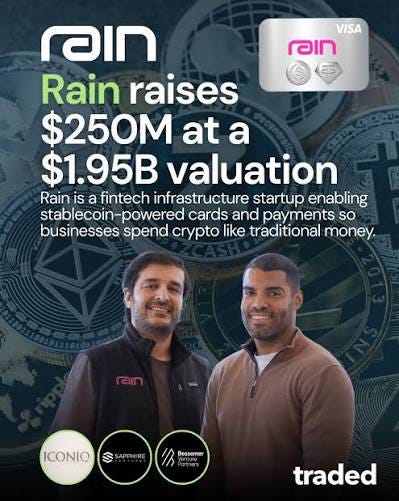
I sat down with Farooq Malik, CEO & Co-Founder of Rain, a $2Bn company that’s building infrastructure for Stablecoin-powered products, including card issuing, payments, wallets, and much more for businesses like Western Union, Slash and Nuvei. In 2025 they grew 30x and they recently raised a $250m round led by ICONIQ Capital.
We discussed why Rain aligns the entire company behind a single north-star metric each year, the experimental use cases emerging with programmable money, why speed is not always a virtue in financial systems, how Rain survived the crypto winter of 2022, and what it actually takes to negotiate a fair deal with a half-trillion-dollar partner when you are the small company in the room.


Rain began with stablecoin-backed card issuing as very deliberate choice for its first product. Card issuing is arguably the most complicated form of payment there is, with thousands of edge cases, countless merchant categories, and transaction types that behave nothing alike. A laundromat does not authorize the way a fuel pump does. Farooq’s bet was that if Rain could make the hardest thing work on a blockchain, everything easier would follow. It is a principle plenty of people in the startup world preach and few actually build around, and it was not intuitive to the Rain team until they brainstormed, argued and eventually reasoned their way there.
The result is proprietary infrastructure that connects any stablecoin on any blockchain to any payment terminal on earth. Underneath the card sits Rain’s own account layer, which authorizes transactions across multiple blockchains and multiple tokens in a few hundred milliseconds, with zero intervention from the user. Nobody has to bridge a token from one chain to another or swap an unsupported token for a supported one. It works out of the box.
What excites Malik most is what that infrastructure unlocks once money becomes programmable. He compares it to the early smartphone era, when a video call was not an obvious use case just because the phone had become mobile. Rain now powers card programs that are not obviously stablecoin products at all: brand-new use cases that only exist because of stablecoins, and traditional use cases that run on stablecoin rails for the capital efficiency. Teams are building agentic payment flows on Rain’s stack. Others run programmatic money movement for credit card and receivable origination, or hourly payroll that disburses wages by the hour instead of every two weeks. Some clients have wired up DeFi integrations where swiping the card borrows against on-chain assets in real time, permissionlessly, without Rain in the loop at all.

In almost every domain, faster is better: a shorter trip, a quicker delivery, a movie you can binge instead of waiting for. Money is the exception, and Farooq knows this well. The friction inside large financial institutions accumulated by inertia, one audit at a time, each adding a step and almost never removing one, until a process that once had five steps has twenty-five. Stablecoin rails strip that away and settle in five minutes what used to take weeks, which is unambiguously good for a business moving money across borders. But the same speed that helps a small business manage working capital can hurt a consumer being defrauded, because the time locks that protect people assume money moves slowly. Making money faster exposes risk at exactly the institutions society trusts most, and Malik recognizes that’s a big source of institutional anxiety.
On regulation, Malik is measured and optimistic. Regulators now understand they were not ready, he says, and that recognition is pushing them to get ready. As an infrastructure player, Rain does not care much which direction the rules go, only that they are clear and that change is iterative rather than the start-stop whiplash where something is permitted one day and forbidden the next.
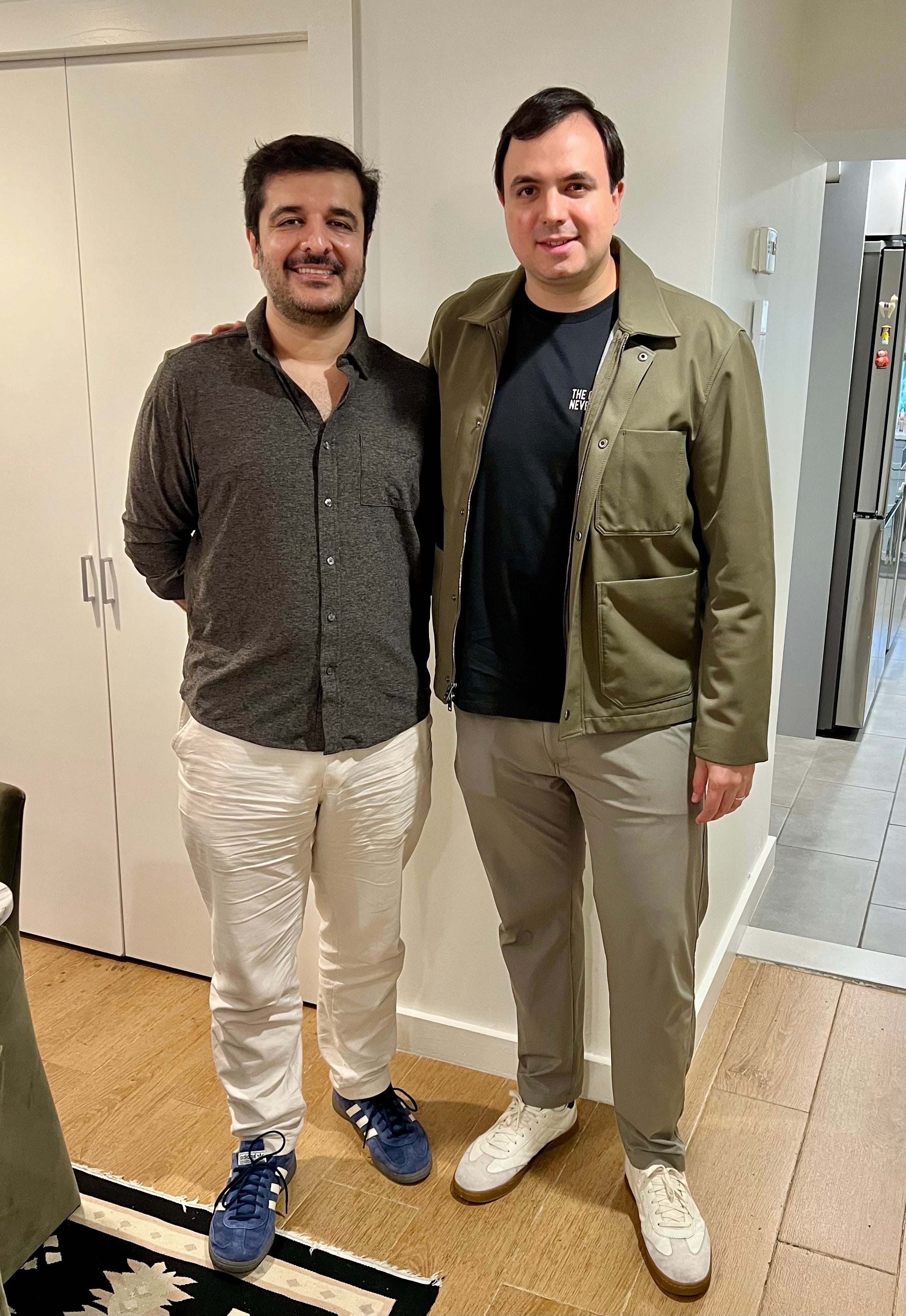
Malik’s global instincts did not start with Rain. He grew up moving around the world with his family, following his father’s job from country to country, absorbing early on that markets, cultures, and the way people handle money are never quite the same from one place to the next. That cross-border thinking shows up directly in how Rain is built.
Rain’s cards are used across dozens of countries, and Malik rejects the software industry’s favorite shortcut. Marketplaces like Airbnb went global without going global, running from a single hub while users typed in a URL from anywhere. Financial services do not work that way, because they are hyper-regulated in a way information is not. Before Rain enters a market, it engages local counsel and regulatory advisors, makes sure customers can reach the company directly, and plans for the scenario where a market succeeds and regulators reasonably expect Rain to establish and invest locally. The strategy Malik borrows from the last generation of global companies is expand and then land: go global, find where the demand actually is, then invest locally to supply it the way each market expects.
The counterintuitive data point is where the dollars end up. The single largest destination for money flowing through Rain’s systems is the United States. Money may originate anywhere, but it tends to settle with American merchants, because people spending dollars want to buy dollar-denominated things. Alongside that, Rain sees rich cross-border activity that would be painful over legacy rails: a business in Bolivia importing auto parts or windscreens from Indonesia cannot easily send a SWIFT transfer, but paying an Indonesian vendor with a card is straightforward.
Rain runs an in-person-first culture out of a New York headquarters, with hubs in Washington, DC, and other cities that emerged partly from regulatory investment and partly from simply hiring the best available person for a role and watching a cluster form. Malik still keeps several remote team members and funds travel so people can meet, because being in the same room accelerates the cross-pollination of ideas and the triage of problems. His advice to founders building globally is simple: reach out directly to people who have done it, be specific about the one thing you want to learn, and skip the vague coffee chat ask. Most founders remember how hard the first hire and the first customer were, and are genuinely happy to help.
On the topic of how a startup strikes a fair deal against a company many thousands of times its size, and in Rain’s case that company is Visa, Farooq says Rain never focused on fairness in the abstract, only on demonstrating follow-through. At the early stage it is tempting to take whatever a giant offers, but the more valuable move is to let both sides evaluate each other, scope the first engagement narrowly, and name the asymmetry out loud, because telling a large partner “we are small, you are big” signals you understand your obligations.
The trap is the standard big-company posture: we can walk away anytime, we will not pay you much, the exposure is your reward. Rain flips it, offering a service the partner can walk away from while acknowledging the risk openly, and lets that goodwill do the work. With Visa, that approach turned a lopsided size gap into a massive partnership.
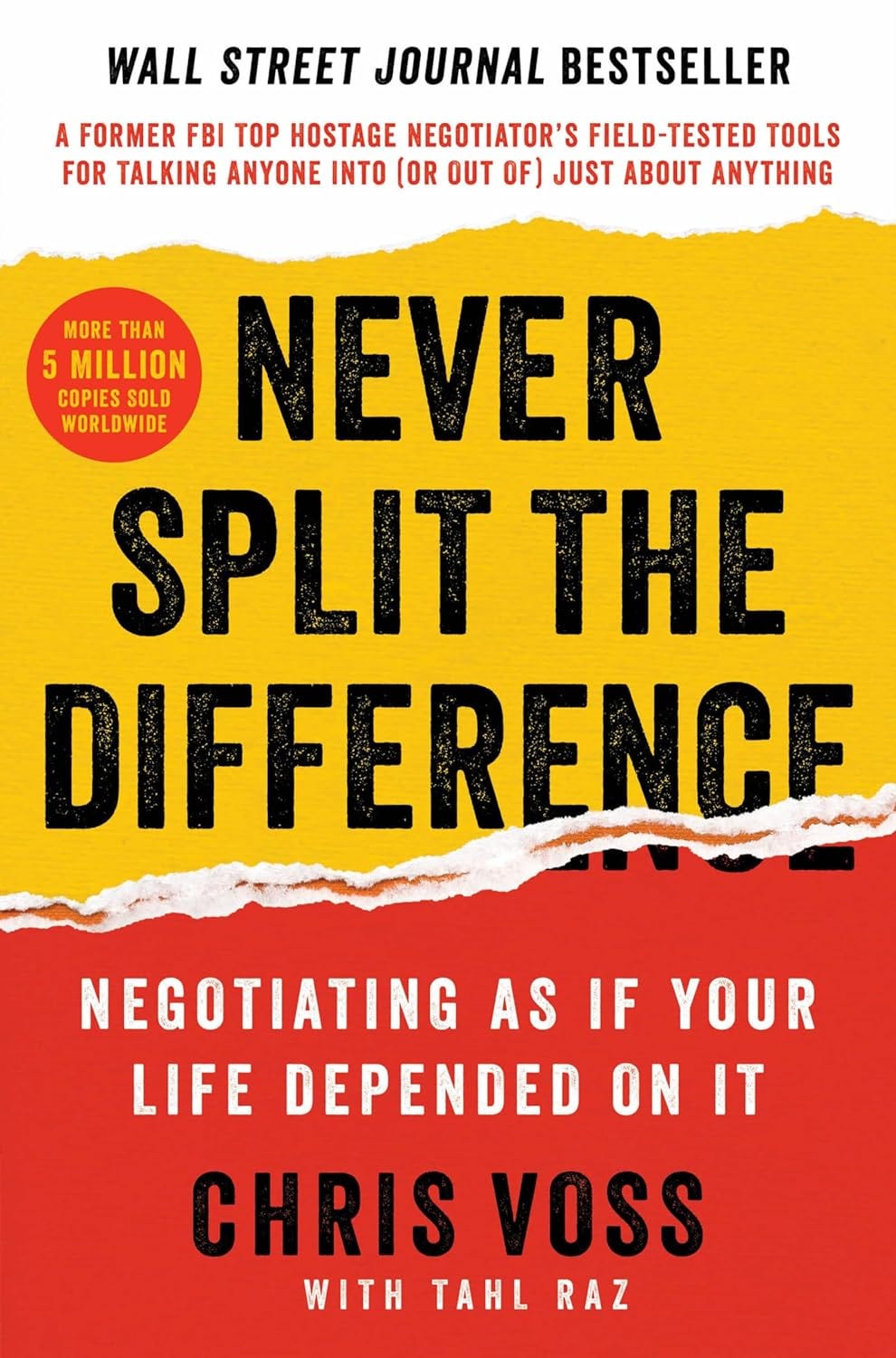
Never Split the Difference by Chris Voss. Malik never formally learned negotiation or sales in his professional career, and this book filled the gap. He returns to it often because so much of early-stage founding feels like a prisoner’s dilemma: you are effectively in a hostage negotiation with your ideas, your customers, and your revenue, and you have to get to the other side without compromising your principles or your vision. He notes that Art Levy of Brex also recommended it while navigating major partnerships.
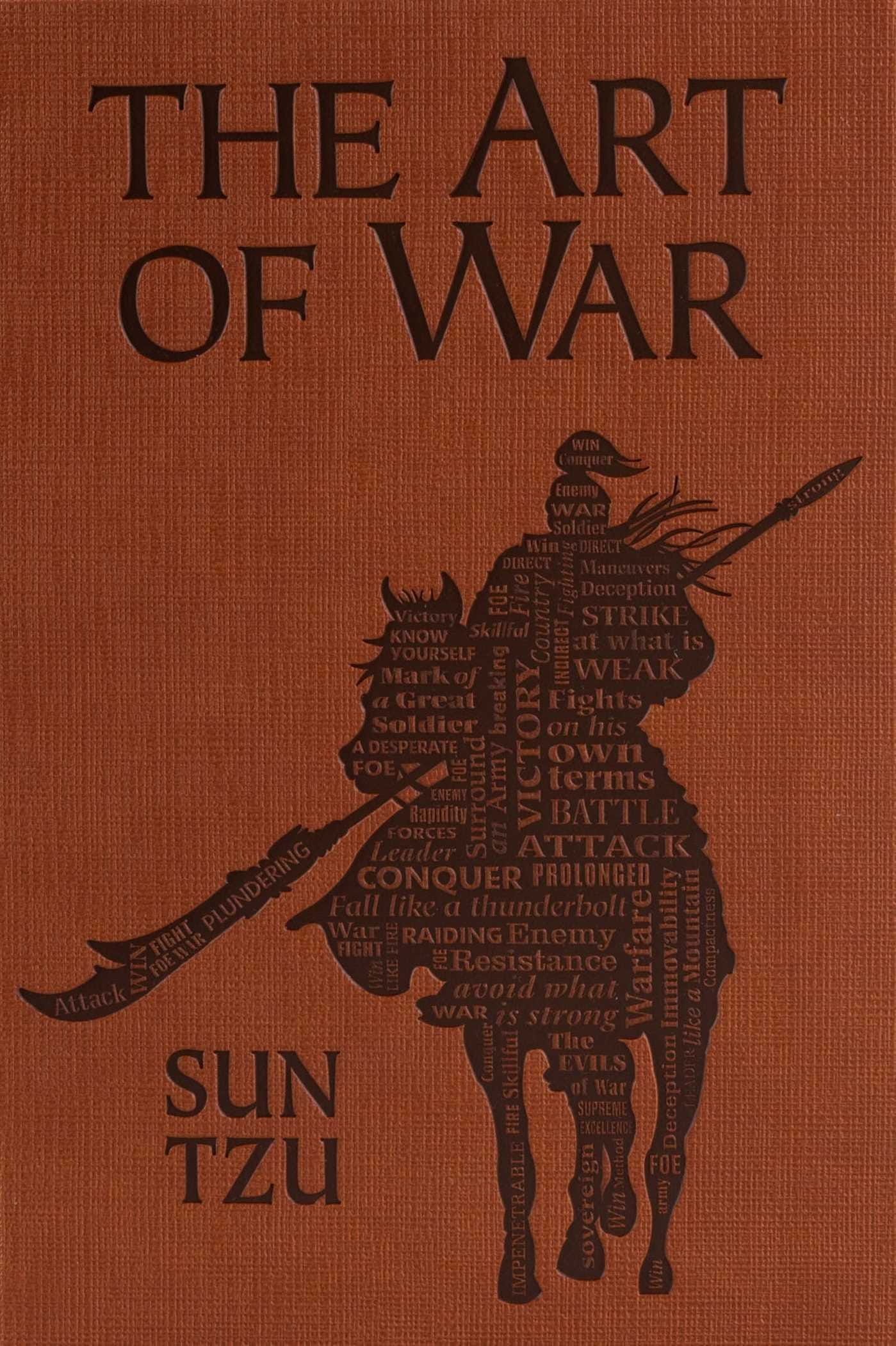
The Art of War by Sun Tzu. Malik says this book has taught him more about building a company than almost anything else, and would put it first on his list.
Farooq Malik: When you have an interdisciplinary team, it’s really important that everybody has a single principle they can go to when they’re caught between two decisions. This year our goal is volume. We have a target for TPV growth that we set at the beginning of the year, and everybody is compensated against it. We have variable pay tied to hitting the target, and there are no tiers. If we don’t hit it, we don’t get any variable pay. You have to make things very simple and clear. Last year the goal was revenue, because that was how we demonstrated the utility of the platform to our partners and investors. Companies evolve. This year is about consolidating volume so we can be more aggressive with economics, and it gives us flexibility for experimental use cases that may not drive revenue yet but drive volume and utility. Whenever you’re building at the frontier, there are prospective use cases that aren’t obvious, and we didn’t want to put a revenue gate there just for the sake of having one.
Farooq Malik: Rain has been building the financial infrastructure for tokenized money from the very beginning. We started with card issuing because it’s the most complicated type of payment. There are thousands of edge cases and different merchant categories; a laundromat behaves differently than a fuel pump. Our thinking was that if we could get the complicated things working on the blockchain, the easy things would become easy. We connect any stablecoin on any blockchain to any payment terminal globally. Underneath, we have account infrastructure that authorizes transactions across multiple blockchains and multiple tokens in a few hundred milliseconds, with no intervention from the user. They don’t have to move a token from one chain to another or swap an unsupported token; it just works out of the box. On top of that, teams are building agentic use cases on our stack. We have programmatic money-movement use cases like credit card and receivable origination, and payroll that disburses paychecks on an hourly basis. Some clients have built DeFi integrations where you swipe the card and borrow from a DeFi protocol against your on-chain assets in real time, permissionlessly, without Rain involved at all.
Farooq Malik: I’m always surprised at the ingenuity of builders. The level of intuition and creativity in our customer and partner base is insane. These are some of the most thoughtful people I’ve ever met, building things that haven’t been possible before and figuring out how to make them possible. That’s where being an infrastructure partner at the forefront of a technology movement is rewarding, because you get to work with really smart people on the earliest days, when they say, I have this crazy idea, how do I plug the pieces together to make it work.
Farooq Malik: One thing that’s emerged is that regulators understand they haven’t been ready, and that recognition is helping them become ready. We’ve had a number of great conversations with them, and it’s been refreshing to see they’re thoughtful, educated, and understand both the opportunities and the risks. As builders, that’s all we can ask for: that regulatory institutions take a considered approach and weigh the pros and cons. As an infrastructure player, whichever way regulations go is fine with us, as long as they’re clear and iterative rather than start-and-stop, where something is fine one day and not the next. What’s unique to early-stage companies is the time frame. For us, a week can be life or death, and a year definitely is. For a regulator or an elected representative, a year is business as usual and two years is just the election cycle. That mismatch drives a lot of the anxiety. You have to calibrate, and believe things end up where sensible people would take them.
Farooq Malik: One of the biggest things we hear people worried about is speed. In most things, faster is good: getting somewhere faster, waiting less for your food. But in monetary systems, speed doesn’t necessarily equal good. The layers of process inside a global financial institution aren’t there by design, they’re there by inertia. Every audit adds a step and rarely removes one, so over ten years you have ten more steps. With stablecoin-based treasury management, something that used to take weeks you can now do in five minutes, and that’s good. But imagine a consumer being defrauded, money flowing out of their account into cash. If that happens instantly, the time locks and security controls that were there to prevent it no longer work. So there’s natural friction. Making things quicker exposes risk, and it exposes it at the same institutions that are the bastions of trust today. We’ll probably see structural limitations on how quickly the largest institutions can safely do certain things, and that’s not good for anybody.
Farooq Malik: It’s a lot of work. Before we do anything, we engage local counsel and regulatory advisors to understand the on-the-ground realities and make sure that if anybody has an issue, they can reach us directly. That level of engagement has helped us build good relationships in our markets. We also operate with a plan for what happens if there’s massive success in a market: it’s reasonable for regulators there to expect us to come in, establish, and invest, and we’re happy to do that. The only way to build a global company is to build a global company. In software and marketplaces, many people build global companies without building global companies; they operate as a technology hub in one place and you access the product by typing in a URL. But financial services are hyper-regulated differently than information, so it requires a different approach. There’s a lot to learn from the last generation of global companies: expand and then land. Go global, figure out where the demand is, then invest locally to supply the services the way people expect to receive them.
Farooq Malik: What really helped was being vision-driven about the goal we had in mind. Beyond the public-facing goal, we had a deep-seated belief about the change that was going to be inevitable, the move from electronic money to digital money, and we wanted to stay in proximity to that change in any way that kept us relevant: by being early, by being right, by having customers and credibility. That manifested as a credit card product for DAOs and decentralized teams that couldn’t access traditional financial services because they were set up in unusual ways. When FTX happened and trust eroded, we were largely fine, because our initial customers were large crypto foundations that had already raised and had capital, some of them billions. We didn’t have that money, but we had line of sight to keep building. From the very beginning of Rain to now, we’ve never had a down quarter. Not because things were always great, they were good and bad and worse, but because we stayed focused on execution and hyper-focused on our customers, doing more with the ones where things were working and building radically good relationships with our evangelists. The only lasting impact is all these white hairs in my beard.
Farooq Malik: Last year we grew volume 30x from the beginning of the year to the end, and it wasn’t from a tiny base, it was real. This year that velocity is continuing; we’re still growing double digits month over month on a bigger base. About 60 to 70% of our customers are live, and we’re still signing customers faster than we’re launching them, so there’s a lot of growth in the tank. One exciting thing, especially since the passing of the Genius Act, is that people you wouldn’t expect to be interested in this technology are showing up and saying they’ve been thinking about it for a while and want help doing it. A lot of our partners have grown massively, Slash is growing super fast, and we’re a second-order beneficiary of the execution being done by really tremendous teams. Between now and this time next year, I think this entire space will hyper-accelerate, and our early bet, that stablecoins aren’t digital assets, they’re just money, is going to start bearing out.
Farooq Malik: It’s all driven by vision alignment. When we met the Visa team, especially the crypto team, what resonated is that they were hyper-focused on what stablecoins and tokenized money mean for their business, and they weren’t thinking about it as a threat, they were thinking about it as an opportunity. We found a peer in them, hyper-focused in the same way we were on where the world was going, and we were a pure-play believer in what they believed too. That let us build a close relationship with their product, crypto, and treasury settlement teams to drive things like seven-day stablecoin settlement and multi-chain, multi-token settlement, and we continue collaborating with them on those initiatives.
Farooq Malik: We never focused on that. We focused on demonstrating that we follow through on what we commit to, because that builds trust. At the early stage it’s tempting to take whatever you’re given, but it’s really valuable for both sides to evaluate each other first and then figure out what a commercial partnership looks like. What’s worked for us is to scope things narrowly and say, we’re small, you’re big. Labeling that early is usually appreciated, because it signals you understand your obligations. Most of the time, large companies come in with, we can walk away whenever we want, we won’t pay you much, and this PR is your reward, take it or leave it. If you start the other way, offering a service they can walk away from anytime while being honest about the risk, that’s usually more appreciated than a clawback mentality where they try to cram you down. If you just start small, it’s easier to get it through.
Farooq Malik: It’s an interesting question, because the largest destination for dollars, believe it or not, is the United States. When people spend dollars, they expect to buy things denominated in dollars from American businesses, so the largest volume we see is money ending up in the US, going to American merchants, even if it doesn’t start here. We also see a lot of cross-border business: a company in Bolivia importing auto parts or windscreens from Indonesia can’t easily send a SWIFT transfer to its vendor, but paying with a card in Indonesia is easy. And we have ultra-high-net-worth use cases where our clients partner with registered investment advisors or broker-dealers. It’s hard to classify into neat buckets, because the ways you can slice it are so many.
Farooq Malik: About 130. If we didn’t have AI, we’d have probably had to go to 500. We’re very fortunate to have brought on really talented, mission-aligned people, but 130 is still undersized for the opportunity. We’re hyper-focused on getting leverage on each role: every person we add, how do we get them to output two, three, or four people’s worth of work. We’re making massive investments in getting technology into people’s hands so that as our customers and volume grow, customer satisfaction keeps increasing while headcount stays flat or grows far more slowly than every other metric. On usage, token spend alone isn’t a useful way to judge people; it’s about the function the tokens are spent on. Pasting an email in and asking a model to make it better is a bad use. Handing an agent a real, scoped job and letting it run is a good use. But if you outsource your judgment to AI, that’s a recipe for your own skills drifting over time. It’s tempting, dangerous, and very powerful all at once.
This interview has been edited and condensed for clarity.


Want more podcast episodes? Join me and follow Fintech Leaders today on Apple, Spotify, Youtube or your favorite podcast app for weekly conversations with today’s global leaders that will dominate the 21st century in fintech, business, and beyond.
Don’t forget to subscribe so you don’t miss big conversations and insights with the giants of Fintech.