
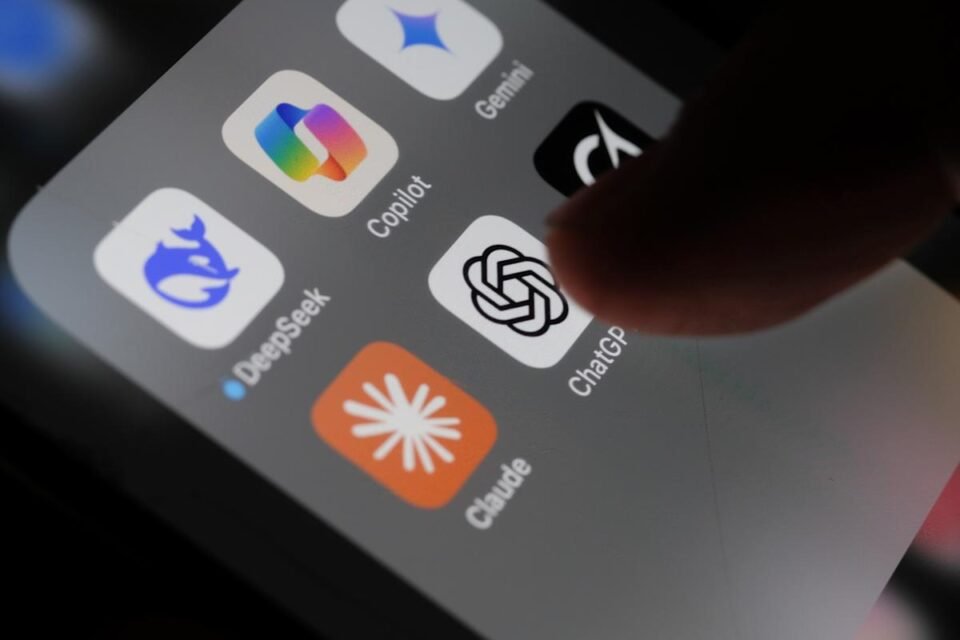
You can now use ChatGPT to analyze your finances — if you’re willing to give it access to your banking information.
OpenAI recently announced its new “personal finance experience,” which lets you ask ChatGPT financial questions and get answers based on your actual account and spending info. But some experts warn that the personalized advice may not be worth the extra risk you take by handing your financial information to an AI agent.
Before you connect your bank accounts to ChatGPT, here are some things to consider.
How does the ChatGPT personal finance experience work?
You can access ChatGPT’s personal finance experience on the web or through your iOS app by linking your financial accounts using Plaid, which supports more than 12,000 financial institutions. These accounts might include your bank account, savings accounts, investment accounts, and more. Soon, you’ll also be able to use Intuit to link accounts.
Right now, the preview version is only available for ChatGPT Pro users, though OpenAI says it’ll learn from those first users before rolling it out to Plus subscribers. Later, it hopes to make the feature available for everyone.
Read more: I asked ChatGPT for financial advice. Here’s what happened.
How can it help with your money?
Once your accounts are synced, you’ll have access to a dashboard view of your spending, payments, net worth, and more.
You can also go beyond the dashboard by having ChatGPT work toward your specific goals. It can use the information from your connected accounts to help you set a budget, work toward a savings goal, understand your investment risks, and more — or simply answer specific questions you have about your situation.
For example, if you want to save more money, ChatGPT can analyze your spending by category and help you find places to cut back and redirect the money toward savings.
While ChatGPT uses the information in your accounts to help you with your money, it can’t make any changes, like making a trade from your investment account or conducting a transaction with your credit card. It also can’t access your specific bank account numbers.
OpenAI does say it eventually wants to move beyond advice and help you “take action” on financial goals using “trusted ecosystem partners,” giving examples like submitting a credit card application or scheduling a session with a tax professional via ChatGPT — though these features aren’t currently available.
Just remember, any AI agent’s guidance is limited. OpenAI even acknowledges: “ChatGPT can help you stay informed and feel more confident managing your finances, but it is not a replacement for professional financial advice.”
Read more: 5 ChatGPT prompts to help you build a better budget
How ChatGPT’s personal finance experience compares to other tools
The process of linking your financial accounts in one place may already be familiar if you’ve used budgeting programs like Rocket Money or You Need a Budget. These apps often also use Plaid to sync your accounts.
The personal finance dashboard you’ll get from ChatGPT is similar to what you’d find from other top budgeting apps. Plenty of tools are already available to help you set spending and savings goals, create a budget, track your net worth, and more.
These apps typically offer some services for free, with upgraded paid plans for additional features. Many of the best budgeting apps available today cost under $100 for a year’s subscription.
At least for now, access to the ChatGPT personal finance experience can cost a lot more. Pro users with access to the preview pay $100 per month and Plus users, who will gain access next, pay $20 per month.
The big difference you’ll gain with using ChatGPT over traditional budgeting apps is conversation. ChatGPT can provide more personalized advice or recommendations over time using not only your linked account information but also the financial details or goals you provide when you talk to the AI agent.
Read more: How to use AI to improve your finances

Should you trust ChatGPT with your financial information?
OpenAI says the ChatGPT personal finance experience is designed to “respect your privacy and ensure that you’re in control of your information.” It specifies that you can disconnect your financial accounts at any time, and that the data will be deleted within 30 days. Individual conversations and “financial memories” can also be deleted.
But Eva Velasquez, CEO of the Identity Theft Resource Center, warns against connecting any of your financial accounts to an AI agent.
“Right now, the technology is too new,” Velasquez said. “The data sharing implications are still unknown … It’s just not something we’re going to recommend.”
Both the industry and regulators are still trying to figure out what responsible use of AI looks like, she said, and the terms and conditions you agree to today could change in the future. “For most people, letting someone else work out the bugs is the best course of action, and your sensitive financial data is not a place that you should be experimenting,” she added.
Instead, use AI as a tool to coach you toward a budget or spending plan without sharing your bank accounts. You can still have conversations about saving money, but consider inputting your spending habits and earnings yourself — rather than linking your sensitive financial data.
“It’s not about not trusting any one particular system,” Velasquez said. “It’s about when you start linking things.” Each time you link your financial accounts, you’re creating another link in the chain, which could be a potential vulnerability for your data: “Anytime you look at increasing your digital footprint, you create risk.”