

Builders are struggling as taxes and high costs bite hard.
ANALYSIS
The building industry is in dire straits. Reports this week have varied, but in NSW alone, it’s been revealed 1500 construction firms have gone bust in the last financial year.
Nationally, there have been more than 7700 developers go under in the past two years.
We need these failing businesses to survive and thrive, because they are the only ones that can build our way out of our worsening housing crisis.
And unfortunately, our governments are only making things harder for them, by taxing them, and their potential customers, to their eyeballs.
MORE:Man loses $650k as builder rips up all sales
There’s GST, developer contributions, windfall gains tax and betterment levies. There’s stamp duty, capital gains tax, foreign investor surcharges, land tax, council rates, income tax on rental revenue and even absence or vacancy taxes.
Bathla Group’s future is in the balance as thousands of construction firms shut down.
Labor also wants to tax trusts at a minimum of 30 per cent, which the building industry claims would affect family-owned and mid tier developers further.
Governments are addicted to property tax. It doesn’t just make them money, but it keeps their administration afloat.
Just look at stamp duty. Back in 2014, the NSW government posted a $2.9 billion budget surplus. It was bragging at the time about its superior economic management as most other states and territories were in deficit. Of course, no need to mention that it coincided with a massive Sydney property boom; the first significant home price growth cycle in a decade. That surplus would have been a large deficit without the $7.2 billion it took in stamp duty revenue.
MORE:Housing slump delivers $130k hit to household wealth
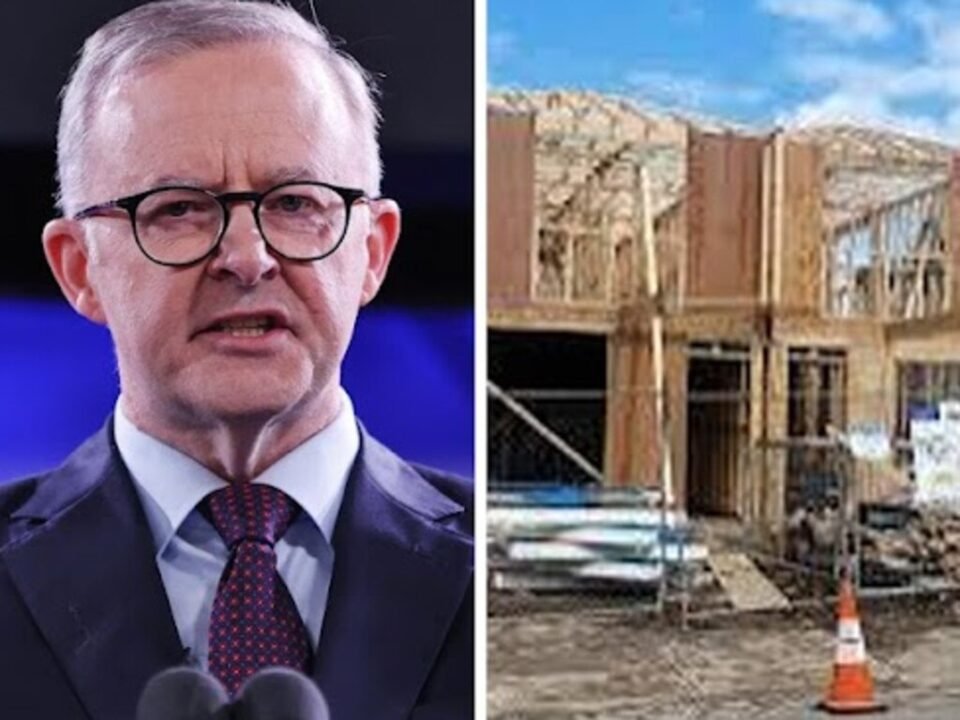
Prime Minister Anthony Albanese’s Labor budget initiatives have been met with derision by the building industry. Picture: Jonathan Ng
Fast forward to today, and the NSW government collected $14.3 billion in the 2025-26 financial year, up from $12.4 billion the year before.
At a national level, the states and territories drew a total of $34.4 billion in stamp duty revenue in the most recent financial year. The national total has been hovering around the $30 billion mark each year since the Covid pandemic.
Even now, with the market struggling, there will be tens of billions collected in tax from home sale transactions before July 2027.
Governments have created a situation in which they rely on property tax to survive.
Cutting taxes on real estate would be like taking 100 poker machines out of a suburban RSL that’s struggling to stay afloat.
MORE:Labor’s negative gearing reforms cost tenants $24k a year
Governments need property tax, like some clubs need pokies.
Australians love real estate. We live in it, we aspire towards owning it and we love to invest in it, whether it’s as an income producing asset, or improvements to our own homes.
It’s so easy for governments to leverage all this and turn it into tax revenue.
And when they’ve exhausted all avenues for the creation of new types of tax, they turn to some of the existing offsets that were established in order to stimulate housing investment and that still made it a worthwhile pursuit. Things like negative gearing or the CGT discount. They’re now gone.
If you keep taking more pieces of the pie, the baker will eventually go out of business.
And that’s what’s happening now. Who is supposed to build property? Who will invest in the supply of rental homes to a starving market of tenants?
Don’t worry about all the incentives, grants, guarantees, small deposit loans and other things the government “does” for real estate, most of which simply incentivise buyers and inflate prices … the best thing it could do would be to cut some tax. Let builders build and create supply. It’s what we desperately need.