
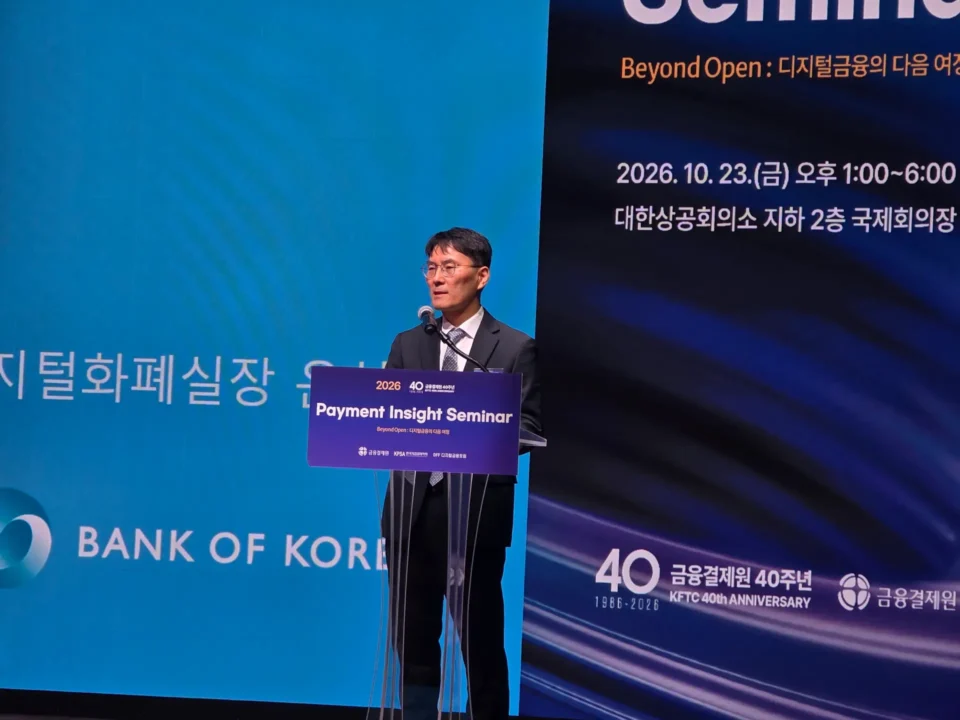
- The Bank of Korea said it emphasized the need for Project Hangang to secure central bank money, legal settlement finality and financial stability even as digital assets spread.
- Project Hangang uses deposit tokens and wholesale digital currency to improve payment efficiency and programmability, and it plans to expand both participating banks and users in a second round of live transaction testing later this year.
- Project Agora is pursuing commercialization in 2028 using deposit tokens to reduce the cost and time of cross-border remittances and support the internationalization of the won, while potentially improving foreign access to the government bond market by linking with tokenized government bonds.
Forecast Trend Report by Period


Central bank money is the final settlement benchmark
Second round of Project Hangang testing set for late December
BOK also pushes won internationalization through Project Agora
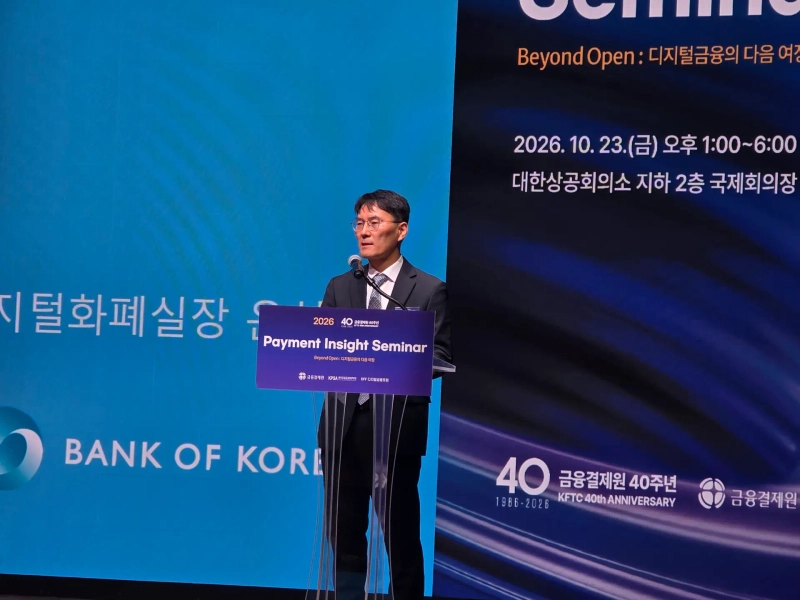
The Bank of Korea underscored the need for its deposit-token initiative, Project Hangang, saying central bank money will still have a role even if digital assets reshape the financial system.
Yoon Sung-kwan, a senior official at the BOK, outlined the progress of Project Hangang and Project Agora at the 2026 Payment Insight seminar held on October 23 at the Korea Chamber of Commerce and Industry in central Seoul.
“Blockchain technology can improve the efficiency of financial transactions, but technological advances do not eliminate the need for central bank money,” Yoon said.
He cited flexible liquidity provision, legal settlement finality, financial stability and the singleness of money as reasons central bank money remains necessary. The Principles for Financial Market Infrastructures, or PFMI, established by the Bank for International Settlements and the International Organization of Securities Commissions, also recommend using central bank money as a settlement asset where possible.
“Banks and securities firms participating in financial markets can always face liquidity shortages,” Yoon said. At such times, the central bank is the only institution able to provide liquidity flexibly.
Central bank money is a safe settlement asset with no credit or liquidity risk, he added. It is also important for securing legal settlement finality and preserving the singleness of money.
Still, Yoon said that did not mean stablecoins have no role. “Personally, I think stablecoins clearly have a role in other areas as well,” he said.
“Hangang tokens play a different role from stablecoins”
Project Hangang is the BOK’s effort to apply the role of central bank money to a blockchain-based financial system. Users would transact with deposit tokens issued by banks, while final interbank settlement would be handled with wholesale digital currency issued by the BOK.
“Project Hangang is not about issuing wholesale digital currency to do something extraordinary,” Yoon said. “It is about the BOK providing support in the background so bank deposits can be used in the form of deposit tokens on a more innovative platform and help create better services.”
He said deposit tokens could deliver benefits including programmability, control over asset ownership and usage rights, and simpler transaction procedures.
One of the clearest use cases for Hangang tokens is government subsidy payments and the management of business expenses at public institutions. “In the past, there were cases where government subsidies and business expenses were misused in the middle of the process,” Yoon said. “If deposit tokens are used, we expect improper spending can be blocked at the payment stage.”
Yoon repeated that he was not denying a role for stablecoins. “Personally, I think stablecoins clearly have a role in other areas as well,” he said.
Hangang is set for a second round of live transaction testing later this year. In that test, the BOK plans to increase participating banks to nine from seven and expand the number of users to 500,000 from 100,000. It also plans to add more merchants that can accept deposit tokens and improve services to make the system easier to use.
“Deposit tokens can contribute to the won’s internationalization”
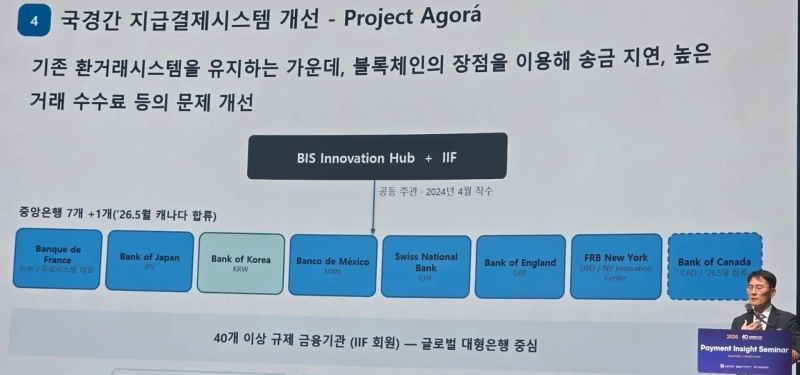
Yoon also presented a blueprint for the internationalization of the won through Project Agora. Project Agora is designed to cut the time and cost of cross-border remittances using blockchain technology. It also uses deposit tokens.
Describing the limits of the current cross-border payment system, Yoon said required checks such as anti-money-laundering reviews are conducted sequentially as funds pass through multiple banks. Agora would run those checks simultaneously and process the transaction at once when all conditions are met.
In July, Agora tested a total of 30 cross-border payments using tokens backed by real value. The average settlement time was about 80 seconds.
The BOK is targeting commercialization of Agora in 2028. It also said that if the project is commercialized, won-based deposit tokens would become more useful in global markets.
“One task ahead is how to build a domestic settlement ledger for Project Agora,” Yoon said. “We need to think not only about using it for cash settlement, but also about connecting it to tokenized assets such as government bonds.”
He said linking tokenized government bonds with Agora’s settlement system could make it easier for foreign investors to access South Korea’s government bond market. That is also connected to the broader goal of internationalizing the won.