
Written by
on October 17, 2026

Two additional cases of New World screwworm have been confirmed in Grant County, the New Mexico Department of Agriculture said Thursday.
The new cases were detected in a horse and a calf here, according to a press release from the agency. In September, the first case in Grant County — which was the second in the state — was confirmed in a horse in Mimbres. That case is now listed as inactive.
Of the new cases, one is in the Silver City area and the second near Hachita, Jenny Green, public affairs specialist for the New Mexico Department of Agriculture, told the Daily Press in an email Friday.
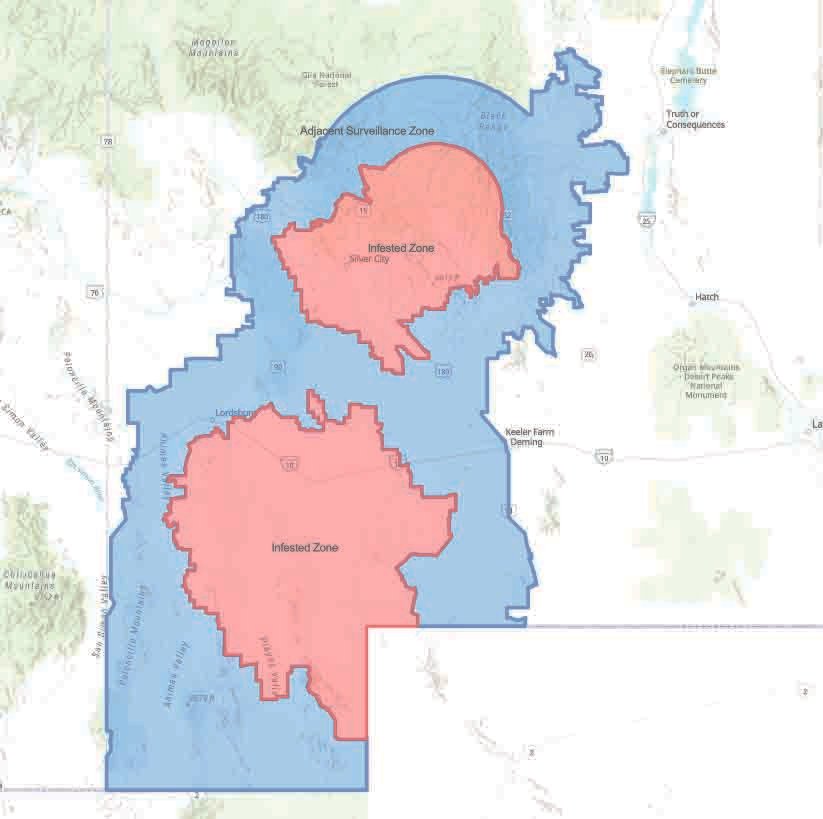
The infested zone for the Silver City case overlaps with that from the first case in Mimbres. The zone now encompasses Bayard, Santa Clara, Hurley and Silver City and areas west, including Mangas Springs, Tyrone and the Burro Mountains.
The infested zone for the Hachita case includes much of the southern leg of Grant County, into Luna County to the east and west into Hidalgo County to the Mexican border. An interactive map of the zones can be found at screw wormnm.org.
The zones will be in place for at least 84 days from the confirmation of infection, and all animals that are to be moved within or out of those zones must be inspected prior to moving.
Surrounding the infested zones are adjacent surveillance zones, where government agencies will conduct trapping to help detect screwworm flies and possibly release infertile flies to help decrease their reproduction.
The surveillance zones surrounding Grant County’s infested zones combine into one large zone ranging from east of the Black Range to the Bootheel. Inspections are not required of animals being moved in those zones, but owners are encouraged to closely monitor their animals.
Look for wounds that fail to heal, worsening injuries, maggots in wounds, foul-smelling discharge or unusual irritation around an injury. Anyone who suspects New World screwworm should immediately contact the New Mexico Livestock Board and avoid moving the affected animal.
Any warm-blooded animal, including dogs, cats and humans, can be a host for the flies to lay their eggs on.
“We are working closely with our state and federal partners to investigate these cases, increase surveillance and monitor for additional infestations,” State Veterinarian Dr. Samantha Holeck with the New Mexico Livestock Board said in the release.
“We appreciate the continued cooperation of livestock producers, veterinarians and animal owners as we respond to these additional cases,” New Mexico Secretary of Agriculture Jeff Witte said. “Early detection and prompt reporting are critical to limiting the spread of this pest. We encourage everyone to remain vigilant and work closely with animal health officials.”
A Friday press release from the New Mexico Department of Wildlife encourages people to also be on the lookout for signs of the screwworm in wildlife, including recently dead animals.
If a case is suspected in a wild animal, the release said, get a GPS location and contact the Department of Wildlife at 888-248-6866 or ispa@dgf.nm.gov during regular business hours. After hours or on weekends, contact a local conservation officer.
The animal should not be handled or transported, but if possible, take pictures of the wound or affected area.
—JUNO OGLE