
Financial systems are not what they used to be. Advances in technology, financial integration and innovation have created new markets, new products and plenty of new players. Incumbent financial services firms are under pressure as consumers have more choice than ever. The problem is that Asia’s regulators have not been able to keep up with these changes. The recent uptick in global financial risks suggests that they should move quickly. Regional cooperation in regulatory reform is a top priority.
Asia’s financial systems would be unrecognisable to our grandparents. Digital-only banks have displaced their bricks-and-mortar counterparts. Asia’s payments systems are now dominated less by banks than tech firms. Payments go through Alipay, WeChat, Gojek, Apple and Google. Lending comes from fintech firms and buy-now-pay-later platforms like Atome and Shopee. Money flows through Stripe, Square, Tyro and Paypal. Cross-border payments flow through Airwallex and Wise. Investment, meanwhile, is increasingly coming from private equity.
This is great for consumers, who benefit from more innovation, choice, greater convenience and lower costs. But the downside of rapid financial development is that regulators and regulatory frameworks in many Asian economies haven’t kept up. The timing could not be worse.
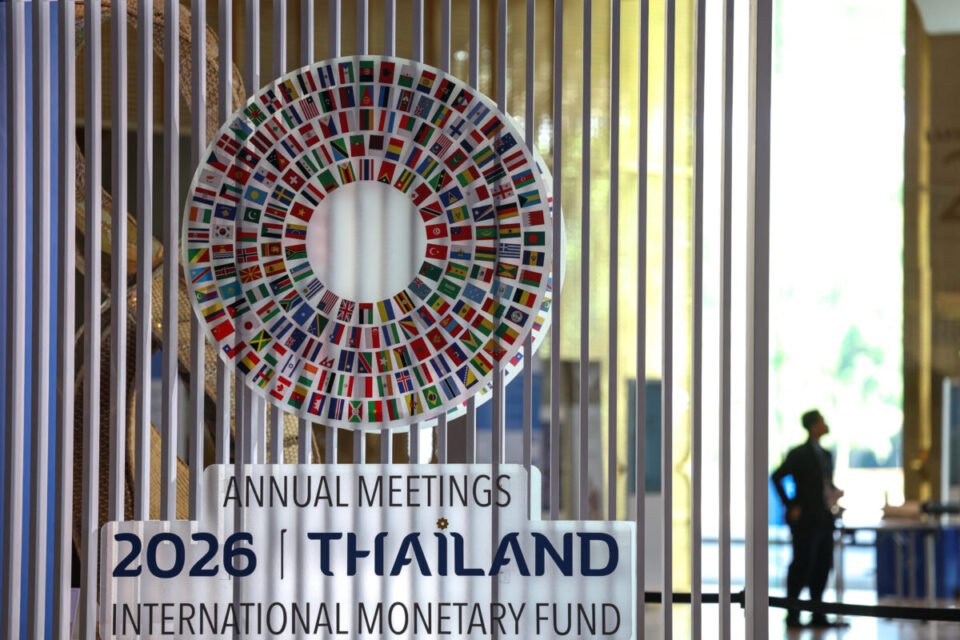
On the eve of the International Monetary Fund annual meetings in Bangkok, 12-18 October, this week’s lead article [LINK] from Anoop Singh warns that Asia now faces ‘uncomfortable parallel[s]’ to the Asian financial crisis. ‘Financial risk has once again migrated faster than the institutional frameworks designed to monitor it’, he says.
Singh compares conditions today with those of 1997, ‘when regulators and international institutions failed to see the network of foreign currency borrowing, maturity mismatches, corporate leverage and financial sector exposures, until confidence reversed and liquidity disappeared’. But he also notes a key difference — the relevant unit of analysis is no longer the bank or even non-bank financial institutions alone. Rather, it is the network and interconnectedness between banks, non-banks, governments and the broader market that matters.
Asian countries are carrying much more debt — both public and private — than ten years ago. Too much of it is denominated in foreign currencies and too little is hedged. This poses a problem when rising bond yields around the world are making these debts more expensive to service, and when the US dollar is appreciating against many Asian currencies.
Add to this the global risks from increased inflation, tightening financial conditions, escalation in the Iran war and financial stability concerns coming from AI, private equity and non-bank lending. It is far from clear that Asia’s economies are ready to manage financial shocks in these new circumstances.
A financial shock would test Asia’s preparedness on four levels.
The first is domestic. This rests on the strength of national supervisory mechanisms, risk management frameworks and resolution processes for detecting financial risks and responding when they materialise. The second is bilateral. Here, the question is whether support arrangements between countries, such as stand-by loans and bilateral currency swaps lines, can supply the foreign exchange needed if markets start to panic.
The third is regional. This tests whether mechanisms like the ASEAN+3 Chiang Mai Initiative Multilateralisation can coordinate regional resources in times of financial stress and prevent crises from spreading. The final level is global. This relates to the adequacy of the International Monetary Fund, the World Bank and, at times, the Bank for International Settlements to mobilise support to countries facing financial difficulties.
There are weaknesses at every level. Domestic monitoring and response mechanisms in many Asian economies have not kept up with a rapidly changing financial system. Bilateral supports are fragmented — some countries have them, others do not, and it is often those who need them most who have the least. Regional support is criticised for having unworkable and opaque processes, which means that it has never or rarely been used in a crisis. Global support remains deeply unpopular after the mishandling of the Asian financial crisis.
The difficulty of addressing these flaws today is compounded by an information gap. ‘Regulators still lack sufficiently granular information about leverage, liquidity and interconnected exposures across non-bank financial institutions and cannot fully understand how these pieces connect’, Singh says.
Singh calls for regulators to draw on best practices from bank regulation — including upgraded reporting, liquidity and collateral requirements, and stress tests — to tackle the new risks deriving from non-bank financial institutions. This has to be a multilateral exercise, with the goal to ‘share information on large cross-border exposures before markets come under stress’.
It is not until the tide goes out that we discover who has been swimming naked, as Warren Buffet likes to quip. Building institutional credibility and effective processes is always easier before a crisis than afterwards. The tide could be running out quickly, and Asia’s economies should be forewarned about what’s needed to manage the shock.
The EAF Editorial Board is located in the Crawford School of Public Policy, College of Law, Policy and Governance, The Australian National University.