
The private bill for public failures
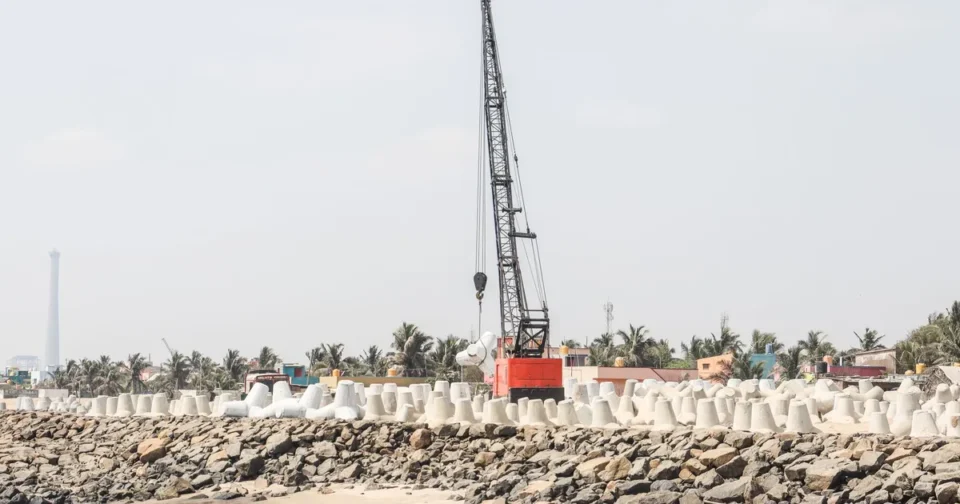
Peter Maich’s home near Westport sits on a riverbank close to the Buller River mouth, where floodwater, high tides and stormy seas have chewed into his land for decades. He reckons he has lost about a metre of land per year over 20 years and has spent between $40,000 and $60,000 on private protection works, roughly 2,000 to 3,000 tonnes of rock and concrete forming a barrier five metres high. “I just forked it out. It’s a horrific amount of money,” he told Stuff. There is no public assistance available, not for private property, not for beachfront.
Up the coast in Granity, Simon Rooke spent $25,000 on 900 tonnes of boulders after high seas pushed gravel towards his properties. Entry-level protection, a few truckloads of large rock, runs $4,000 to $6,000. “Everybody I know that’s had the sea come in, they’ve all got some rocks out the front now,” Rooke said. Rock walls are no longer the exception. They are the coastal norm.
The scale nobody wants to own
These are not outliers. A 2025 Ministry for the Environment report estimated roughly 219,000 residential properties sit in coastal inundation zones nationally. Drawing on the Climate Sigma analysis, it found that between 2026 and 2060, 2,200 to 14,500 properties are expected to cop at least one damaging flood or inundation event, with $1.8 billion to $12.9 billion of property value at risk. In just the first decade, 600 to 3,600 properties face damage.
And that is the conservative figure. The Climate Sigma work explicitly excludes coastal erosion, the very thing eating Maich’s riverbank. The true exposure across all coastal hazards is materially larger than these numbers suggest.
The market has already put a price on it
Insurers are the first market actor to price what planners never did. A January 2026 Treasury Cabinet paper on insurance affordability found home premiums have grown at three times the rate of general CPI since 2011, and rose 40% in just the last two years. They are climbing fastest in high-risk areas, and Treasury expects further increases as scientific understanding of risk sharpens.
The geography is stark. In June 2025, University of Auckland senior lecturer Dr Timothy Welch documented Wellington homeowners paying the nation’s highest premiums at $4,467 a year, double Auckland’s, with some reporting jumps from $3,000 to $9,000 in a single year. “Your postcode now determines whether you can afford your own home,” Welch said.
The endgame is worse than expensive premiums. If insurers withdraw from the highest-risk zones, banks stop lending against uninsurable assets and property values follow the cliff edge into the sea. The MfE value-at-risk range then becomes a floor, not a ceiling.
Who signed off on this
University of Auckland environment professor Mark Dickson names the cause directly. The problem, he said, reflects “a legacy of coastal development decisions made decades ago, when subdivisions were consented in coastal areas without full consideration of the dynamic nature of shorelines naturally eroding, and without consideration of the likely impacts of sea-level rise.”
Welch’s argument should land hardest with anyone worried about the fiscal bill. New Zealand has, he wrote in 2025, “no national framework for infrastructure retreat decisions. No standards. No thresholds. No consistency.” Moving Foxton Beach Road two years before it fails would save an estimated $42 million in residential insurance claims. Failing to act early is not caution. It is a cost.
The barn door shuts, the horses long gone
The National Policy Statement for Natural Hazards, in force from 15 January 2026, is the first serious attempt to standardise risk assessment nationally. It requires councils to avoid very high-risk development and to consider climate impacts 100 years out. But it applies to new consents. It does nothing for the 219,000 properties already in inundation zones, or the unknown number exposed to erosion.
The equity gap is glaring. After Cyclone Gabrielle, more than $250 million is being spent protecting Hawke’s Bay homes from river flooding, while the same region’s beachfront communities, losing half a metre a year, are left to fund their own defences. Dramatic floods get public money. Slow erosion gets a private invoice, as the Port Waikato community found when it funded its own $400,000 seawall.
The cost-sharing question between central government, councils, insurers and owners remains unresolved. Until it is answered, homeowners like Maich will keep tipping rock into the tide, paying today for planning decisions made when the shoreline was someone else’s problem.