
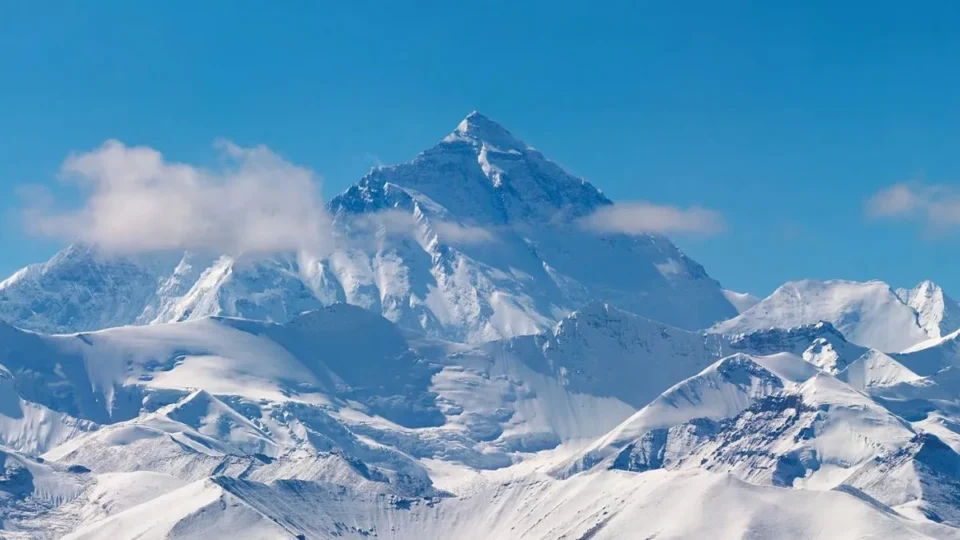
India has long treated the Himalayas as scenery, frontier and source of water. It now needs to treat the majestic mountains as something more consequential: critical economic infrastructure. The distinction matters because a deteriorating mountain ecosystem can impose costs far beyond the states in which the damage occurs. Glaciers across the Himalayan region are losing mass at an accelerating rate. That does not translate into a simple story of rivers running dry tomorrow. The immediate problem can be the opposite: unstable slopes, expanding glacial lakes and sudden floods.
The long-term danger is more profound. Once glaciers lose mass, the rivers they feed will increasingly become dependent on increasingly erratic snowfall and rainfall. For India, this is an economic problem disguised as a geographical one. Himalayan water supports agriculture, hydropower, tourism and the lives of hundreds of millions of people. Wheat and rice cultivation in the plains, electricity generation in mountain states and the enormous pilgrimage economy all depend, directly or indirectly, on the stability of this water system. Any serious disruption will therefore be reflected in food prices, electricity costs, infrastructure losses and public finances.
Advertisement
The warning signs are already visible. The 2021 Uttarakhand disaster and the 2023 Sikkim glacial lake outburst showed how quickly a mountain hazard can become a national infrastructure crisis. Roads, bridges and hydropower installations are often concentrated in narrow valleys precisely where floods and landslides can be most destructive. Yet India’s response remains too fragmented. Disaster management authorities prepare for disasters; environmental agencies monitor ecosystems; infrastructure ministries build roads and power projects; tourism departments pursue visitor numbers. The Himalayas do not operate according to these bureaucratic divisions. A road, dam or tourist settlement alters the risk faced by everything downstream.
The monitoring deficit is particularly troubling. Thousands of glaciers exist across the wider Himalayan-Karakoram system, but only a tiny fraction receive sustained, detailed observation. Governments cannot manage hazards they cannot see developing. Satellite surveillance, ground sensors, glacial-lake mapping and shared hydrological data should therefore be treated as essential infrastructure, not specialist scientific projects. There is also a relatively neglected opportunity. Black carbon from combustion sources, including pollution generated in the plains, contributes significantly to accelerated melting. Reducing soot emissions will not solve climate change, but it is one area where regional action can produce relatively direct benefits for the Himalayas.
Money must follow the risk. Mountain states should not be left to finance the protection of an ecological system whose economic benefits flow across India. National investment in resilient infrastructure, early-warning systems and ecosystem protection is justified precisely because the beneficiaries are national. And the Himalayas cannot be governed through national boundaries alone. Rivers, glaciers and atmospheric pollution cross borders. India, Nepal, Bhutan, Pakistan and China have different interests and political relationships, but none can make the mountain system obey a passport. The choice is therefore not between development and environmental protection. It is between paying deliberately for resilience now or paying unpredictably for Himalayan instability later. India should recognise which option is cheaper.