
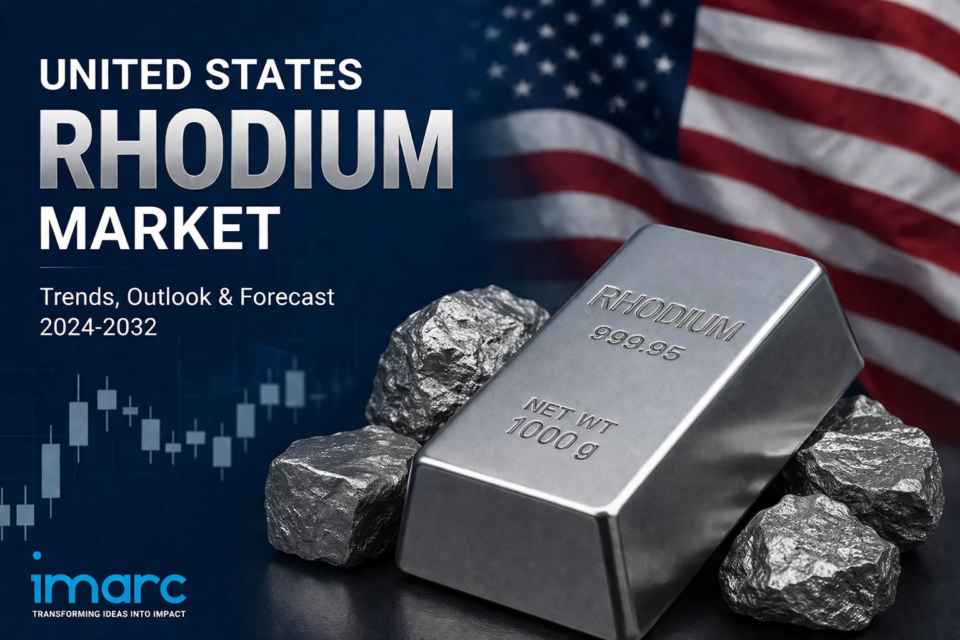
As industries prioritize sustainability and advanced technology, the role of rhodium-one of the rarest and most valuable precious metals in the world- is becoming increasingly crucial in the United States. This precious metal’s excellent catalytic and anti-corrosive properties are instrumental in lowering emission levels and facilitating cleaner industrial processes.
IMARC Group reported that the U.S. Rhodium market amounted to $330.8 million in 2025 and is predicted to reach $473.3 million by 2034, projecting a CAGR of 4.06 percent between 2026-2034.
The rise in demand for automotive catalytic converters is a key growth driver. Since rhodium is a fundamental component of automotive catalytic converters used to convert harmful substances such as NOx, carbon monoxide and hydrocarbons into less toxic elements, it’s indispensable for vehicle emission control, and growing emission standards throughout the U.S. Are increasing the reliance on these systems.
Clean energy and hydrogen technologies are also major market shapers, and since rhodium catalysts play an integral part in fuel cells and electrolyzers-used for energy storage and hydrogen production- increased investment in renewable energy and hydrogen infrastructure is also boosting rhodium demand.
The chemical industry further supports market growth, employing rhodium catalysts for a number of chemical processes, including hydrogenation, hydroformylation and carbonylation, making these processes more effective and selective in the production of a wide range of industrial and consumer products.
Rhodium’s use in the electronics and jewelry industries has been on the rise. It can be applied as a coating on connectors, and its properties have also found a role in jewelry, where rhodium plating offers the brilliance and durability desired for white gold and silver.
One emerging trend influencing the market is an increased reliance on recycling as a vital source of supply, considering that rhodium is primarily a byproduct of platinum and palladium mining. Given the limited nature of the ore, used automotive converters, and electronics, are now considered increasingly important sources to supplement demand.
From a segmentation perspective, the market is comprised of mineral sources (PGM mining) and recycling. As mentioned earlier, the role of recycling is expected to grow over time with growing sustainability concerns. In terms of product type, the market is segmented into alloys, metal and compounds, while catalysis leads by application, followed by alloying with platinum and palladium, and jewelry making.
Catalysis dominates by application and the automobile industry holds a significant share in the end-use industry segment due to the growing adoption of emission control technologies, followed by chemicals, glass and electronics. The market is geographically segmented into the Northeast, Midwest, South, and West of the U.S., and major industrial hubs and automobile manufacturing regions in the area are major contributors.
Another dominant market trend is rhodium’s price volatility, driven by its low supply and high demand. The price of this scarce precious metal can vary greatly and is affected by mining output, geo-political conditions, and industry demand.
What sets the U.S. Rhodium market apart is its deep connection to environmental progress and technological development, and the increasing desire for cleaner processes and more energy-efficient technologies places rhodium in a key position due to its unique properties. The market is expected to expand further due to stricter environmental regulations, the growth of hydrogen technology, the importance of recycling and developments in catalytic technology, and will likely play an indispensable part in achieving greater sustainability in industrial processes for the foreseeable future.