
PI Global Investments
Alternative Investments

‘We’re looking at a bubble here’: Experts including Ray Dalio advise on how to protect your wealth as bond yields spike


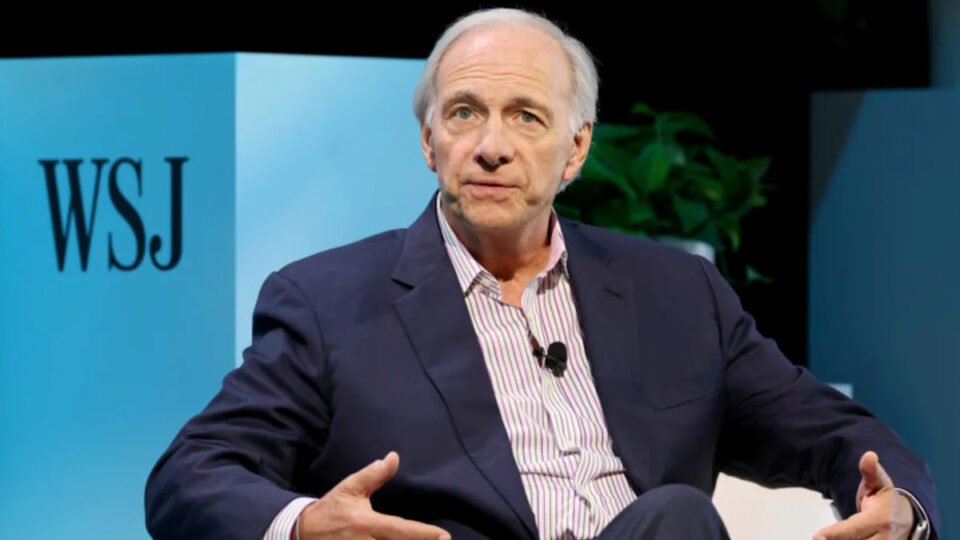
ay Dalio, Founder and CIO Mentor, Bridgewater Associates speaks onstage during The Wall Street Journal's the Future Of Everything Festival
Dia Dipasupil /Getty Images

Moneywise and Yahoo Finance LLC may earn commission or revenue through links in the content below.

Bonds are on investors’ minds nowadays.

Even if you don’t identify as a bond buyer, it’s hard to ignore the 5%-plus yields (1) on long-dated U.S. Treasuries. Interest rates this good may be tempting. On the flip side, they can be a bit terrifying when you consider the impact on the broader economy.

Top Picks

The greater interest you’re getting on bonds also isn’t risk-free, as you’re still losing on the actual price (2) of the bond. If you can’t hold a long-dated bond until maturity, you can take a loss on your position.

Treasury bonds are also still relative underperformers versus other sectors. For example, the tech-heavy Invesco QQQ ETF (Nasdaq:QQQ) — powered by AI stocks — has had returns of over 20% (3) this year.

So does it make sense to buy into the bond selloff? The Wall Street Journal (4) reached out to six of the world’s most powerful investment fund managers, including Bridgewater Associates founder Ray Dalio, with just that question. They all had different answers, but their insights may give you some ideas on where to put your investment dollars.

Tracking the trends

BlackRock’s CIO of Global Fixed Income, Rick Rieder, told the Journal that historical trends are on bond investors’ side. “People recognize that once you get the 10-year above 5%, you tend to make money,” he said, adding that he’s already begun adding some of these long-dated bonds to his portfolio.

Bryan Whalen, CIO of Fixed Income for TCW, points to factors including an eventual end to the war in Iran and the high concentration of debt in the hands of “interest-rate-insensitive” AI hyperscalers. He predicts bondholders will be rewarded for their patience.

Even relatively cautious investors like Pimco’s CIO Dan Ivascyn see high-yielding bonds as an opportunity. Ivascyn noted he sees signs of slowing in the U.S. economy due to higher yields but that sustained spending from AI companies, coupled with the homebuyers who already secured lower fixed mortgage rates, is likely to stave off a recession. If you take advantage of current yields, he noted, “You can build a 6% or 7% high-quality portfolio.”

Read More: Vanguard reveals what’s coming for U.S. stocks — and it could be bad news for this group of investors

Is the AI trade still alive?

Managers are hopeful for productivity gains from AI, and they note that the tech companies borrowing these billions of dollars have solid balance sheets.

But that doesn’t mean they’re all putting their money into large-cap tech equities. Speaking on Big Tech stocks, Syzygy Asset Management’s founder Rob Arnott said, “I’m of the view that we’re looking at a bubble here.” Rather than piling into major indices like the S&P 500, Arnott says there could be opportunities in smaller companies poised for better growth.

But knowing there may be opportunities outside the biggest names is one thing, finding them is another.

Investors such as Arnott and Dalio have spent decades studying market cycles, valuations and economic shifts. They also have research teams helping them sift through the noise and put that information into context.

For the average investor, trying to replicate that process alone can quickly turn into guesswork. And when markets are already jittery, making big portfolio moves based on the latest headline can be just as risky as ignoring the warning signs altogether.

That’s where professional guidance can make a difference.

Get tips from Wall Street experts

Platforms like Moby can help you identify stocks with strong growth potential, helping investors uncover opportunities they might otherwise overlook.

Their team of former hedge fund analysts and experts spend hundreds of hours each week sifting through financial news and data to provide you with breaking stock recommendations.

Moby’s success speaks for itself. The platform’s stock picks have outperformed the S&P 500 index by about 11.9% over the past four years.

Even better, Moby offers a 30-day money-back guarantee so you can see if the service is right for you. And if you sign up for Moby Premium you get one free top stock to get you off to a good start.

What to buy if bonds still scare you?

If you still aren’t sold on government or corporate bonds, you may want to listen to Dalio. He argues that ballooning deficits and yields will keep rising and put a damper on the global economy.

Rather than buying bonds at these levels, Dalio recommended focusing on investments that aren’t sensitive to interest rates.

A tried-and-true diversifier

Dalio’s on record for endorsing “non-government-produced monies” as a hedge against currency devaluation. In a recent LinkedIn post (5), he noted it could be worth having a 10% to 15% allocation to gold, as well as a “bit of Bitcoin.”

The appeal is easy to understand. Gold has long been viewed as a potential hedge against inflation, currency weakness and periods of financial stress. It also doesn’t necessarily move in lockstep with stocks and bonds, which can make it useful as part of a diversified portfolio.

And Dalio isn’t the only one. SchiffGold’s founder Peter Schiff recently told TheStreet (6) he recommends holding 10% to 20% in physical precious metals. DoubleLine Capital’s CEO Jeffrey Gundlach said on the Julia La Roche Podcast (7) that he holds about 20% of his portfolio in both physical gold and a commodity-focused ETF.

Although gold’s price (8) is slightly down year-to-date, and it’s taken a hit recently because rising bond yields can draw investors away (9) from precious metals, it remains a popular pick for those who feel skittish about the economic environment. Big banks like J.P. Morgan (10), which forecasts a potential surge to $6,300 per ounce in 2027, also view it as an attractive portfolio diversifier.

Opt for a gold IRA

Opening a gold IRA with the help of American Hartford Gold allows you to invest in gold and other precious metals in physical form while also providing the significant tax advantages of an IRA.

You can get free setup, shipping and insured storage for up to five years with American Hartford Gold. Plus, you can roll over your existing IRA or 401(k) into a precious metals IRA completely tax and penalty-free.

Even better? Qualifying purchases can also receive up to $25,000 in free silver and a free information guide when you sign up.

The case for real estate

Investors who want to spread their risk even further can move beyond Wall Street altogether.

Real estate is tied to a different set of economic forces than stocks and bonds. Property values and rental income are typically influenced by local conditions, including supply, demand, employment and housing costs. Those forces can look very different from what’s driving the S&P 500 on any given day.

Of course, buying a rental property isn’t that simple. The upfront costs are steep, while mortgage payments, property taxes, insurance, repairs and vacancies can quickly add to the bill. Then there’s the matter of actually managing the property and dealing with the hassles of being a landlord.

That’s where platforms like Arrived can help.

Backed by world-class investors like Jeff Bezos, Arrived lets you invest in shares of rental properties across the country with as little as $100.

To get started, simply browse through their selection of vetted properties, each picked for its income-generating potential and prospective long-term market appreciation.

Arrived distributes any rental income generated by properties to investors monthly, allowing you to set up a passive income stream without the extra work that comes with being a landlord of your own rental.

The best part? For a limited time, when you open an account and add $2,000 or more, Arrived will credit your account with a 2% match.

And for investors with more capital on hand, multifamily properties can provide another avenue. In a JPMorgan report, Al Brooks, the firm’s vice chair of Commercial Banking, said, “I think multifamily housing is absolutely where you want to be as an investor (11).”

Accredited investors can now tap into this opportunity through platforms such as Lightstone DIRECT, which gives accredited investors access to single-asset multifamily and industrial deals.

Lightstone DIRECT’s direct-to-investor model ensures a high degree of alignment between individual investors and a vertically-integrated, institutional owner-operator — a sophisticated and streamlined option for individual investors looking to diversify into private-market real estate.

With Lightstone DIRECT, accredited individuals can access the same multifamily and industrial assets Lightstone pursues with its own capital, with minimum investments starting at $100,000.

Double check with a fiduciary

All of this raises an important question — If AI valuations look stretched, should investors simply get out?

There are legitimate concerns about AI valuations, particularly when a relatively small group of companies has become such a large part of the market. At the same time, AI’s economic impact is difficult to ignore.

AI spending accounted for 40% of U.S. economic growth over the past year, while Goldman Sachs analysts have attributed roughly half of recent S&P 500 earnings growth to AI (12).

That makes an all-or-nothing decision especially tricky. Selling every tech stock because you fear a bubble could protect you if valuations tumble could also mean missing out if AI continues to drive productivity and earnings.

Before making a dramatic portfolio change, it may be worth getting a second opinion from a fiduciary. A financial professional can help you assess how much exposure you actually have to AI, whether your portfolio is sufficiently diversified and what changes would make sense given your goals and risk tolerance.

If you have a portfolio of $250,000 or more, platforms like WiserAdvisor can connect you with vetted professionals who specialize in this kind of planning.

All you have to do is answer a few simple questions about your savings, retirement timeline and overall investment portfolio. From there, WiserAdvisor will review its network and match you with up to three vetted, reputable advisors aligned to your specific needs.

WiserAdvisor does the heavy lifting when vetting financial advisors on its roster. Each advisor is screened based on their years of experience, their SEC/FINRA registration and records, and compensation criteria.

Just schedule a no-obligation consultation with your matches to find the best fit for your long-term goals.

Note: WiserAdvisor is a matching service and does not provide financial advice directly. All matched advisors are third parties and specific financial results are not guaranteed.

-With files from Eric Esposito

What To Read Next

Get Warren Buffett’s best investing lessons, free. Join 250,000 readers getting Moneywise’s sharpest money reporting every week. Subscribe and we’ll send you our guide to the ideas that built Buffett’s fortune as a welcome gift.

Article Sources

We rely only on vetted sources and credible third-party reporting. For details, see our editorial ethics and guidelines.

CNBC (1), (8); Federal Reserve Bank of St. Louis (2); Yahoo Finance (3), (9); The Wall Street Journal (4); LinkedIn (5); TheStreet (6); YouTube (7); J.P. Morgan (10), (11); NBC News (12)

This article provides information only and should not be construed as advice. It is provided without warranty of any kind.


Source link

Related posts

Week Ahead for FX, Bonds : Fed Minutes in Focus as -2-

D.William

Majority of investors plan to stay or grow in Canada – Benefits and Pensions Monitor

D.William

Otis Ukpai: Unlocking Alternative Investment Possibilities in the African Private Credit Market

D.William

Leave a Comment